

Keeping Traditional Fishing in Modern Indonesia
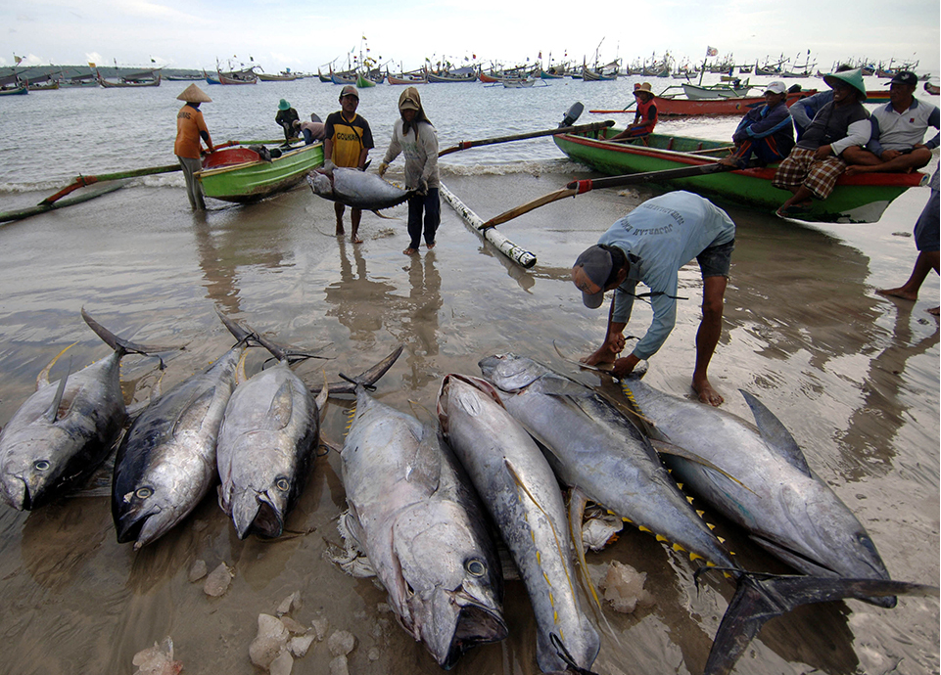
Fishermen arrive at Bali’s fishing village in Jimbaran with a fresh catch of tuna (Photo Credit : Sonny Tumbelaka/AFP Photo)
Indonesia is the world’s largest archipelagic nation, with waters spanning over 5.8 million square kilometers that have sustained millions of lives for generations. At the heart of this vast maritime heritage are traditional fishermen. Armed with small wooden boats, handheld lines, and a profound, intuitive understanding of the sea, they are not just looking for a livelihood—they are the living keepers of Indonesia's cultural soul.
However, as the tides of rapid modernization, industrialization, and economic shifts sweep across the country, these small-scale fishers find themselves navigating increasingly turbulent waters. Balancing ancestral heritage with modern economic survival has become the ultimate test of resilience. For these communities, the struggle is not merely about catching fish; it is about preserving a way of life that defines the very identity of coastal Indonesia.
The Anchors of the Past: Local Wisdom and Eco-Consciousness
Long before modern sustainability became a global buzzword, Indonesian traditional fishermen were practicing it as a core tenant of life. Across the archipelago, cultural norms and local wisdom—known broadly as “kearifan lokal”—have governed how communities interact with the ocean, ensuring that nature is never exploited beyond its capacity to heal.
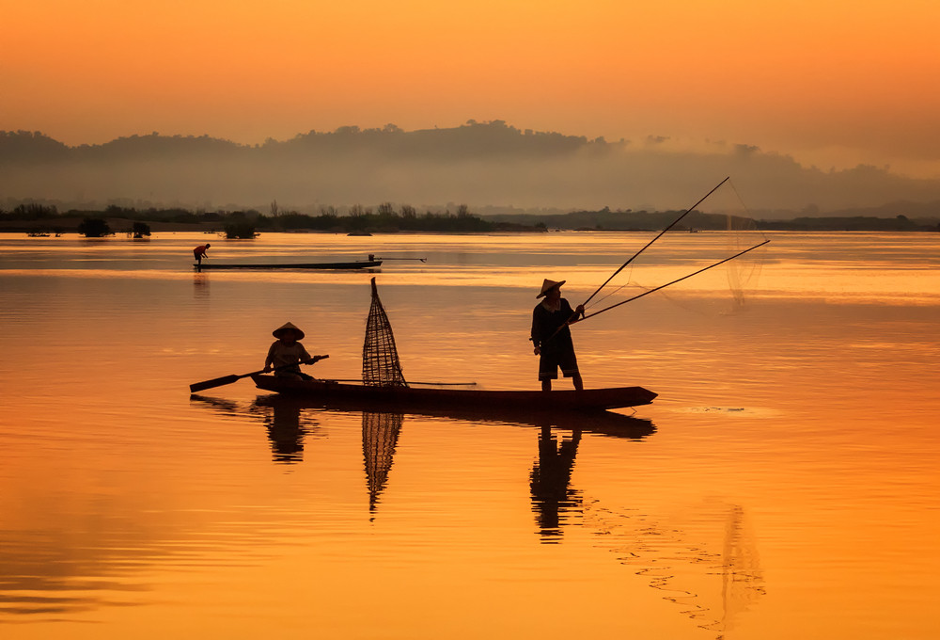
Fishermen casting a net from a traditional boat (Photo Credit : SantiPhotoSS)
These practices treat the ocean not as a resource to be aggressively plundered, but as a living entity that requires respect, reciprocity, and balance. For traditional fishers, protecting the marine ecosystem is synonymous with protecting their own future.
- Sasi (Maluku and Papua)
In the eastern waters of Indonesia, Sasi is a traditional customary law that temporarily bans the harvesting of specific marine resources—such as sea cucumbers, trochus snails, or certain fish species—in designated areas. This closure allows marine life to mature and regenerate completely. When the Sasi is finally lifted during a communal festival, the harvest is bountiful, proving that patience and restraint yield long-term survival.
- Mane'e (North Sulawesi)
In the Talaud Islands, the *Mane'e ritual is an annual tradition where the community gathers to catch fish using “samami” (a long rope made of woven coconut leaves). The community drives the fish toward the beach together, taking only what is needed to feed the village for the festival. Destructive tools are strictly forbidden, reinforcing the cultural belief that greed brings misfortune from the sea.
- Panglima Laot (Aceh)
Dating back to the era of the Aceh Sultanate, the Panglima Laot (Commander of the Sea) is a traditional tribal institution that holds legal authority over coastal communities. They regulate fishing zones, settle disputes between fishermen, enforce safety codes, and strictly ban destructive fishing gears like bombs or potassium cyanide. The institution also enforces "prohibited fishing days," such as Fridays and religious holidays, giving both the fishermen and the sea a mandatory day of rest.
Cruising into a Storm: The Challenges of the Modern Era
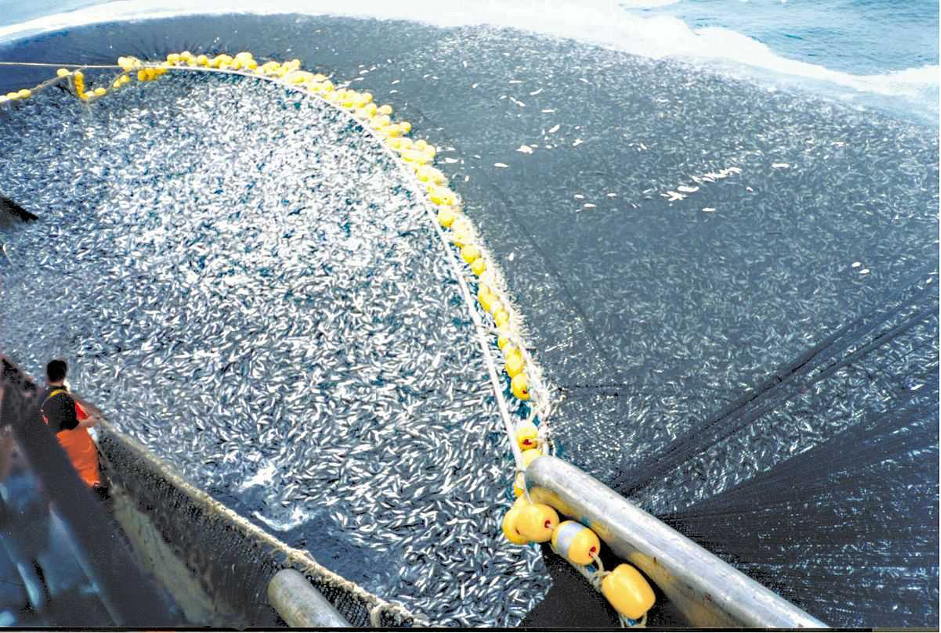
Massive industrial fishing net (Photo Credit : Asc1733)
Despite their ecological mindfulness and historical legacy, traditional fishermen are facing an uphill battle against the unforgiving realities of a rapidly modernizing world. The pressures they face are multifaceted, stretching their economic limits to the breaking point.
- Industrial Competition and Encroachment
Large, commercial trawlers and modern corporate fleets equipped with advanced sonar, massive dragnets, and industrial refrigeration often encroach on traditional fishing grounds. These large vessels deplete fish stocks at an alarming rate, leaving little for the small-scale fishers who operate within the 12-nautical-mile coastal zone. Traditional fishers are forced to sail further out into the open ocean, placing themselves in greater danger with equipment designed only for shallow waters.
- Climate Change and Shifting Tides
Compounding the physical danger is climate change. Unpredictable weather patterns, rising sea temperatures, and erratic currents have disrupted traditional navigation techniques passed down through generations. Fishermen can no longer accurately read the stars or seasonal winds (musim barat and musim timur), making every voyage highly unpredictable and significantly more hazardous.
- The Fuel Price Squeeze: A Daily Crisis
Perhaps the most immediate, crushing threat to a traditional fisherman’s daily survival is the volatile cost of fuel. Unlike large corporate fleets that have capital reserves to absorb price hikes, small-scale fishers operate on razor-thin, day-to-day margins.
Because they rely heavily on subsidized fuel (BBM Bersubsidi) like diesel (Solar) or gasoline for their small motorized boats (perahu ketinting), any sudden policy shift, price increase, or distribution bottleneck directly cuts into their daily take-home pay.
In many remote coastal areas, logistical inefficiencies mean subsidized fuel rarely reaches local docks at its intended price. Fishermen are often forced to buy fuel from middlemen at inflated black-market rates. On bad days, the cost of the fuel required to sail outweighs the economic value of the fish caught. This imbalance forces fishermen into a vicious cycle of debt, tying them to predatory local moneylenders just to buy enough fuel for the next day's trip.
Adapting to the Tides: Strategies for Survival
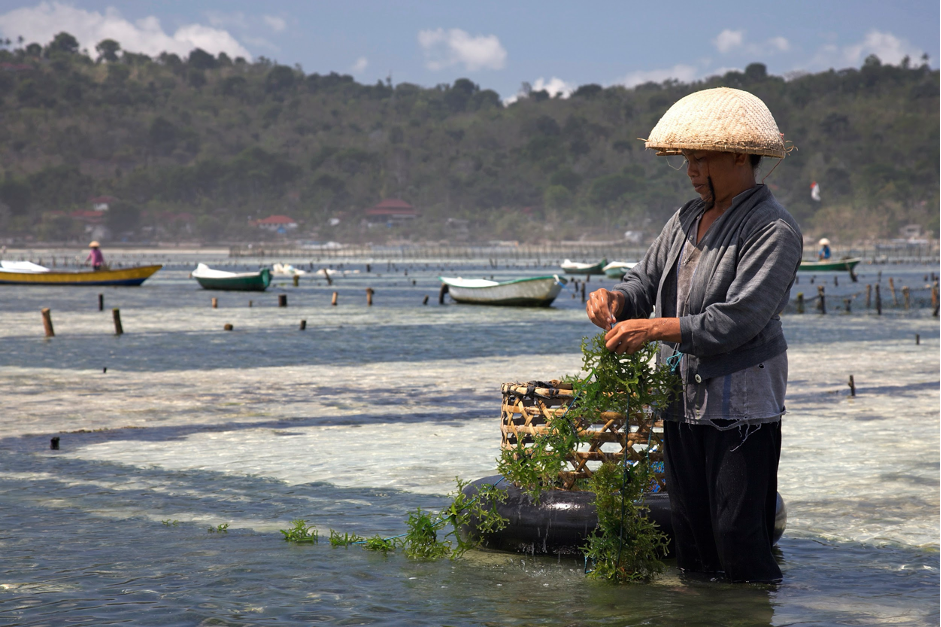
Edible seaweed farming on the small island of Nusa Lembongan (Photo Credit : Jean-Marie Hullot)
To keep their traditions from sinking, Indonesian fishermen are learning to adapt without losing their cultural identity. Survival in the modern era requires a tactical blend of old-school grit and selective, smart modernization.
- Micro-Tech Adoption
While they may reject industrial trawls, traditional fishers are increasingly embracing digital technology to level the playing field. Many now utilize smartphones equipped with government-developed apps or real-time weather data to monitor wave heights and wind speeds before setting sail. By integrating basic GPS mapping, they can pinpoint exact historical fishing coordinates, drastically reducing the time spent wandering the open ocean and conserving precious, expensive fuel.
- Diversification of Livelihoods
During the lean or stormy seasons (musim paceklik), when the sea is too rough to navigate, relying solely on wild catches is an economic impossibility. Coastal families have begun diversifying their income streams to build economic resilience:
- Aquaculture & Seaweed Farming: Many communities have established small-scale seaweed plots or coastal fish cages (keramba) that provide a steady income regardless of weather conditions.
- Eco-Tourism: In areas like Raja Ampat or Bali, traditional fishermen pivot to working as local tour guides, boat operators, or conservation rangers, utilizing their unparalleled knowledge of marine topography to protect their waters while earning a stable living.
- Value-Added Processing: Instead of selling raw, highly perishable fish to middlemen at low prices, fishing households process their catch into shelf-stable goods like salted fish, savory crackers (kerupuk ikan), and traditional shrimp paste (terasi), capturing higher profit margins.
- Grassroots Advocacy
Traditional fishers are no longer passive observers of their own displacement. Organized through unions like the Indonesian Traditional Fishermen's Association (KNTI), they are actively lobbying the government for stricter enforcement of maritime zoning laws, transparent distribution of subsidized fuel through digital fuel cards, and legal protection for ancestral marine territories.
The Ultimate Lifejacket: Community Solidarity and Social Fabric
If there is one defining element that keeps traditional Indonesian fishing alive, it is the unbreakable bond of social solidarity. In a coastal village (kampung nelayan), fishing is never an individualistic, capitalistic venture; it is a collective, deeply social lifestyle governed by the philosophy of “gotong royong” (mutual aid).
- The Social Safety Net of the Coast
The ocean is a volatile workplace where success is never guaranteed. When a fisherman’s engine breaks down at sea, nearby boats will abandon their own fishing lines to tow him back to shore, expecting no payment in return. If a family suffers from a prolonged streak of empty nets, neighbors routinely share their own fuel, lend extra nets, or split their catch so that no household goes hungry.
This informal social safety net ensures that economic shocks do not instantly destroy a family. Risk is collectivized; a bad harvest at sea is a burden shared by all, and a massive bounty caught by one boat is celebrated and distributed across the village.
- The Power of Women's Cooperatives
The social fabric of fishing communities is heavily anchored by women on the shore. While the men are out at sea facing physical dangers, women manage the entire socio-economic backbone of the village:
- Sustaining Financial Resilience: Through grassroots networks, women build their own informal financial safety nets. They pool resources and create independent community funds to provide immediate, life-saving cash injections when fuel prices spike or when crisis hits. By doing so, they rescue families from the trap of predatory moneylenders and keep boats moving.
- Market Stabilization: Women-led cooperatives handle the processing and direct marketing of the fish. By taking control of the supply chain on land, they prevent external middlemen (tengkulak) from exploiting their husbands' hard work, keeping the wealth within the community.
- Community Welfare: These cooperatives often act as informal welfare boards, ensuring that the elderly, widows of lost fishermen, and children maintain access to nutrition and basic education.
Preserving the Horizon
Keeping traditional fishing alive in modern Indonesia is not an act of stubborn nostalgia or a resistance to progress. Rather, it is a crucial strategy for ensuring that progress does not erase human dignity, cultural identity, and ecological balance. Traditional fishermen are the frontline guardians of the nation's marine biodiversity, providing decentralized food security to millions of citizens while maintaining centuries of maritime knowledge.
To save this way of life, the modern world must meet them halfway. This means securing exclusive, heavily enforced fishing zones for small-scale fishers, streamlining the logistics of subsidized fuel to eliminate corruption, and directly funding village-level cooperatives. By empowering these coastal communities, Indonesia can ensure that its identity as a great global maritime nexus remains permanently anchored in both modern innovation and the timeless, communal traditions that have defined its people for generations.