Understanding Blue Carbon: The Climate Power of Coastal Ecosystems
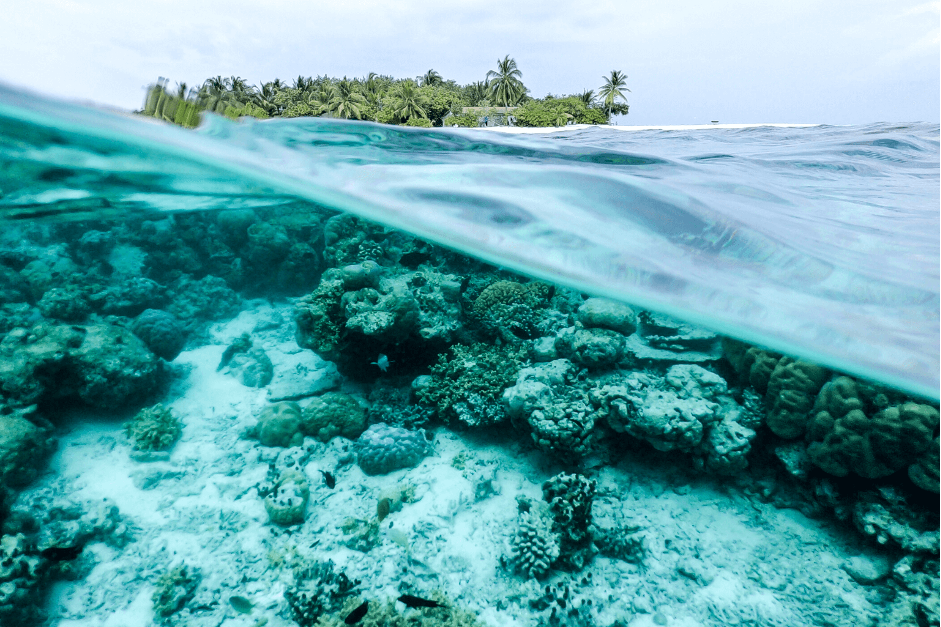
Photo Credit : Ishan@seefromthesky/Unsplash
Along the edges of continents, where land meets sea, lies one of the planet’s most underestimated climate allies. Coastal ecosystems—often quiet, overlooked, and increasingly threatened—hold an extraordinary ability to capture and store carbon. This natural process is known as Blue Carbon, and it is becoming a central topic in global climate discussions.
What Is Blue Carbon?
Blue carbon refers to the carbon captured and stored by coastal and marine ecosystems. Unlike terrestrial forests, which store much of their carbon in trunks, branches, and leaves, coastal systems store a significant share underground in waterlogged soils and sediments. Because oxygen levels are low in these environments, decomposition happens slowly, allowing carbon to remain trapped for hundreds or even thousands of years.
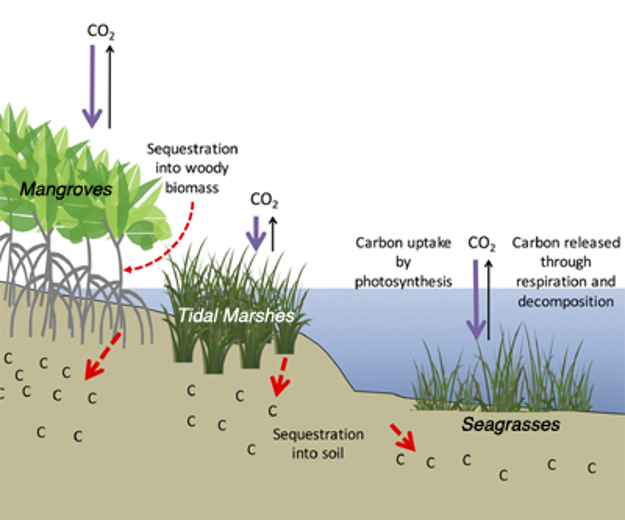
Blue carbon diagram (Photo Credit : Ocean Carbon & Biogeochemistry)
The three primary blue carbon ecosystems are:
- Mangrove forests
- Seagrass meadows
- Tidal salt marshes
Each of these systems plays a distinct role, yet all share a common strength: their efficiency in long-term carbon storage.
Mangroves: Coastal Guardians with Hidden Depth
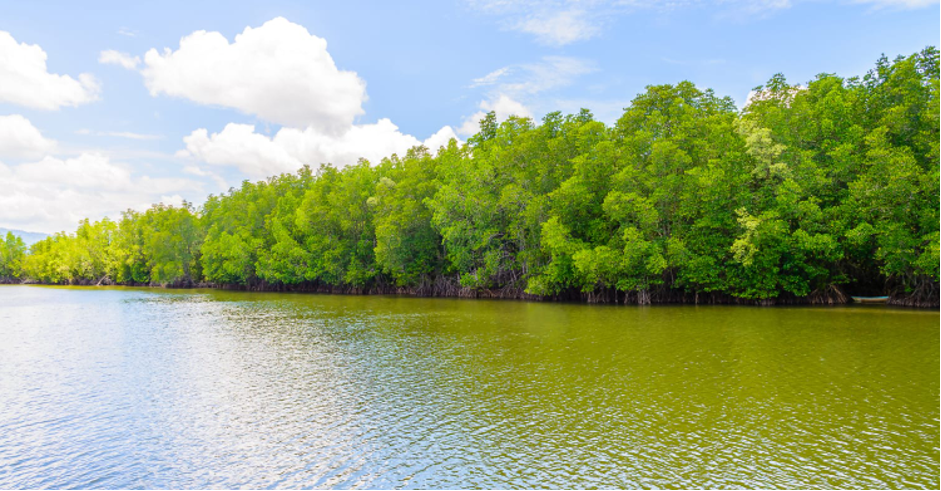
Mangroves (Photo Credit : Ist.)
Mangroves are salt-tolerant trees that grow where tropical and subtropical coastlines meet sheltered seawater. They are commonly found in estuaries, river mouths, lagoons, and calm coastal bays.
Their tangled root systems are more than visually striking. These roots slow down water flow, allowing sediments rich in organic carbon to settle and accumulate. This creates deep carbon rich soils beneath the forest floor. In fact, mangroves can store up to four times more carbon per hectare than tropical rainforests.
Beyond carbon storage, mangroves also provide benefits far beyond climate regulation: reduce coastal erosion, buffer storm surges and waves, improve water quality by trapping sediments, serve as nursery habitats for fish, crabs, and shrimp, and support local livelihoods through fisheries and ecotourism. Countries like Indonesia, home to the world’s largest mangrove area, play a crucial role in preserving this ecosystem.
Seagrass Meadows: Invisible Yet Powerful
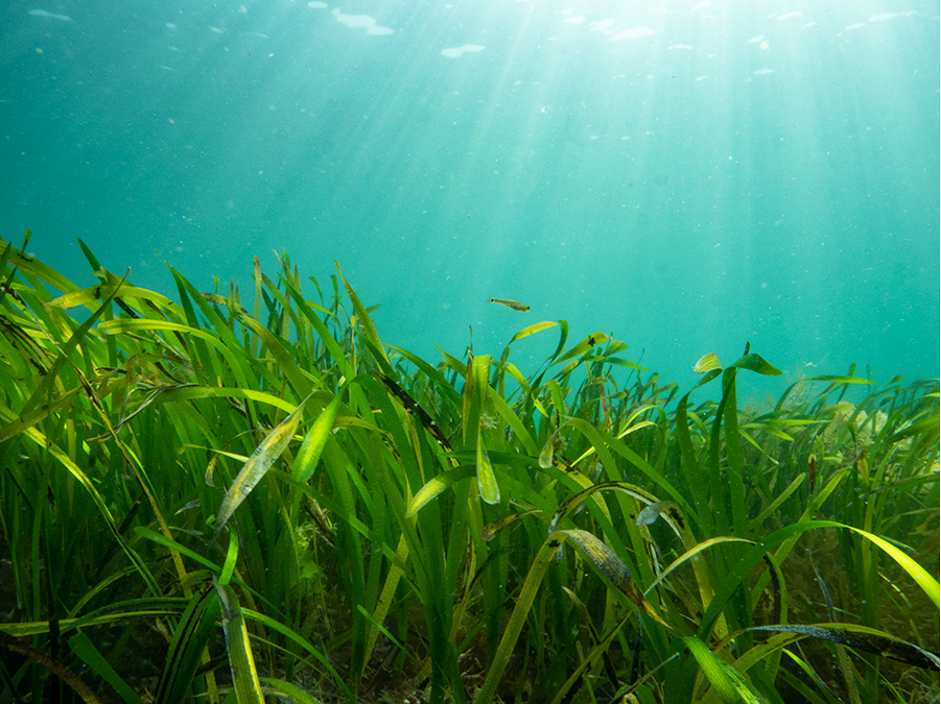
Seagrass (Photo Credit : Fiona Crouch)
Often mistaken for seaweed, seagrasses are flowering plants that grow in shallow marine waters. They form underwater meadows in sandy or muddy seabeds where lights can still reach the ocean floor.
Despite their modest appearance, seagrass meadows are among the most efficient carbon sinks on earth. They absorb carbon dioxide through photosynthesis and store it in both their biomass and the sediment below. What makes them remarkable is their ability to trap carbon continuously, even as older plant material gets buried.
Seagrass meadows also stabilize the seabed and reduce sediment movement, improve water clarity by trapping particles, provide habitat for juvenile fish and shellfish, and feed animals such as sea turtles and dugongs, as well as help maintain healthy coral reef systems nearby.
Yet seagrasses are highly vulnerable to pollution, dredging, coastal construction, and declining water quality.
Salt Marshes: The Overlooked Carbon Vaults
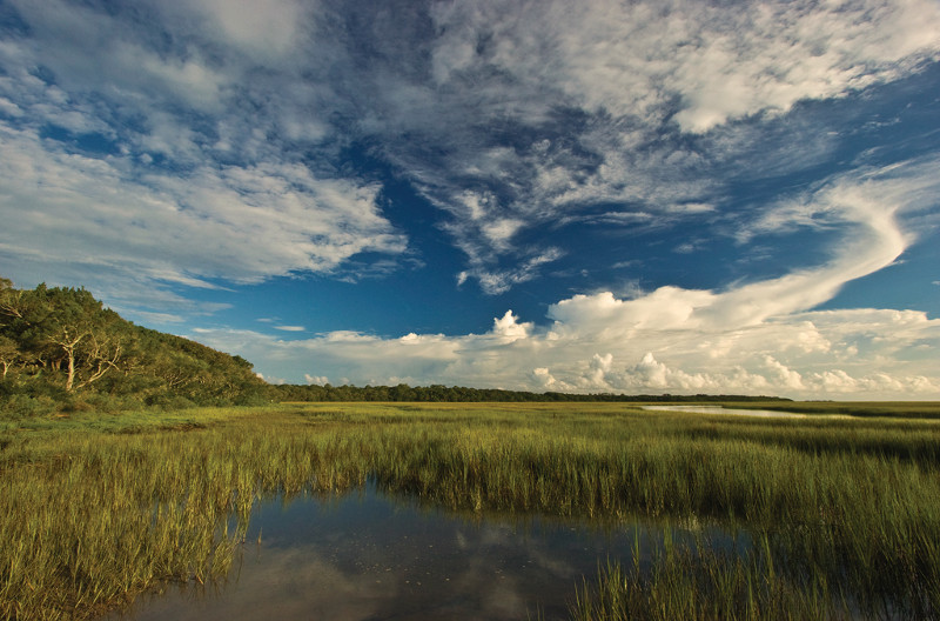
Salt marsh (Photo Credit : Florida State Parks)
Salt marshes are coastal wetlands dominated by grasses, reeds, and low-growing plants adapted to saline conditions. They are usually found in temperate regions along sheltered coasts, estuaries, and tidal river mouths. The low-oxygen conditions in these soils slow down decomposition, allowing organic carbon to accumulate over time.
Salt marshes also provide practical benefits to reduce inland flooding during storms, filter excess nutrients and pollutants from water, provide habitat for migratory birds and fish, build land naturally by trapping sediments, and increase coastal resilience as sea level rise.
Although less discussed than forest or coastal reefs, salt marshes are among the most productive ecosystem on the planet.
Why Blue Carbon Matters
Blue carbon ecosystems cover only a small fraction of Earth’s surface, yet their climate value is remarkably large. Mangroves, seagrass meadows, and salt marshes capture carbon dioxide from the atmosphere and store it in vegetation, roots, and carbon-rich sediments below ground. In many cases, this stored carbon can remain locked away for centuries or even millennia.
What makes these ecosystems especially important is not only how much carbon they absorb, but how long they can store it when left undisturbed. Healthy coastal habitats function as long-term carbon sinks, quietly removing greenhouse gases while delivering many other environmental benefits.
When these ecosystems are degraded or destroyed—through land conversion, pollution, dredging, or unsustainable aquaculture—the stored carbon can be released back into the atmosphere. In that moment, areas that once helped slow climate change may begin contributing to it.
Protecting blue carbon ecosystems, therefore, is not only a matter of conservation. It is also a practical climate strategy that helps avoid future emissions while strengthening coastal resilience.
Threats to Coastal Ecosystems
Despite their value, blue carbon ecosystems are disappearing at an alarming rate. Mangroves are often cleared for shrimp farming, agriculture, ports, and urban development. Seagrass meadows are damaged by dredging, boat anchors, sediment runoff, and declining water quality. Salt marshes have historically been drained or filled for agriculture, roads, and coastal infrastructure.
Climate change adds another layer of pressure. Rising sea levels can drown wetlands that cannot migrate inland. Stronger storms can erode coastlines. Ocean warming and acidification may disrupt plant growth, biodiversity, and ecosystem balance.
Without intervention, the loss of these habitats could accelerate both ecological decline and carbon emissions.
Conservation and Restoration Efforts
Recognizing their importance, global initiatives are now focusing on protecting and restoring blue carbon ecosystems. Programs under organizations like United Nations Environment Programme promote sustainable coastal management and restoration projects.
Restoration efforts commonly include replanting degraded mangroves, protecting seagrass meadows from physical damage, rehabilitating tidal wetland and marshes, reducing pollution and sediment runoff, and establishing marine and coastal protected areas.
These initiatives not only capture carbon but also support local communities through fisheries, strengthen tourism economies, reduce storm damage, and create local employment opportunities.
In some regions, blue carbon is also being integrated into carbon markets and climate finance systems, creating economic incentives for long-term conservation.
The Role of Local Communities
Local communities are at the heart of successful blue carbon conservation. Indigenous knowledge, sustainable fishing practices, and community-led restoration projects have proven to be highly effective.
In Indonesia, for example, community-based mangrove restoration initiatives have demonstrated how environmental recovery can be combined with income generation through fisheries, ecotourism, and sustainable coastal enterprises.
Looking Ahead
Blue carbon is not a silver bullet for climate change, but it is a powerful piece of the solution. As the world seeks ways to reduce greenhouse gas emissions, coastal ecosystems offer a natural, cost-effective strategy that also delivers a wide range of co-benefits.
Protecting these ecosystems requires coordinated efforts—from governments, scientists, and communities alike. It also demands a shift in perspective: recognizing that some of the most powerful climate solutions are not found in advanced technology, but in nature itself.
Conclusion
The story of blue carbon is one of hidden potential. Beneath the surface of coastal waters lies a vast and vital climate resource, quietly working to stabilize our planet.
Understanding, protecting, and restoring these ecosystems is not simply an environmental priority. It is a global necessity for climate resilience, biodiversity protection, and the future of coastal communities worldwide.