

Seahorses and Their Adaptations in Seagrass Habitats
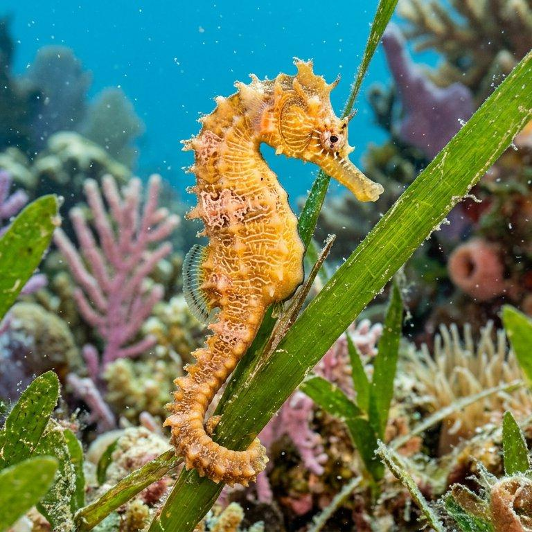
Yellow seahorse clinging to a blade of seagrass (Photo Credit : News of Bahrain)
Small Residents with a Unique Appearance
Seahorses or seahorses are a group of marine fish from the genus Hippocampus, family Syngnathidae. This group is still related to pipefish and sea dragons. Unlike most fish, seahorses have a horse-like head, an erect body, an elongated snout, and a tail that can wrap around and grip surrounding objects.
One of the most interesting characteristics of seahorses is their ability to swim in a vertical position. Their dorsal fins move quickly to generate thrust, while their pectoral fins help control the direction of movement. Although they are capable of swimming, seahorses are not strong swimmers. Because of this, they more often rely on their tails to hold on to seagrasses, algae, mangrove roots, and other underwater structures.
This ability is not just a unique behavior. By holding on to vegetation, seahorses can reduce the risk of being carried away by currents while maintaining their position when foraging for food or avoiding predators.
The body size and color of seahorses vary greatly between species. Some measure just a few centimeters, while others can reach lengths of more than 20 cm. Their body color can also adjust to the environment, ranging from yellow, brown, red, to blackish. Certain body patterns and protrusions help them camouflage themselves among vegetation and substrate.
Seagrass beds: Home and Shelter
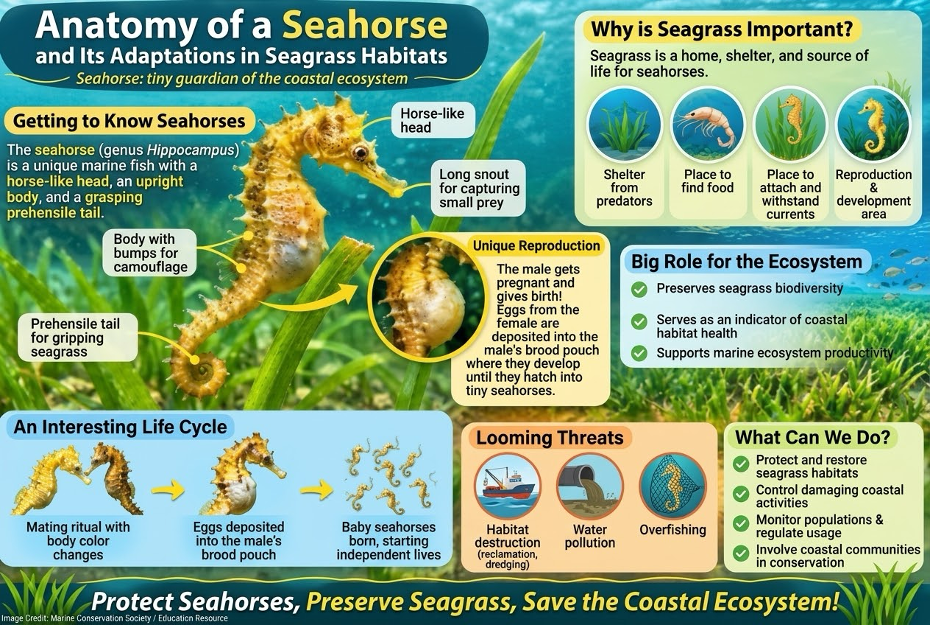
Anatomy of a seahorse and its adaptation in seagrass habitats diagram (Photo Credit : Marine Conservation Society)
Seagrass beds are one of the important habitats for various types of seahorses, especially in tropical and subtropical regions. This expanse of underwater vegetation provides a habitat structure that allows seahorses to carry out their various life activities.
There are several reasons why seagrass ecosystems are so important to seahorses.
- Shelter from predators : The tightly packed seagrass leaves create a shelter for seahorses. The body shape and color that resemble the surrounding environment help them camouflage so that they are harder for predators to find.
- Where to forage : Seahorses are small predators that feed on zooplankton, small crustaceans, and a variety of other organisms. With long snouts that act like suckers, they catch prey that is nearby. Seagrass beds provide an environment that supports the existence of a variety of small organisms as a food source.
- Adhesive place and maintain position : A prehensil tail or tail that can grip is an important adaptation for seahorses. They can wrap their tails around seagrass leaves or algae so that they are not easily carried away by the current. This behavior is especially helpful because seahorses' swimming abilities are relatively limited.
- Habitat for reproduction and development : Seagrass meadows are also part of an environment that supports reproductive activities and the sustainability of seahorse populations. Complex habitat structures can provide protection for both adult and juvenile individuals.
The relationship between seahorses and seagrass is not only limited to habitat use. Research on Selayar Island, South Sulawesi, found two species of seahorses, namely Hippocampus barbouri and Hippocampus horse, on several seagrass beds. The study also shows that habitat complexity, including the presence of macroalgae, needs to be considered in understanding the distribution and abundance of seahorses.
These findings show that habitat quality is not sufficiently assessed based on seagrass cover area alone. The structure of vegetation and the presence of other habitat elements can also affect the presence of organisms living in it.
The Uniqueness of Seahorses: Males Who Conceive and Give Birth
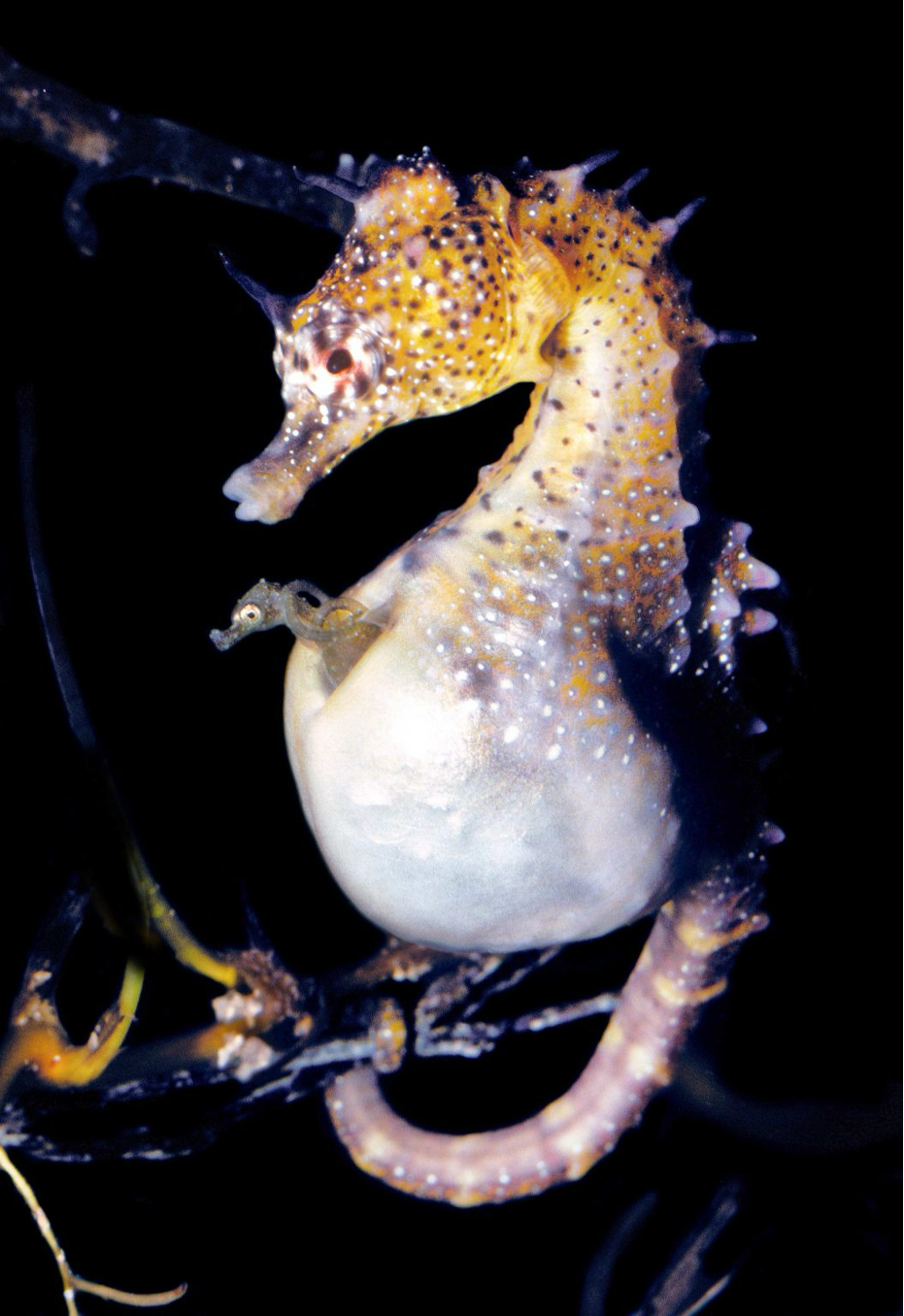
Male seahorse giving birth (Photo Credit : Rudie H. Kuiter/Marine Life Photographer)
One of the most interesting biological phenomena of seahorses is their reproductive system. In this group of fish, it is precisely the male individual who undergoes the process of pregnancy and gives birth to children.
The reproductive process begins when the seahorse pair performs a mating ritual that involves changing body color and moving closer to each other. After the egg transfer process, the female puts her eggs into the brood pouch located in the male's abdomen.
In the sac, the egg develops into a young individual. The incubation sac is not only a place to store eggs, but also has a physiological function in supporting embryonic development, including internal environmental regulation and substance exchange.
Once the incubation period is complete, the male seahorse will expel her young through body contractions. The number of offspring born varies, depending on the species and size of the mother.
Newborn seahorse calves already have a body shape resembling an adult individual in miniature size. They then have to survive independently, facing predators and foraging in the aquatic environment.
This reproductive strategy is one of the unique evolutionary features of the Syngnathidae group as well as showing how interesting the adaptation of marine organisms to their environment is.
Getting to Know Seahorses in Indonesian Waters
Indonesia has a fairly high diversity of seahorses because it is located in the Indo-Pacific region, one of the regions with the largest marine biodiversity in the world.
Some of the species of seahorses that have been reported from Indonesian waters include:
- Yellow seahorse (Hippocampus kuda)
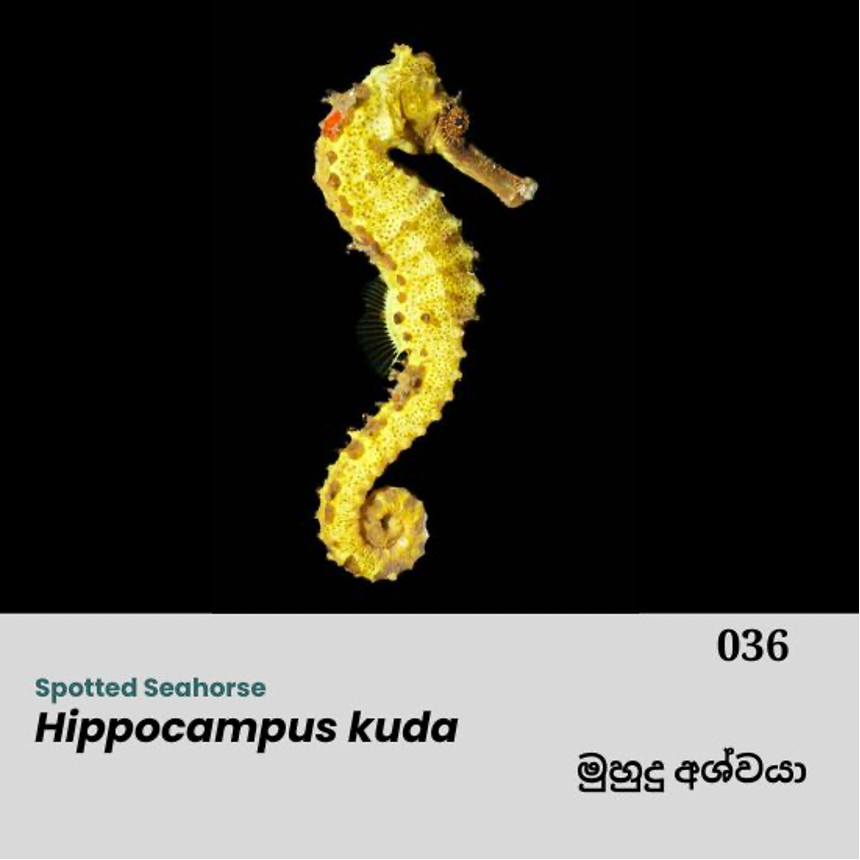
Yellow seahorse (Photo Credit : Lanka Mangrove Museum and Learning Center)
This species has a wide variety of body colors, ranging from yellow, brown, to blackish. Its habitat is diverse, including seagrass meadows, mangrove areas, and shallow coastal waters.
- Spiny seahorse (Hippocampus barbouri)
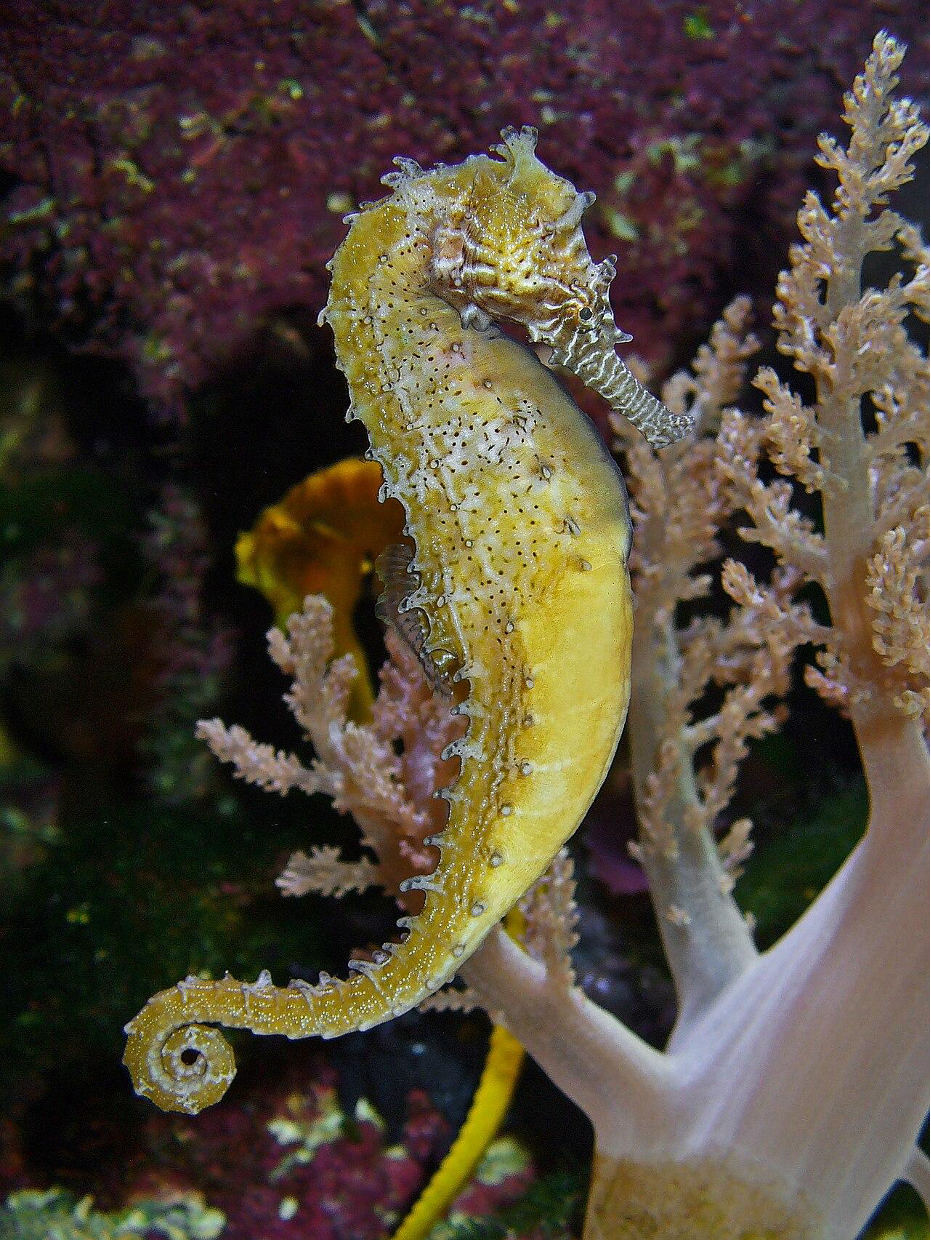
Spiny seahorse (Photo Credit : H. Zell)
It has spike-like protrusions on parts of the body and head. This species is found in the Indo-Pacific region and has been reported in the waters of South Sulawesi. Research in Selayar shows that this species takes advantage of seagrass and macroalgae habitats.
- Tiger-tailed seahorse (Hippocampus comes)
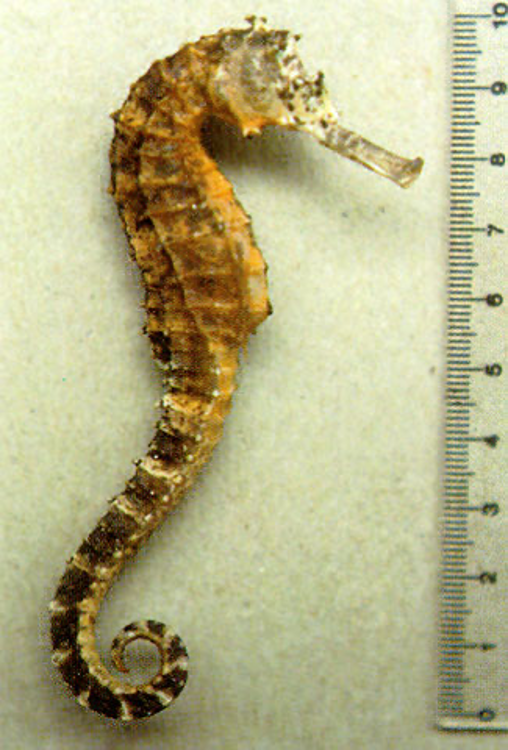
Tiger-tailed seahorse (Photo Credit : Lourie, S.A.)
It has a striped pattern or pattern resembling stripes on its tail. This species is one of the seahorses reported from the Riau and Lampung Islands regions.
- Long-spined seahorse (Hippocampus spinosissimus)
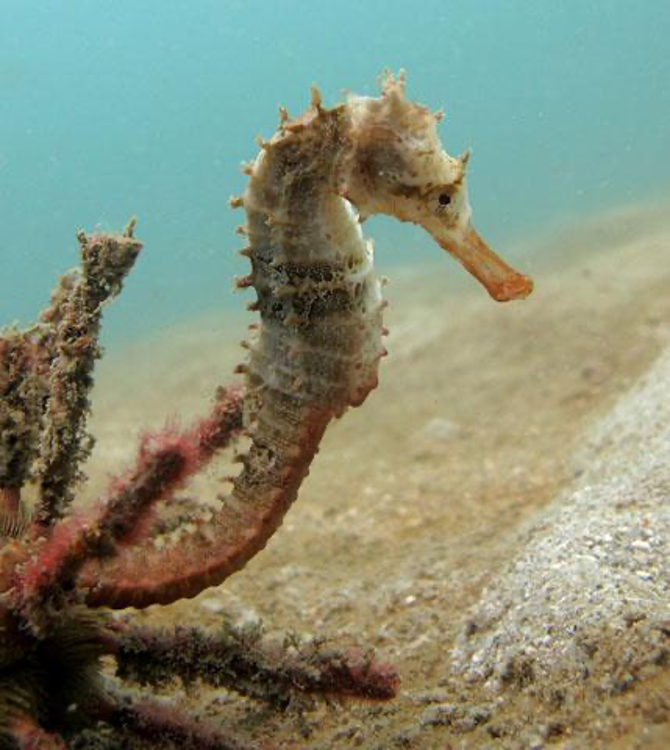
Long-spined seahorse (Photo Credit : Marine Conservation Cambodia)
It is recognized through the spines that develop on its body parts. This species is also recorded in the inventory of seahorse resources in the waters of Bintan.
The four species are examples, not exhaustive lists of Indonesian seahorses. Seahorse identification is sometimes not easy because body color and shape can vary between individuals. Morphological approaches and molecular identification through COI gene markers and 16S rRNA were used by researchers to identify seahorse specimens from Sumatra.
In addition, on the north coast of Bintan Island, two species were also found, namely Hippocampus of horses and Hippocampus comes. The study also found a relationship between seagrass cover and seahorse density. These findings reinforce the importance of maintaining seagrass conditions as a habitat for this group of fish.
When Its Habitat Is Threatened
Despite their unique camouflage and adaptability abilities, seahorses face a variety of environmental pressures. One of the main threats is the destruction of coastal habitats.
Some factors that can threaten the existence of seahorses include:
- Degradation of seagrass beds. Reclamation, coastal development, dredging, and boat activities can lead to the loss of seagrass vegetation that serves as shelter and foraging.
- Pollution of waters. Domestic waste, industrial activities, and excessive nutrient runoff can alter habitat quality and affect the communities of organisms that are food sources.
- Seahorses are traded as ornamental fish as well as a traditional medicinal ingredient in a number of countries. Market demand can put additional pressure on natural populations.
- Destruction of other coastal habitats. Changes in mangroves, coral reefs, and underwater vegetation can reduce the availability of alternative habitats for some species.
This issue is becoming increasingly important because seahorses have biological characteristics that make their populations vulnerable to capture pressure. Relatively low mobility, dependence on certain habitats, and reproductive patterns involving incubation in males can affect the population's ability to recover when exploited.
Seahorses are also included in Appendix II of the Convention on International Trade in Endangered Species of Wild Fauna and Flora (CITES). This means that the international trade of the species listed in it must be controlled so as not to threaten their survival in nature.
The threat status of each species is also not the same. Therefore, conservation assessments need to refer to species identities and status updates on the IUCN Red List, rather than assuming that all seahorses have a uniform threat category.
Protecting Seahorses Means Protecting Seagrass
Seahorse conservation cannot be done simply by protecting its individuals. Protection efforts must include habitats where they live, breed, and forage.
Some of the steps that can be taken include:
- Protecting and restoring seagrass meadows, especially in areas known to be seahorse habitat.
- Control coastal activities, such as dredging, reclamation, and boat activities that have the potential to damage underwater vegetation.
- Strengthen population monitoring, through periodic surveys to determine distribution, abundance, and changes in habitat conditions.
- Controlling trade and catching, through the implementation of regulations and supervision of the use of seahorses.
- Involve coastal communities, especially fishermen and conservation area management groups, in monitoring and protecting habitats.
Thus, good seagrass meadow management also has the potential to provide direct benefits for the protection of seahorses and their various associated organisms.
Small Keepers, A Major Role for Coastal Ecosystems
Seahorses may not be an organism that is often the focus of conversation about the conservation of coastal ecosystems. However, their existence provides an idea of the importance of the relationship between organisms and the habitats in which they live.
Seahorses' dependence on underwater vegetation structures shows that seagrass beds are not just a stretch of marine plants. This ecosystem is a living space that supports various ecological processes, ranging from the provision of food, protection from predators, to the sustainability of the life cycle of organisms.
The presence of seahorses can also be one of the supporting information in assessing the condition of coastal habitats. Although it cannot be used as a single indicator of seagrass health, changes in its distribution and abundance can provide clues about changes in habitat quality and pressures on the environment.
In the end, protecting seahorses means helping to maintain the ecosystem that supports their lives. Because, behind its small body and slow movements, there is a reminder that the health of coastal ecosystems is highly dependent on the existence of every component of biodiversity in it.
Small creatures, big roles. Taking care of seahorses means helping to protect the future of seagrass beds.
-Yuni Sulaiman