Sacred Waters: Preserving Indigenous Marine Conservation Rituals Across Eastern Indonesia
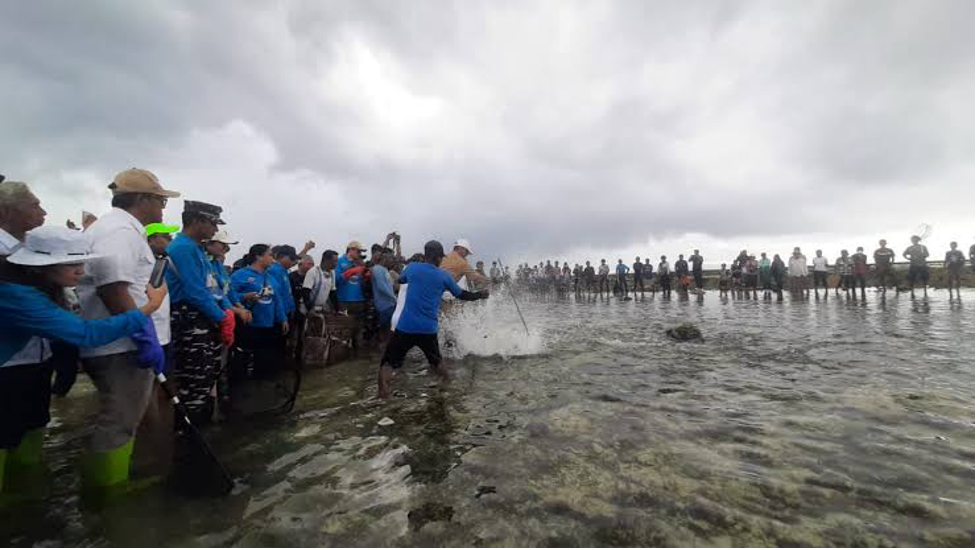
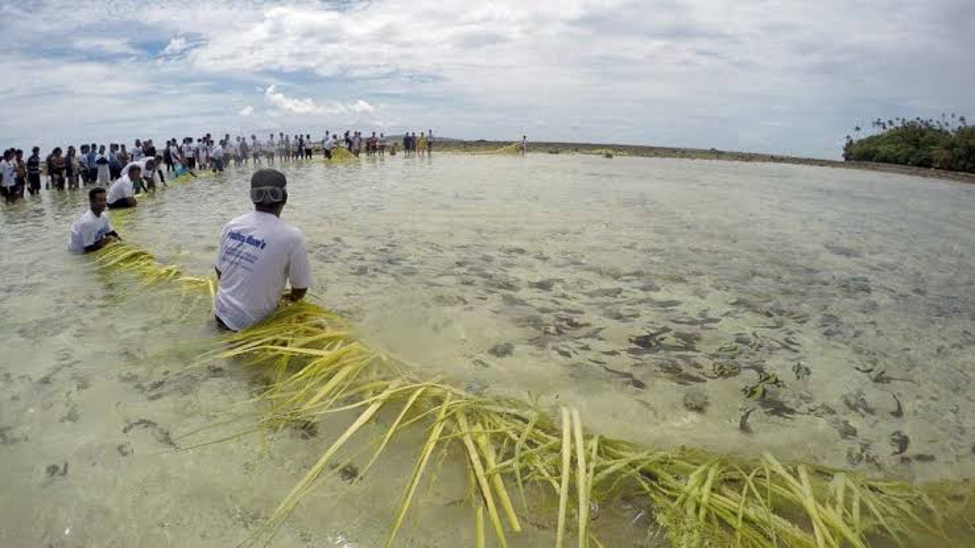
Locals and community members wading through shallow water during a Mane’e gathering in Talaud Islands (Photo Credit : Pemerintah Kabupaten Kepulauan Talaud)
Imagine closing down an entire neighborhood grocery store for six months—not because it went out of business, but to give the shelves time to restock naturally. Across the islands of Eastern Indonesia, coastal communities have been doing the exact ocean equivalent for centuries. Long before modern marine biology, satellite tracking, or government fishing quotas existed, local elders relied on sacred traditions to keep their seas alive.
Today, as Indonesia faces severe overfishing, plastic pollution, and rising ocean temperatures, these ancient customs are proving to be some of the most effective conservation tools in the world.
Indigenous Marine Rituals Across Eastern Indonesia
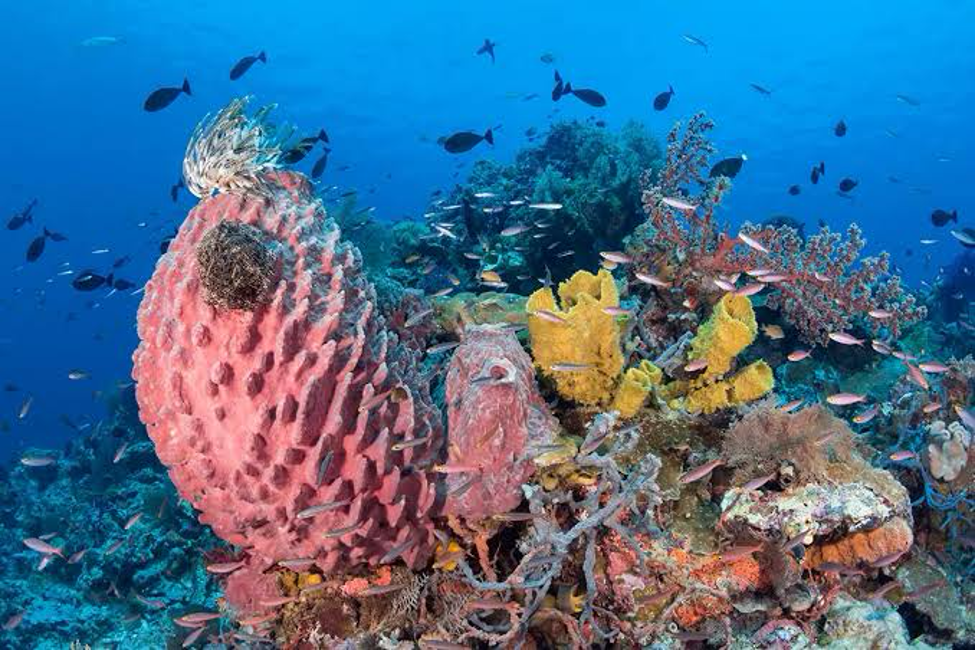
Healthy reef and fish in Wakatobi (Photo Credit : Wakatobi Dive Resort)
In provinces like North Sulawesi, East Nusa Tenggara, Southeast Sulawesi, and Papua, the sea is not treated as an endless warehouse of free food. It is viewed as a living ancestor that demands respect. To protect it, communities practice customary laws (hukum adat) enforced by spiritual beliefs and community leadership.
- Mane’e and Eha (Talaud Islands, North Sulawesi): Before any fish are caught, communities on Kakorotan and Intata islands enforce Eha—a sacred months-long ban on entering coastal reefs. Once a year during the lowest tide, elders (ratumbanua) lift the ban with the Mane’e Villagers weave kilometers of coconut leaves and forest vines into a giant biodegradable net, gently herding fish into shallow water. They harvest only enough for a communal feast and immediately release juvenile fish back into the sea.
- Lilifuk (Kupang, East Nusa Tenggara): Practiced by the Helong people on Semau Island, Lilifuk transforms natural coastal lagoons into sacred nurseries. Elders close the lagoon for up to a year, forbidding anyone from disturbing the crabs, shrimp, and reef fish inside until a ceremonial communal harvest day is declared.
- Kaombo (Buton and Wakatobi, Southeast Sulawesi): In the heart of Wakatobi’s coral reefs, the Kaombo system designates specific marine zones as strictly off-limits for months at a time. Marked by sacred prayers and customary boundaries, it bans destructive fishing gear and gives octopus, groupers, and coral reefs space to recover.
- Tiyatiki (Jayapura, Papua): Practiced by coastal communities around Depapre and Tanah Merah Bay under the authority of traditional leaders (ondoafi), Tiyatiki uses customary ecological rules to divide coastal waters into sacred no-take zones and seasonal fishing zones, protecting turtle nesting beaches and coral spawning grounds.
Case Study: How Mane’e and Eha Protect the Reefs of Kakorotan Island, North Sulawesi
Villager herding fish with coconut leaves (Photo Credit : LautSehat.ID)
To see how these traditions work in real life, look at Kakorotan Island in the remote Talaud archipelago of North Sulawesi—near the border between Indonesia and the Philippines. Like many coastal areas in Indonesia, Talaud’s waters have faced growing pressure from modern gillnets, compressor diving, and outside fishing boats sweeping through local reefs.
While neighboring reefs without customary rules saw declining catches, the indigenous community of Kakorotan kept their ancestral Eha and Mane’e system alive:
- The Action: Under the leadership of traditional elders (ratumbanua), the community strictly enforces Eha across their coastal reef flats for most of the year. During this period, boats, anchors, and fishing gear are banned from the sacred zone, giving corals and reef fish months of complete peace to breed and grow.
- The Ritual Harvest: Only once a year—usually in May or June when the tide drops lowest—the elders open the waters for Mane’e. Instead of using nylon nets that scrape and break delicate corals, hundreds of villagers wade into the water holding a traditional sammi (a floating rope woven from forest vines and young coconut leaves). The shadow of the leaves naturally guides fish toward the shore without damaging the seabed.
- The Conservation Result: Marine researchers studying Talaud found that Mane’e prevents the two biggest threats to Indonesian reefs: physical habitat destruction and the overharvesting of juvenile fish. Because the sammi does not touch the reef floor, coral cover remains intact, and the strict rule of releasing small fish ensures that breeding populations replenish surrounding waters through natural spillover—turning Kakorotan into both a thriving marine sanctuary and a celebrated cultural eco-tourism site.
Why This Matters for Indonesia’s Real Conditions Today
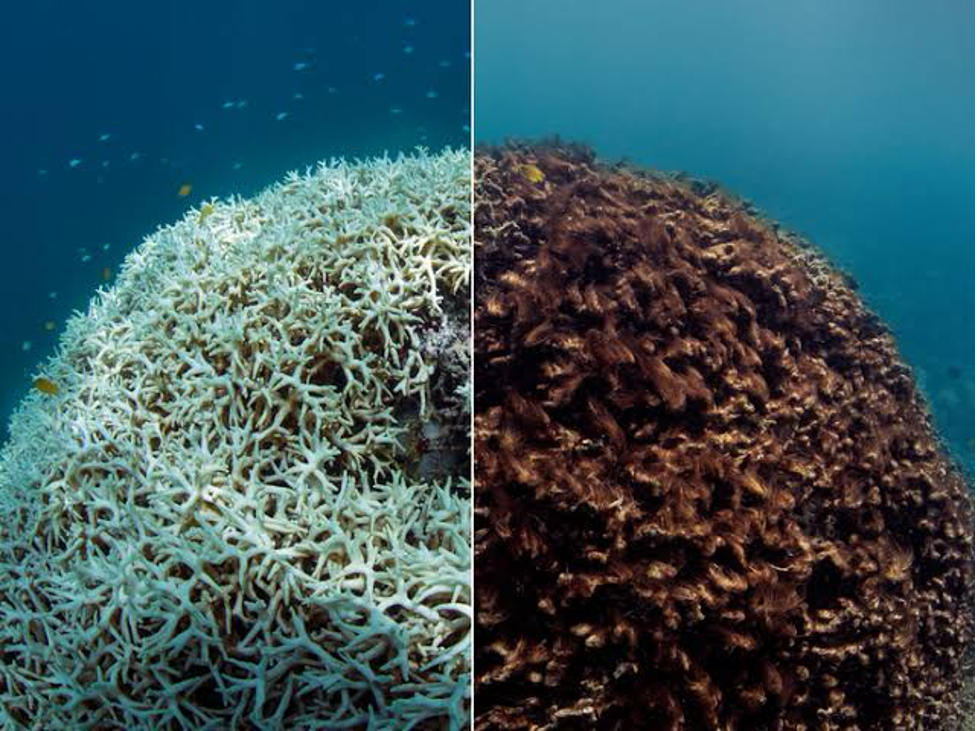
Bleached coral compared to healthy coral (Photo Credit : Business Insider)
Indonesia sits at the heart of the Coral Triangle, home to more than 75% of the world’s coral species and thousands of reef fish species. Millions of Indonesians depend directly on these waters for their daily protein and income. However, the real situation on the ground is under heavy pressure:
- Illegal and Destructive Fishing: Despite strict national laws, blast fishing and cyanide poisoning still damage fragile reefs, turning vibrant underwater nurseries into rubble.
- Commercial Overfishing: Large, outside vessels often sweep through traditional fishing grounds, leaving local small-scale fishermen with empty nets and damaged coastlines.
- Climate Change and Coral Bleaching: Warming waters across Eastern Indonesia threaten the very ecosystems coastal villages rely on to survive storms and feed their families.
- Enforcement Gaps: Indonesia spans more than 17,000 islands. Even the best-funded navy or maritime ministry cannot patrol every remote bay 24 hours a day.
This is where indigenous rituals shine. A government ban on paper is easy to ignore when no patrol boat is watching. A Mane’e, Lilifuk, or Kaombo boundary guarded by your own neighbors, your church or mosque, and generations of ancestral respect commands far stronger daily compliance than distant state regulations.
The Challenges of Keeping Sacred Waters Alive
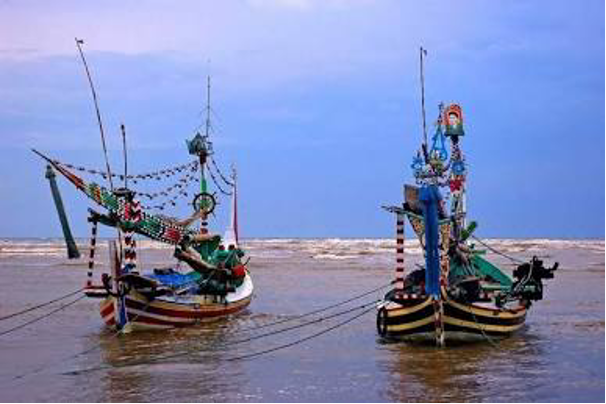
Traditional wooden boats along the shore (Photo Credit : Insight Guides)
While these traditions work remarkably well, they are not guaranteed to survive. Modernization brings real hurdles to remote villages:
- Economic Pressure: When global market prices for live reef fish, octopus, or sea cucumbers spike, outside traders often tempt struggling villagers with quick cash to break traditional bans.
- Generational Disconnect: Many young people leave their home islands for school or city jobs, meaning fewer youth are learning the traditional songs, tidal calendars, and customary laws from their elders.
- Weak Legal Recognition: In some regions, local customary boundaries are not officially mapped by the government, leaving indigenous communities vulnerable when outside companies claim coastal waters for mining, tourism, or industrial fishing.
Bridging Ancient Wisdom and Modern Science
Across Indonesia, a hopeful shift is taking place. Rather than replacing indigenous traditions with Western conservation models, scientists, NGOs, and the Indonesian government are blending the two.
In places like Wakatobi, Talaud, and Kupang, marine biologists now work side-by-side with customary leaders—such as ratumbanua, parabela, and ondoafi. Scientists use underwater surveys and fish counts to measure how biomass and coral recruitment recover during customary closures like Kaombo and Lilifuk, sharing that data so elders can refine the best timing to open and close the reefs. Meanwhile, the government has increasingly recognized Indigenous Marine Protected Areas, giving customary leaders legal backing to keep destructive outsiders out of their waters.
Preserving these rituals is not about living in the past. In a world struggling to save its oceans, the coastal communities of Eastern Indonesia offer a proven, living blueprint: when people treat the sea as sacred family rather than mere property, both nature and humanity thrive.
Further Reading:
Ariando, W., Manan, A., Coulson, J., & Arunotai, N. (2023). Institutional Complexity Around Locally Managed Marine Area: A Situation Analysis of “The Bajau” Sea Oriented Communities in Wakatobi. International Journal of Conservation Science, 14(2).
Sahadula, F. J., & Therik, W. M. A. (2017). Manam’mi: Pembangunan Berbasis Kearifan Lokal Studi pada Masyarakat Miangas Kabupaten Kepulauan Talaud. KRITIS: Jurnal Studi Pembangunan Interdisiplin, 26(2).
Sujarta, P., Renyoet, A., & Dimara, L. (2021). Kajian Sistem Etno Konservasi Laut Masyarakat
Pesisir Papua: Sasisen dan Tiyaitiki. Jurnal Education and Development, 9(1).
Surbakti, J. A., & Leonak, S. P. (2020). Kajian Profil Kearifan Lokal Lilifuk: Traditional Ecological Knowledge (TEK) di Desa Kuanheum. Jurnal Sumberdaya Akuatik Indopasifik, 4(2).