Profits from the Roots: How Local Farmers Raise Seafood While Restoring Mangroves
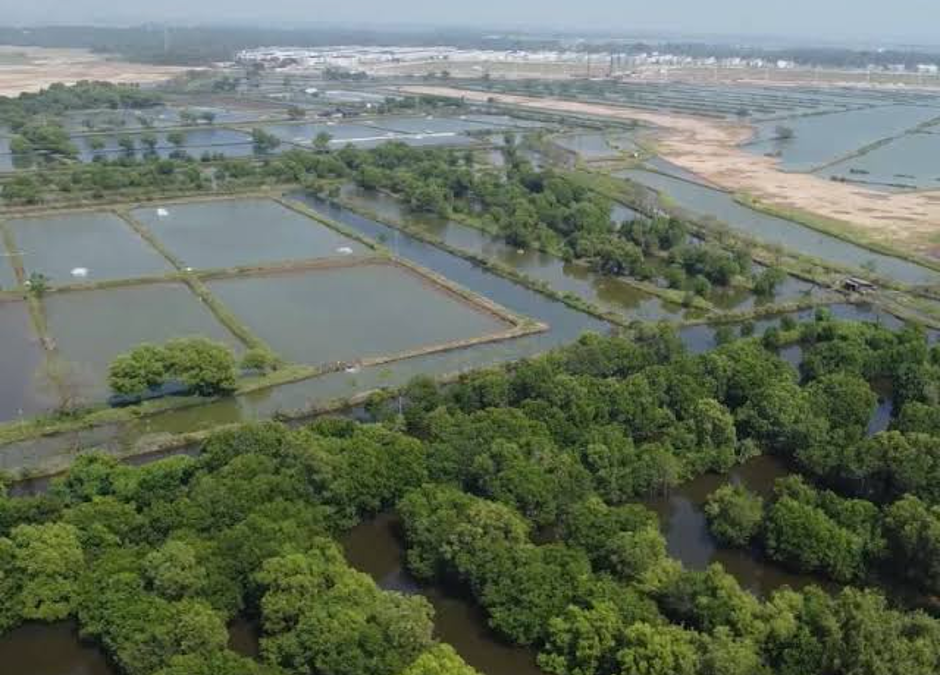
Aerial view of silvofishery channels integrated within mangrove forest in Indonesia (Photo Credit : LindungiHutan)
Along Indonesia’s tropical coasts, home to more than 20% of the world’s mangrove forests, a different approach to managing coastal resources is taking root. For decades, coastal communities from North Sumatra to South Sulawesi have faced a difficult choice. They could clear mangroves to build aquaculture ponds and generate income or protect the forests while finding ways to sustain their livelihoods.
A community-based approach known as silvofishery, or wanamina, offers another option. The system combines aquaculture with mangrove vegetation, allowing local farmers to continue producing seafood while maintaining important ecological functions.
In a silvofishery system, mangroves and aquaculture ponds are managed as part of the same production landscape. Mangroves provide habitat for aquatic species, help reduce erosion, and offer protection from waves and storms. At the same time, farmers can continue to produce fish, shrimp, and other aquatic products from their ponds.
For coastal communities, silvofishery is therefore more than a mangrove restoration approach. It is a practical way to support local livelihoods while keeping coastal ecosystems productive and healthy.
What is Silvofishery?
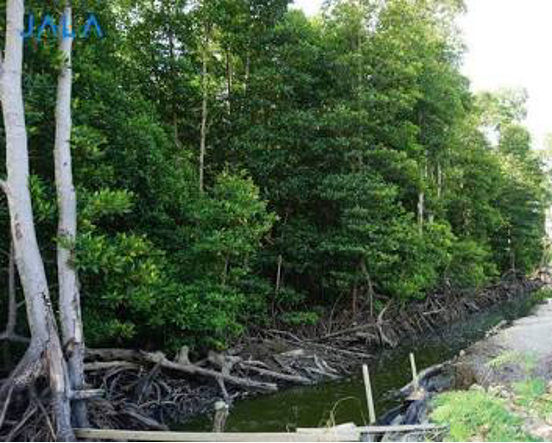
A traditional silvofishery canal running through mangrove roots in Indonesia (Photo Credit : JALA Tech)
Silvofishery is a low-impact aquaculture system that combines mangrove management with aquatic farming. Unlike intensive shrimp farming, which often involves extensive mangrove clearing and depends on commercial feed, chemicals, and mechanical aeration, silvofishery keeps mangrove vegetation as an integral part of the production system.
In a typical silvofishery pond, a substantial part of the area remains covered with mangrove trees such as Rhizophora(bakau) and Avicennia (api-api). Shallow canals and open water areas run between the mangroves, providing space for fish, shrimp, crabs, and other aquatic organisms.The system also makes use of natural processes within the mangrove environment. Fallen mangrove leaves enter the water and gradually decompose, adding organic matter to the pond. This supports microorganisms, algae, and plankton that form an important part of the natural food web. Fish, shrimp, and other aquatic species can then feed on these naturally occurring organisms and other food resources within the pond. This can reduce the dependence on commercial feed, although the level of feed use varies depending on the species, farming system, and management practices.
The Indonesian Context: Overcoming Historical Loss
Indonesia’s coastal history shows why approaches such as silvofishery are increasingly important. During the rapid expansion of aquaculture in the 1980s and 1990s, large areas of coastal mangroves in Java, Kalimantan, and Sulawesi were cleared to make way for open-water tambak. The expansion brought significant economic benefits to many coastal communities, but the conversion of mangroves also created environmental problems. The loss of mangrove vegetation affected natural filtration and changed the ecological conditions of coastal ponds, contributing to problems such as poor water quality, soil acidification, disease outbreaks, and declining pond productivity.
In some areas, ponds were eventually abandoned when production became too costly or difficult to maintain. At the same time, the loss of mangroves left coastal communities more exposed to erosion, land subsidence, and saltwater intrusion. This history highlights an important lesson for coastal development in Indonesia: aquaculture production and mangrove conservation do not necessarily have to compete. The challenge is to develop farming systems that support local livelihoods while maintaining the ecological functions of coastal ecosystems.
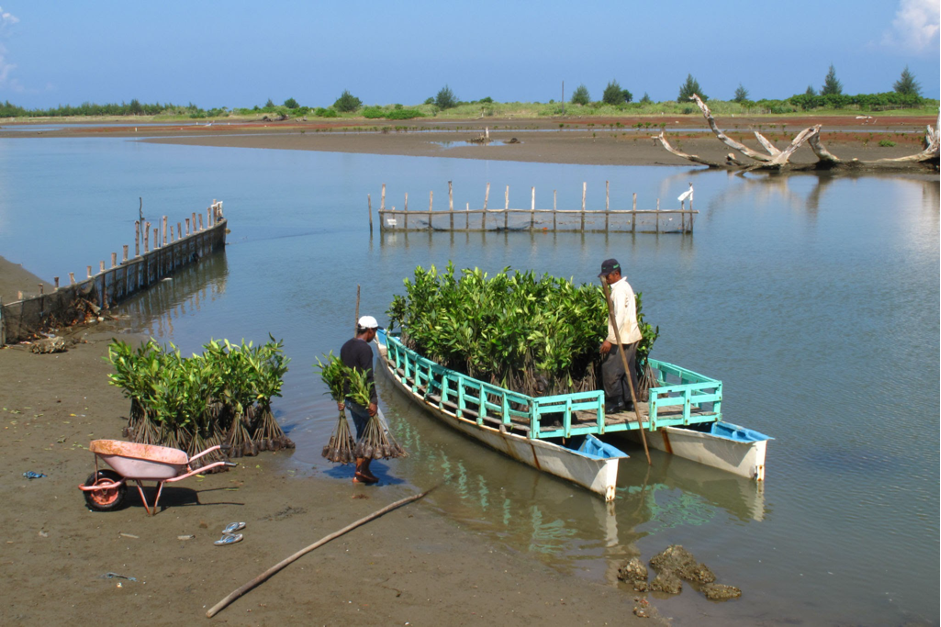
Local community members transporting mangrove saplings (Photo Credit : Getty Images)
The Social Engine: Empowering Coastal Communities
Mangrove conservation is more likely to last when the people living around the forest have a direct stake in protecting it. For coastal communities, restoration is not only an environmental issue. It is also about whether the forest can contribute to a stable livelihood. When healthy mangroves support productive ponds and other sources of income, protecting them becomes part of everyday economic decisions.
- From Destructive Exploitation to Local Stewardship
Mangrove cutting in coastal areas is often linked to limited livelihood options. Silvofishery can change this relationship by giving farmers a reason to maintain the mangroves around their ponds. Healthy mangroves can support water quality, provide natural food sources, and create habitat for fish, shrimp, and crabs. When these functions are maintained, farmers have a stronger incentive to protect the forest from activities that could damage it.
- Diversifying Income and Reducing Financial Risk
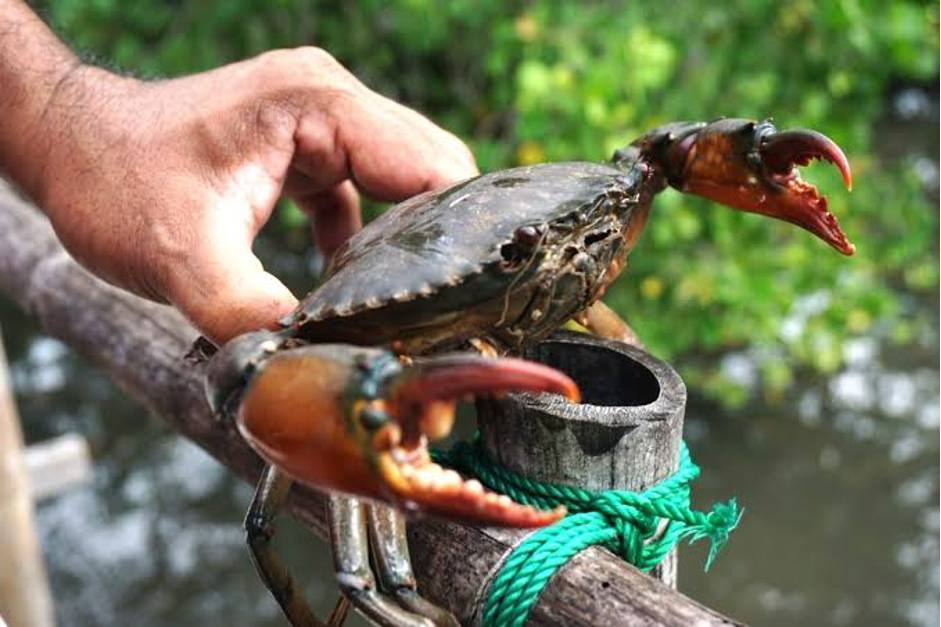
Mud crabs harvested directly from community-managed mangrove ponds (Photo Credit : Mongabay Indonesia)
Silvofishery can also help farmers reduce their dependence on a single commodity. Intensive monoculture systems can expose smallholders to significant financial losses when disease outbreaks, poor water quality, or market price changes affect production. A more diverse system can provide several products, including mud crabs, black tiger shrimp, and milkfish, depending on local conditions and management practices.
This diversification does not eliminate financial risk, but it can provide farmers with more than one source of income and reduce their dependence on a single harvest. For smallholder households, that flexibility can be important when environmental or market conditions change.
- Elevating Women and Cooperative Ownership
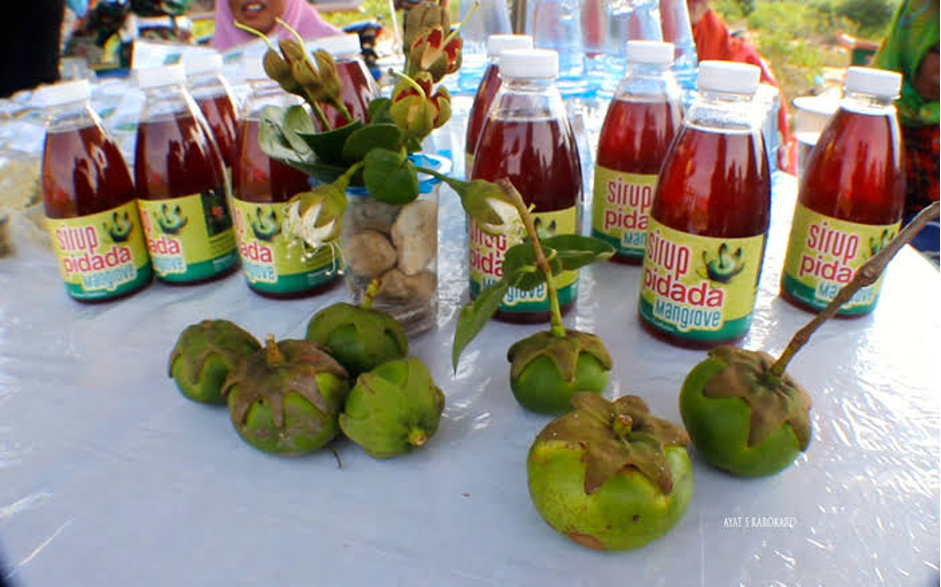
Local women in coastal communities process mangrove fruit (pidada) into commercial syrups (Photo Credit : Mongabay Indonesia)
Women can also play an important role in community-based coastal enterprises, particularly in activities such as processing, product preparation, quality control, and marketing. Where community groups or cooperatives are involved, these activities can create additional opportunities for women to participate in and benefit from the local coastal economy.
The success of silvofishery ultimately depends on more than the design of the pond. It depends on whether communities have a meaningful reason to maintain the mangroves over the long term. When conservation and livelihoods are connected, local farmers are not simply users of the coastal forest. They can become its long-term stewards.
Scaling the Model: Challenges and Opportunities
Silvofishery has clear potential, but expanding the approach across Indonesia will require more than introducing the right pond design. Farmers need secure access to the land they manage, practical technical support, and a market that recognises the value of sustainably produced seafood.
Land tenure is one of the first issues to address. Farmers are more likely to invest time and money in restoring mangroves when they have clear and secure rights to manage the area over the long term. Depending on the location, this may involve customary rights, social forestry arrangements, or other forms of recognised management permits.
Restoring degraded ponds also requires technical knowledge. Reintroducing mangroves into existing aquaculture areas is not simply a matter of planting trees. Pond layout, water depth, tidal exchange, drainage, and the condition of the existing landscape all need to be considered so that both mangroves and aquatic species can thrive.
The final piece is the market. Sustainable production only becomes a viable livelihood when farmers can sell their products at a fair price. Better links between community producers, responsible buyers, and markets that value sustainably produced seafood could help turn environmental benefits into lasting economic returns.
Scaling silvofishery, therefore, is not about applying one model to every coastal village. It is about creating the conditions that allow local communities to develop systems suited to their own environment, resources, and livelihoods.
Profits Rooted in Preservation
Silvofishery offers a practical way to connect mangrove conservation with coastal livelihoods. When farmers benefit from keeping mangroves healthy, restoration becomes part of how they manage their ponds and earn a living, rather than a separate environmental activity.
The approach does not offer a single solution for every coastal community. Its value lies in finding a balance between production and ecological protection, with local farmers playing a central role in managing both. In the right conditions, healthy mangroves can support healthy coastal livelihoods, giving communities a reason to protect the forests that protect them.