How Coastal Communities Build Resilience Through Sustainable Livelihoods
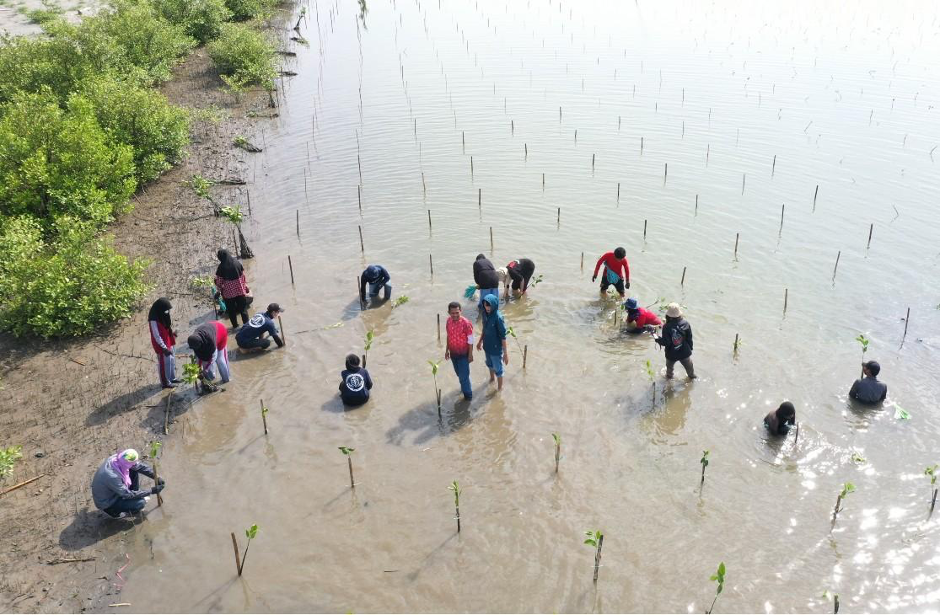
Local residents participate in mangrove restoration activities, helping protect coastlines, support fisheries, and strengthen community livelihoods (Photo Credit : Irfan Saputra/Kanal Desa)
Coastal communities are on the front line of global environmental change. Rising sea levels, extreme weather, coastal erosion, habitat degradation, and declining fish stocks are increasingly affecting the lives of people who depend directly on the ocean and coastal ecosystems. However, the vulnerability of coastal communities is not determined solely by the magnitude of the threats they face.
Two communities may experience the same environmental pressures yet possess very different capacities to endure and recover. The difference often lies in livelihood resilience—the ability of households and communities to sustain their livelihoods, adapt to change, and create new opportunities when traditional ways of living are no longer viable.
Therefore, building coastal resilience requires more than physical infrastructure such as seawalls, breakwaters, or other coastal protection measures. Long-term resilience also depends on healthy ecosystems, diversified livelihoods, strong local institutions, access to markets and finance, and the capacity of communities to learn and adapt. From this perspective, coastal communities should not be viewed merely as groups that need protection from climate change, but as active agents of coastal resilience.
- Diversifying Livelihoods: Creating More Options, Not Simply More Jobs
Coastal communities that rely heavily on a single source of income face significant risks when that source is disrupted. Fishers, for example, may experience declining catches due to seasonal shifts, extreme weather, habitat degradation, rising operational costs, or changing market conditions.
For this reason, livelihood diversification is one of the most important strategies for strengthening resilience. However, diversification is not simply about finding an additional job. Effective diversification should create a portfolio of livelihoods that allows households to shift or adjust their income sources as conditions change.
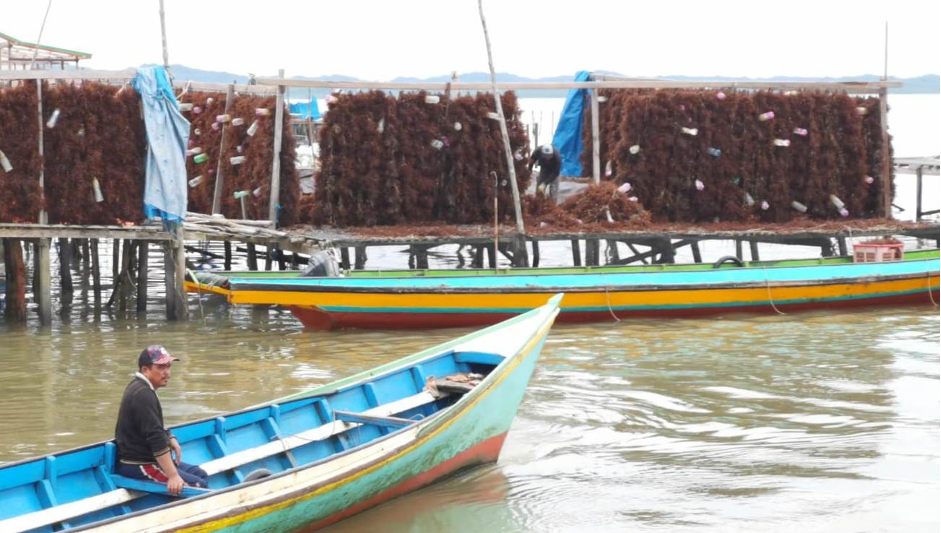
Seaweed farming provides an alternative source of income for coastal households while reducing pressure on wild marine resources (Photo Credit : Radar Tarakan)
These options may include sustainable aquaculture, seaweed farming, community-based ecotourism, fish processing and value-added products, or small businesses connected to coastal value chains. Evidence from small-scale fisheries also shows that income from non-fishing activities can become critically important during poor fishing seasons or when catches decline.
The objective, therefore, is not to move coastal communities away from the sea. Rather, the more sustainable approach is to diversify livelihoods while maintaining the ecological systems that support them. This is essential because livelihood strategies that increase short-term income while accelerating resource exploitation may ultimately increase long-term vulnerability.
- Healthy Ecosystems as Livelihood Infrastructure
Infrastructure is often associated with roads, ports, seawalls, or buildings. Yet for coastal communities, ecosystems are also infrastructure. Mangroves, coral reefs, seagrass meadows, estuaries, and other coastal habitats provide essential ecological functions that directly and indirectly support people’s livelihoods.
Mangroves, for instance, not only reduce wave energy and protect shorelines from erosion but also serve as critical nursery habitats that enhance fisheries productivity. Ecosystem restoration, therefore, should not be viewed solely as a conservation effort—it can also be a livelihood strategy.
Approaches such as mangrove restoration integrated with sustainable aquaculture, ecotourism, or the sustainable harvesting of mangrove-associated products connect ecological recovery with economic opportunity. This is one of the key principles behind Nature-based Solutions (NbS).
Indonesia’s Oceans for Prosperity (LAUTRA) program, for example, explicitly links biodiversity conservation and marine resource management with diversified sustainable livelihoods and improved coastal resilience.
In other words, restoring ecosystems can also mean restoring livelihood security.
- From Resource Users to Resource Stewards
An important shift has taken place in the way coastal development is understood.
Traditional approaches often viewed communities simply as beneficiaries of conservation programs. More progressive approaches recognize them as resource stewards—people who have a direct stake in maintaining the long-term sustainability of natural resources.
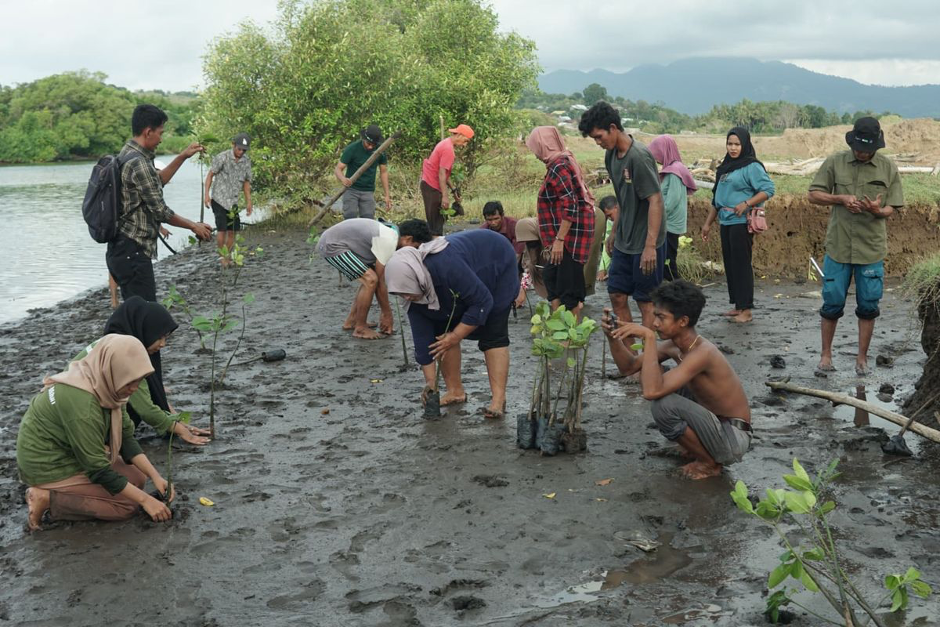
Community-based conservation initiatives empower local residents to become stewards of coastal ecosystems while benefiting from sustainable resource use (Photo Credit : Galan Loh)
This represents a fundamental change in perspective. When communities derive economic benefits from healthy ecosystems, conservation is no longer merely an environmental responsibility—it becomes part of livelihood security.
For example:
- Mangroves → nursery habitat → fisheries productivity → household income
- Healthy mangroves → ecotourism and sustainable products → local income → incentives for conservation
These relationships create what can be described as a positive social-ecological feedback loop. Healthy ecosystems support livelihoods, while well-designed livelihood systems create incentives to protect those ecosystems. Increasingly, the FAO emphasizes the role of small-scale fishing communities as stewards of natural resources, rather than simply beneficiaries of development initiatives.
- Social Capital: The Invisible Infrastructure of Resilience
Resilience is not built through financial resources and technology alone. In many coastal communities, the ability to withstand and recover from shocks depends heavily on social relationships. Trust among community members, fishers’ groups, cooperatives, family networks, women’s groups, and local organizations often serves as an informal safety net during economic or environmental crises.
A study of small-scale fishing households in Tegal, Indonesia, found that households with fewer productive assets relied more heavily on social capital and trust as coping mechanisms. In contrast, households with greater economic assets had more opportunities to experiment with different livelihood options.
This finding highlights an important lesson:
Resilience is not determined only by what people own, but also by the networks they can rely on.
Consequently, livelihood development should strengthen not only individual assets but also collective capacity. Business groups, cooperatives, community-based organizations, women’s associations, and local institutions can help communities access markets, manage natural resources, develop collective enterprises, and respond to crises more effectively.
- Moving Beyond Raw Products: Building Coastal Value Chains
One of the greatest challenges facing coastal communities is not necessarily low production, but rather their position at the bottom of the value chain.
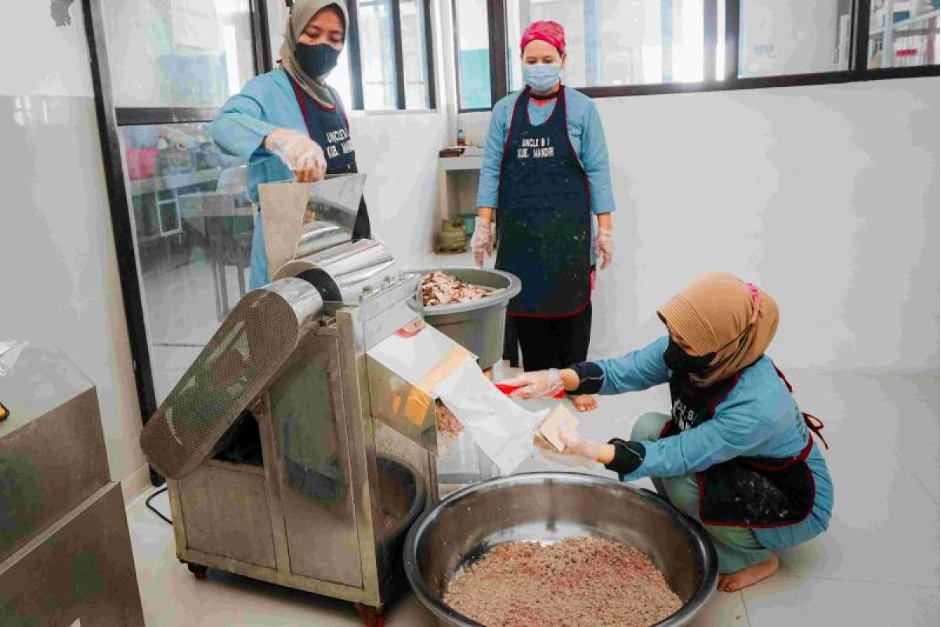
Value-added activities such as seafood processing, packaging, and marketing help coastal communities capture greater economic value from local resources (Photo Credit : BritCham Indonesia)
Fishers and aquaculture farmers often sell fish, shrimp, crabs, or seaweed as raw products, while much of the economic value is generated later through processing -> packaging ->logistics -> branding -> market access.
Strengthening livelihood resilience therefore also involves increasing local value capture through initiatives such as simple cold-chain facilities, product certification, and direct-to-consumer markets.
The FAO promotes similar approaches in Indonesia by integrating small-scale fisheries into broader value chains and expanding access to new market opportunities, including fish-based products.
The key development question should therefore not simply be:
“How can coastal communities produce more?”
Instead, it should be:
“How can coastal communities capture more value from what they already produce?”
- Financial Resilience: From Credit Access to Adaptive Capital
Access to finance is important for coastal communities, but resilience requires looking beyond microcredit alone. Credit itself can become a source of vulnerability if livelihoods are unstable.
A more useful concept is adaptive capital—financial resources that enable households and communities to adjust when conditions change. This may include community savings schemes or cooperative financing mechanisms.
The objective is not merely to provide loans but to create financial room to adapt. For example, when fishers are unable to go to sea for several days because of extreme weather, savings or financial protection mechanisms can prevent households from resorting to harmful coping strategies, such as selling productive assets or accumulating unsustainable debt.
- Resilient Coastal Communities
Within this framework, ecosystem conservation and improved community well-being are not competing objectives. Instead, they reinforce one another.
When coastal ecosystems remain healthy and productive, communities have a stronger natural resource base on which to build their livelihoods. When communities receive fair and sustainable economic benefits from those resources, they have greater incentives to protect and manage them responsibly.
This is the essence of sustainable coastal livelihoods: building communities that can adapt to change without undermining the ecosystems on which their future depends.
-Rika