

Crabs, Birds, and Mudskippers: A Short Guide to Mangrove Wildlife
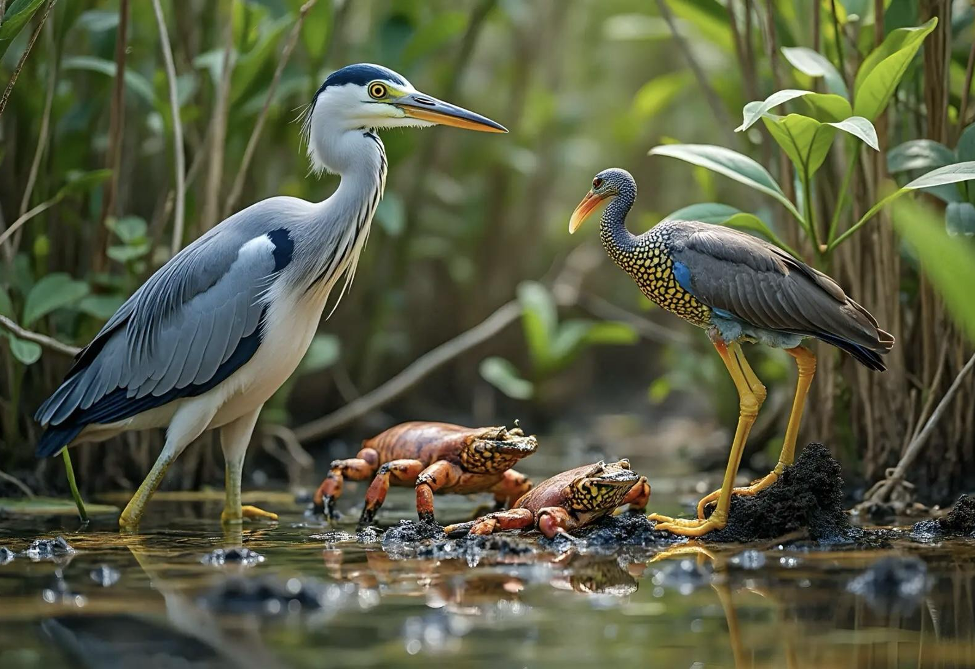
Mangrove forest biodiversity (Photo Credit : Petrichor Thong)
Three groups of animals we often see in mangroves carry an ecological story far greater than their size. As the tide recedes, the mangrove floor slowly transforms into a stage of life. Small holes appear in the mud. A crab emerges, moves quickly, and vanishes back into its burrow. In shallow pools, a mudskipper moves in a way that seems unusual for a fish. Meanwhile, birds begin foraging among mangrove roots and mudflats.
To some, this is merely an interesting sight while visiting a mangrove. To an ecologist, however, crabs, birds, and mudskippers are part of a far more complex system.
Mangroves are not just collections of trees growing by the sea. This ecosystem is a meeting point between land, rivers, the ocean, mud, tides, and diverse organism groups. Root structures, canopies, sediment, water pools, and leaf litter create diverse microhabitats used by wildlife to feed, shelter, grow, and reproduce.
Thus, to understand mangroves, recognizing tree species is not enough. We must also learn to read the animal life moving below, between, and above the mangrove trees.
- Crabs: Small Architects of the Mangrove Floor
Among the most easily found animals in mangrove areas are crabs. Ecologically significant groups include crabs from the family Sesarmidae and fiddler crabs from the family Ocypodidae. They are not merely mud inhabitants; their activities actively influence the structure and function of mangrove sediment.
Sesarmid crabs, for example, heavily utilize leaves and plant parts that fall to the forest floor. Several species carry this litter into their burrows. Consequently, fallen plant material does not just accumulate on the surface, but re-enters the soil system and food web.
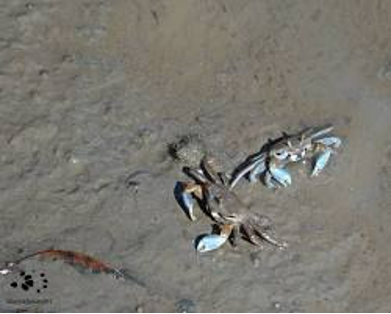
A male fiddler crab displaying its oversized claw beside its burrow on the mangrove mudflats (Photo Credit : Wildlife/Marine Biology)
Meanwhile, fiddler crabs are renowned for their feeding activity on the sediment surface. They scoop up sediment particles to filter organic material, microalgae, and other food sources.
What makes them particularly interesting are the crab burrows themselves. As crabs dig, maintain, and expand their burrows, they alter the physical condition of the sediment. This activity aids in aeration, sediment mixing, and modifies the microenvironment for microorganisms. Due to their ability to modify their physical environment, crabs are often referred to as "ecosystem engineers." In other words, a small hole in the mud is actually a footprint of a much larger ecological process.
Don't just count crabs. In mangrove surveys, crab presence and abundance provide valuable information about habitat condition. However, caution is required: a high crab population does not automatically mean a healthier mangrove. Species abundance is influenced by sediment type, salinity, tidal patterns, food availability, vegetation, predators, and human pressure. Therefore, crab data should be read alongside other ecological indicators.
- Birds: Connecting Mangroves to the Broader Landscape
If crabs offer a glimpse into life on the sediment surface, birds carry the story of the mangrove to a broader scale.
The mangrove canopy offers perching and roosting sites, while mudflats, roots, and shallow waters supply rich feeding grounds. Mangroves also serve as vital stopover sites for migratory birds traveling across continents.
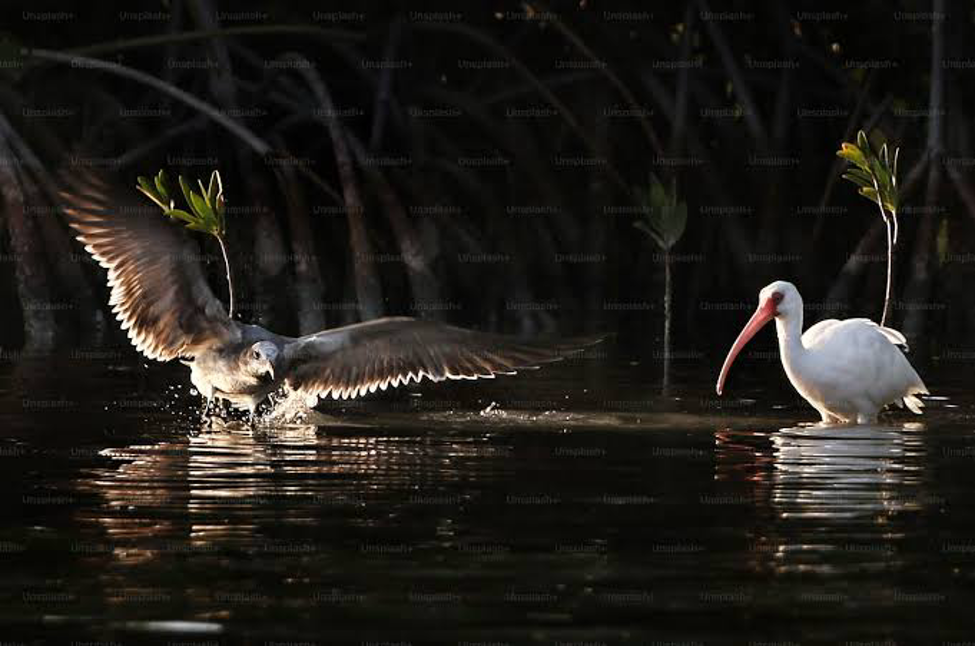
Waterbirds foraging for crabs, fish, and invertebrates along shallow mangrove edges (Photo Credit : Unsplash Wildlife Photography)
Piscivorous (fish-eating) birds utilize shallow waters and mangrove channels, while invertebrate-eating birds search the mud for worms, mollusks, crustaceans, or other small organisms. Birds are not just "visitors"; they are an integral part of the food web.
Birds as indicators. Bird diversity serves as a key component in assessing ecosystem health. Research on mangrove health assessment in the Guangdong conservation area shows that bird diversity can serve as a direct indicator of mangrove ecosystem health. More diverse habitats offer more space and resources for a wider range of bird species.
Yet again, interpretation must not be oversimplified. A mangrove with high bird numbers is not guaranteed to be "healthy." Birds are highly mobile and can utilize multiple habitat types simultaneously. Consequently, species composition, feeding guilds, presence frequency, and community shifts over time are often far more informative than a simple head count.
- Mudskippers: Fish Learning to Live in Two Worlds
There is one mangrove inhabitant that almost always captures visitors' attention: the mudskipper. Belonging to the family Gobiidae, these fish possess remarkable adaptations for life in the intertidal zone.
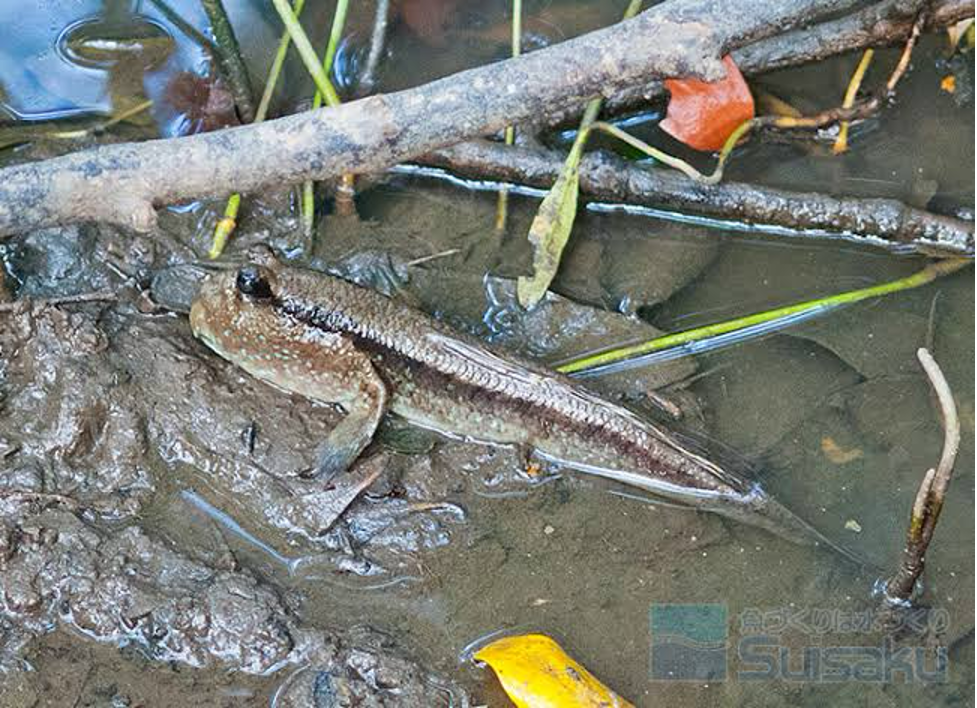
A mudskipper using its modified pectoral fins to move across exposed sediment during low tide (Photo Credit : Suisaku Column)
At low tide, mudskippers rest on the mud surface and move using their pectoral fins. Their physiological adaptations allow them to survive in conditions that would be extreme for most other fish.
One example found in Indonesia is Periophthalmus argentilineatus. Research on this species at Baros Beach, Yogyakarta, highlights adaptations for coping with periods when mangrove habitats dry out and are exposed to air.
Mudskippers are not just morphologically fascinating; they are vital members of the intertidal community with close ties to muddy habitat characteristics and mangrove cover. Research at Bahak Indah, Probolinggo, identified four mudskipper species: Boleophthalmus pectinirostris, Boleophthalmus boddarti, Periophthalmus chrysospilos, and Periophthalmodon schlosseri. Their abundance and presence were significantly higher in habitats with mangrove vegetation compared to unvegetated beaches.
These findings deliver a simple message: mangroves are not just a backdrop for mudskippers—the vegetation is a vital part of their habitat. Recent research on the Aceh coast has even begun analyzing the genetic diversity of Periophthalmus argentilineatus to better understand mudskipper populations across Indonesian mangrove ecosystems.
Field Guide Box: Three Easily Recognized Mangrove Animals
|
Group |
Easily Observable Features |
Commonly Used Habitat |
Ecological Role |
|
Sesarmid Crabs |
Relatively sturdy body; often found near roots and mud surfaces |
Forest floor, root zones, muddy sediment |
Litter processing, bioturbation, organic matter decomposition |
|
Fiddler Crabs |
Males have one oversized claw; active during low tide |
Open mudflats and intertidal areas |
Sediment processing, microalgae and organic material utilization, bioturbation |
|
Mudskippers |
Protruding eyes, moves across mud, capable of staying out of water |
Intertidal mudflats and mangrove edges |
Part of the food web and benthic-intertidal community |
|
Mangrove Birds |
Highly diverse; varied beak and feet shapes tailored to diet |
Canopy, roots, mudflats, water channels |
Predators, consumers, nutrient transporters, and community indicators |
Reading One Ecosystem Through Three Animal Groups
Interestingly, crabs, birds, and mudskippers highlight three distinct layers of mangrove life:
- Crabs → Reading the Sediment: Tied directly to mud conditions, leaf litter, and bioturbation processes.
- Mudskippers → Reading the Intertidal Zone: Presence linked to muddy habitats, tidal cycles, salinity, and mangrove structure.
- Birds → Reading the Landscape: Mobility connects mangroves with open waters, beaches, mudflats, and distant ecosystems.
Together, they offer complementary perspectives on the same ecosystem.
This is why a biodiversity-focused approach is becoming increasingly vital in mangrove assessment. Recent studies emphasize that biodiversity is not merely a "species checklist," but an active part of ecological processes supporting ecosystem functions and services. Habitat structural complexity, interspecies interactions, and connectivity with adjacent habitats are critical to maintaining mangrove functions.
When Mangrove Wildlife Begins to Vanish
Imagine a mangrove that still looks green from a distance. The trees are standing, yet beneath the canopy, crab burrows are scarce. Mudskippers are rarely seen, and foraging birds on the mudflats have thinned out.
Ecosystem health is not defined solely by canopy coverage or tree counts. Mangroves face heavy pressures from land conversion, coastal development, aquaculture, pollution, eutrophication, climate change, and habitat degradation.
Therefore, mangrove monitoring should not stop at asking: "How much mangrove area is left?"
It must also ask: "Who is still living inside it?" and further: "What are these organisms doing for ecosystem function?"
These questions shift our focus from merely measuring vegetation cover to truly understanding ecosystem health.
A mangrove is a home, not just scenery. Walking through a mangrove, we might notice the trees first. But if we pause to observe the mud, roots, water pools, and canopy, a much livelier world reveals itself: a crab moving leaf litter, a mudskipper waiting for the tide, a bird hunting in the mud. Each performs a different activity, yet all are connected through food webs, energy flow, nutrient cycles, and habitat structure.
That is what makes a mangrove a living ecosystem. Perhaps next time we spot a small hole in the mud or a fish "walking" across sediment, we won't see it as ordinary. We are witnessing the mangrove's ecological engine at work.
Notes for Mangrove Observers
If you take a mangrove walk, try recording four simple things:
- Crabs: Species/morphology, burrow count, and burrow locations.
- Mudskippers: Species observed, individual counts, and habitat characteristics.
- Birds: Species, count, activities, and foraging locations.
- Habitat: Sediment condition, water pools, vegetation, marine debris, and human disturbances.
Conducted consistently, these simple notes can evolve into valuable biodiversity data for ecosystem monitoring.
Why This Matters for Coastal Indonesia
Indonesia holds one of the largest mangrove areas in the world, serving as a critical habitat for diverse coastal organisms. However, anthropogenic pressures have caused mangrove loss and degradation across various regions. Consequently, conservation cannot rely on tree planting alone. Preserving habitats, ecological processes, biodiversity, and ecosystem connectivity is just as vital as adding mangrove saplings.
A healthy mangrove is not defined merely by tree density, but by the life thriving within it. To recognize that life, we only need to start with three simple groups.
-Yuni Sulaiman
References
Nagelkerken et al. (2008). The habitat function of mangroves for terrestrial and marine fauna: A review. Aquatic Botany, 89, 155–185.
Kristensen (2008). Mangrove crabs as ecosystem engineers; with emphasis on sediment processes. Journal of Sea Research, 59, 30–43.
Cannicci et al. (2008). Faunal impact on vegetation structure and ecosystem function in mangrove forests: A review. Aquatic Botany, 89, 186–200.
Lee et al. (2014). Ecological role and services of tropical mangrove ecosystems: a reassessment. Global Ecology and Biogeography, 23, 726–743.
Lovelock et al. (2025). Mangrove biodiversity and ecosystem services. Nature Reviews Biodiversity.
Setiawan et al. (2025). Species Diversity of Fiddler Crabs (Uca spp.) in the Mangrove Ecosystem of Duta Coastal, Probolinggo Regency, East Java. Jurnal Kelautan Tropis.
Baderan et al. (2023). Morphological characteristics and biodiversity of mudskipper fish (Periophthalmus: Gobiidae) in mangrove ecosystem of coastal Bay of Tomini, Boalemo. Biodiversitas.
Dewiyanti et al. (2025/2026). Genetic variation of the Mudskipper (Periophthalmus argentilineatus) in the mangrove ecosystem, North Coast of Aceh. Biodiversitas.