Coastal Erosion in Indonesia: Challenges, Policy Context and Nature-Based Solutions
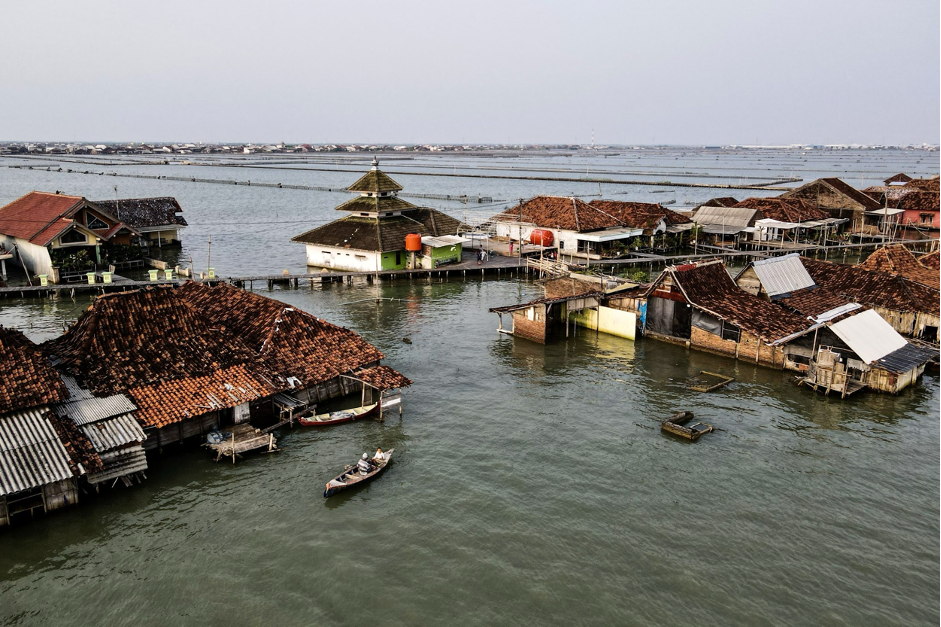
Villagers houses with the surrounding area submerged by sea water at Timbulsloko village in Demak (Photo Credit : Bay Ismoyo/AFP)
As the world’s largest archipelagic nation, Indonesia is defined by its coastlines. Stretching over 95,000 kilometers, these coastal zones are home to dense populations, critical infrastructure, rich ecosystems, and vibrant local economies. However, Indonesia is facing an escalating environmental challenge: coastal erosion. This gradual yet persistent loss of land along shorelines threatens livelihoods, biodiversity, and long-term national resilience.
Coastal erosion in Indonesia is not driven by a single factor. Instead, it results from a complex interaction between natural processes and human activities. Understanding these causes is essential for developing effective and sustainable solutions—particularly nature-based approaches that work with, rather than against, the environment.
Understanding Coastal Erosion
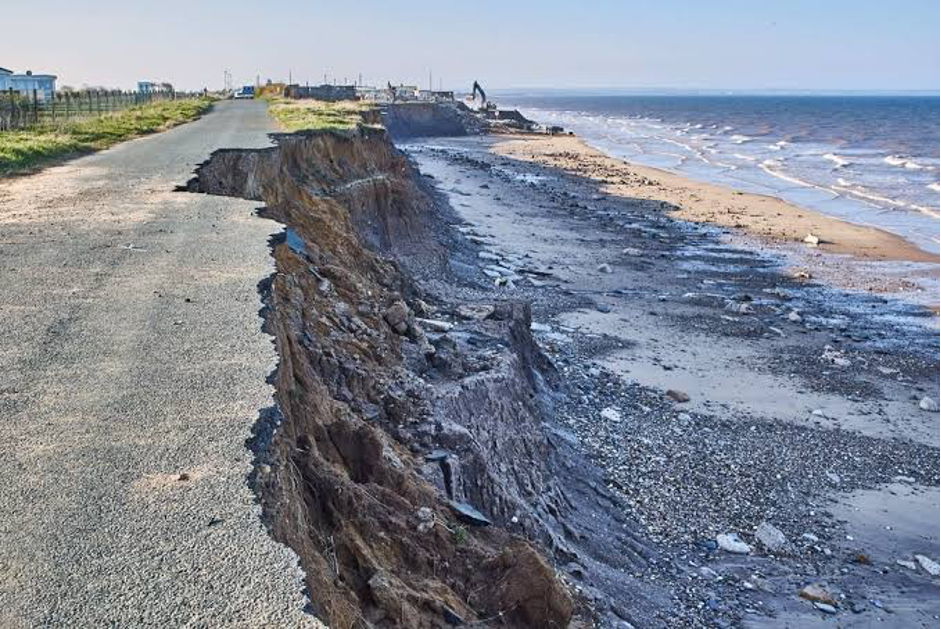
Coastal erosion (Photo Credit : Matthew J Thomas/Shutterstock)
Coastal erosion refers to the wearing away of land along the shoreline due to wave action, currents, tides, and human interference. While erosion is a natural process that helps shape coastlines over time, its acceleration in recent decades has become a serious concern.
In many parts of Indonesia—such as northern Java, Sumatra’s eastern coast, and parts of Kalimantan—entire villages have been submerged or forced to relocate due to shoreline retreat. In some areas, erosion rates exceed several meters per year, dramatically altering landscapes and displacing communities.
Key Driver of Coastal Erosion in Indonesia
- Natural Process
Indonesia’s geographic and climatic conditions make it inherently vulnerable to coastal changes.
- Wave action and ocean currents: Strong monsoon-driven waves continuously reshape coastlines.
- Sea-level rise: Global warming contributes to rising sea levels, intensifying erosion and flooding.
- Storm surges: Extreme weather events increase coastal vulnerability, especially in low-lying areas.
While these processes are natural, their impacts are amplified when combined with human activities.
- Mangrove Loss
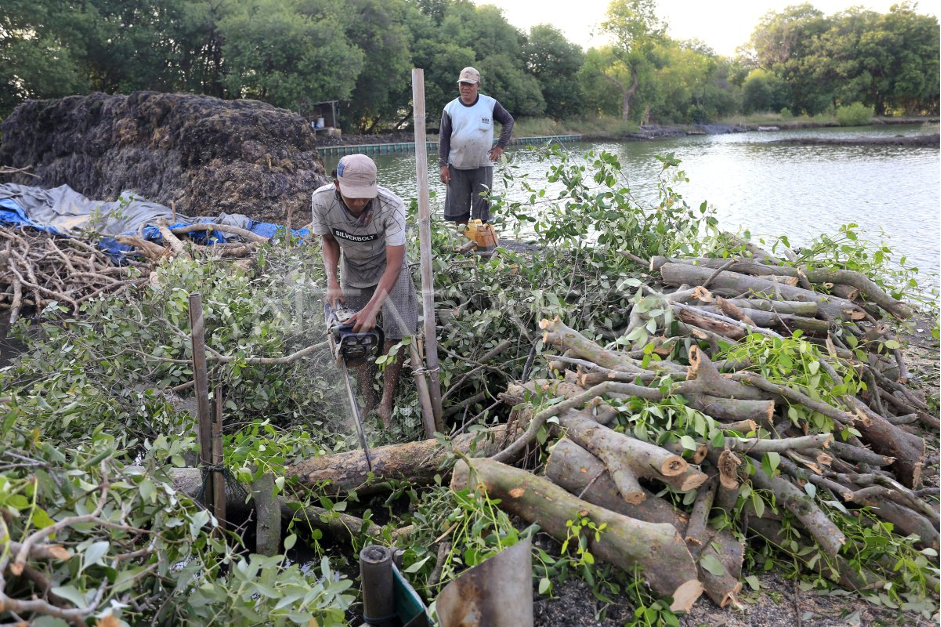
Mangrove deforestation to clear land for fish pond (Photo Credit : Dedhez Anggara/ANTARA FOTO)
Mangroves act as natural coastal barriers, stabilizing shorelines and reducing wave energy. Unfortunately, Indonesia has lost significant mangrove coverage due to:
- Aquaculture expansion (especially shrimp farming)
- Coastal development
- Logging
Without mangroves, coastlines become exposed and fragile, accelerating erosion dramatically.
- Unsustainable Coastal Development
Activities such as sand mining and poorly planned infrastructure disrupt the natural sediment balance. In many cases:
- Seawalls may protect one area but worsen erosion downstream.
- Coastal reclamation projects alter natural currents, leading to unexpected erosion patterns.
- Reduced Sediment Supply
Rivers play a crucial role in delivering sediment to coastal areas. However:
- Dams trap sediment upstream
- Deforestation increases sediment runoff but in unstable ways
- Urbanization changes river flow patterns
This reduces the natural “supply” of sand needed to maintain coastlines.
- Land Subsidence
In cities like Jakarta, excessive groundwater extraction causes the land to sink—a process known as subsidence. When combined with rising sea levels, this makes coastal erosion and flooding significantly worse.
Impacts of Coastal Erosion
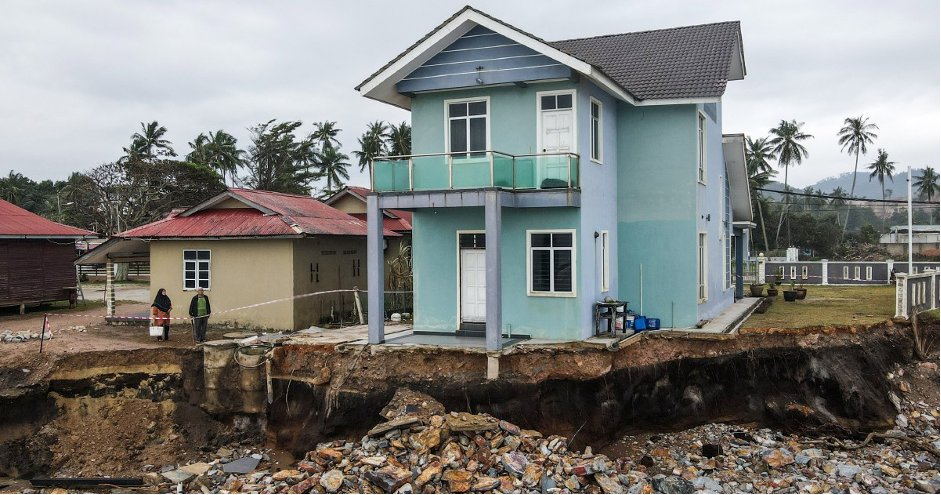
The owner of a blue bungalow in Kampung Tanjung that was affected by coastal erosion, has been forced to relocate and stay at a nearby chalet for the past five days (Photo Credit : GHAZALI KORI/NSTP)
The consequences of coastal erosion in Indonesia are wide-ranging:
- Loss of land: Homes, farms, and infrastructure disappear.
- Economic damage: Fisheries, tourism, and local businesses suffer.
- Environmental degradation: Critical habitats like mangroves, coral reefs, and wetlands are destroyed.
- Social displacement: Communities are forced to relocate, often with limited resources.
In many cases, the poorest communities are the most affected, making coastal erosion not just an environmental issue but also a social justice concern.
Policy Landscape in Indonesia
Indonesia has established several frameworks to address coastal challenges:
- Undang-Undang No. 27 Tahun 2007 (revised by Law No. 1/2014), which promotes sustainable coastal management
- RZWP3K (Rencana Zonasi Wilayah Pesisir dan Pulau-Pulau Kecil), guiding spatial use of coastal areas
- National Mangrove Rehabilitation Program, targeting large-scale ecosystem restoration
These policies open space for collaboration between government and private sector in implementing sustainable coastal solutions
Towards Sustainable Solutions
Nature-Based Solutions: A Sustainable Approach
Traditional responses to coastal erosion often rely on “hard” engineering solutions like seawalls and concrete barriers. While sometimes necessary, these approaches can be expensive, short-lived, and environmentally harmful.
Nature-based solutions offer a more sustainable alternative by restoring and working with natural systems.
- Mangrove Restoration
Replanting and protecting mangrove forests is one of the most effective strategies.
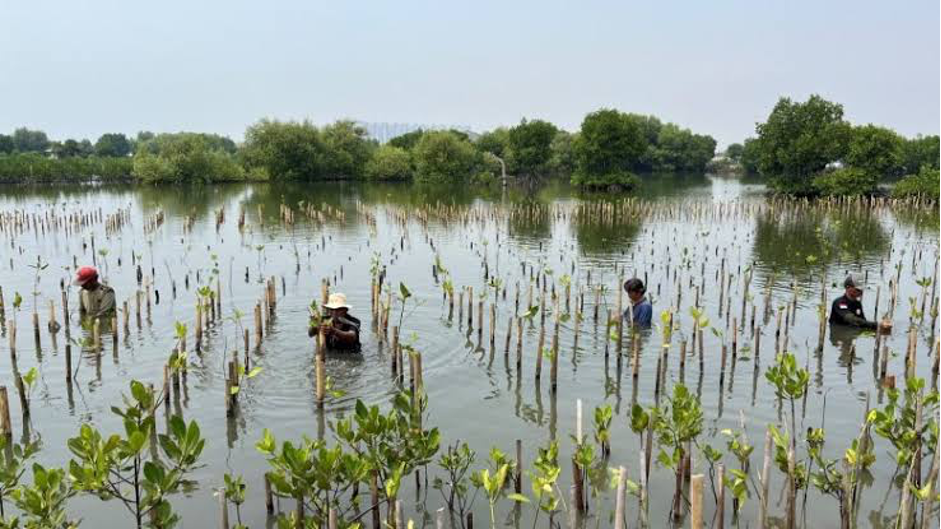
Local residents plant mangroves at a government conservation site in the Teluk Naga area of North Jakarta (Photo Credit : World Bank)
Benefits:
- Reduce wave energy by up to 70–90%
- Trap sediments and build land naturally
- Provide habitat for fish and wildlife
- Support local livelihoods (e.g., eco-tourism, fisheries
Successful projects in Java and Bali have shown that restored mangroves can significantly slow erosion while benefiting communities.
- Living Shorelines
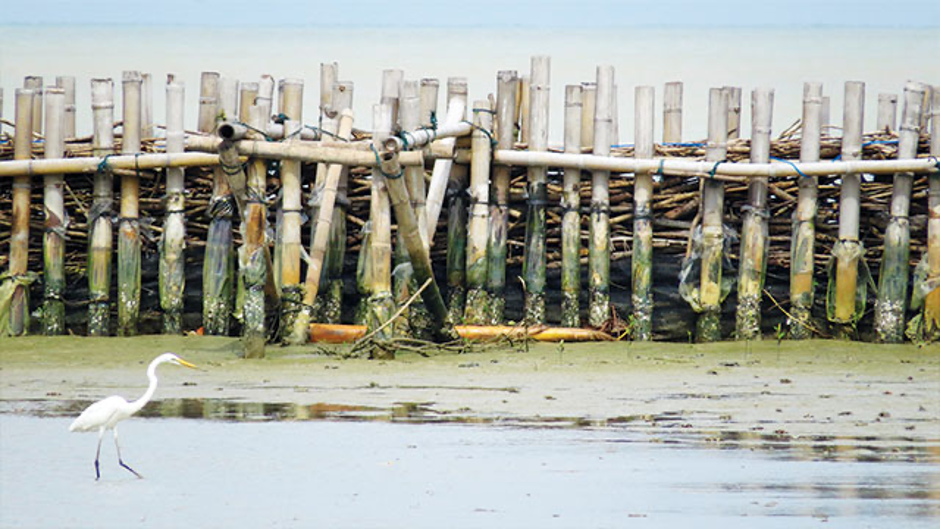
Sediment trap structure, Timbulsloko Village, Demak, Central Java (Photo Credit : Apri Susanto)
Living shorelines combine natural elements like vegetation, sand, and biodegradable structures to stabilize coasts.
Examples include:
- Bamboo fences that trap sediment
- Seagrass planting to reduce wave energy
- Natural fiber barriers that degrade over time
These solutions adapt to environmental changes and often become stronger over time.
- Coral Reef Restoration
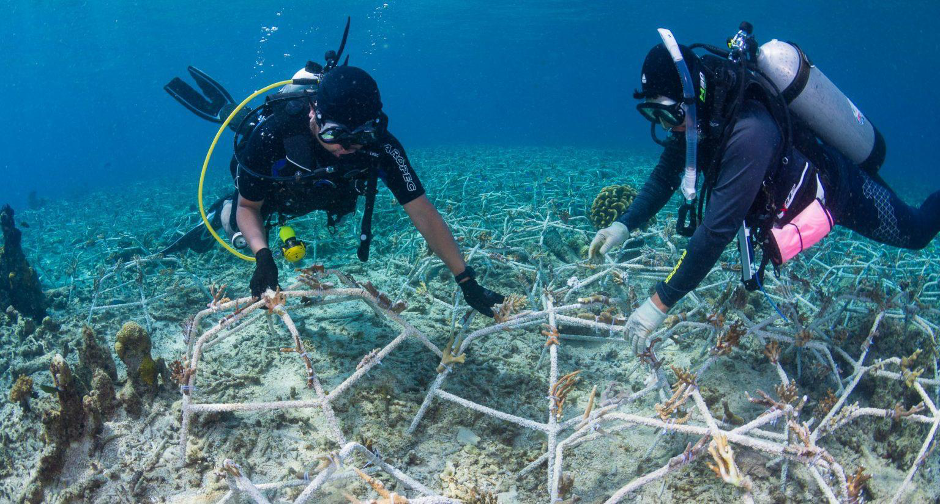
Coral reef restoration (Photo Credit : Indo-Pacific Films)
Healthy coral reefs act as underwater barriers, reducing wave force before it reaches the shore.
Efforts include:
- Coral transplantation
- Artificial reef structures
- Protection from destructive fishing practices
Restored reefs not only protect coastlines but also enhance marine biodiversity and tourism.
- Sustainable Coastal Management
Long-term success requires integrated planning:
- Limiting sand mining
- Regulating coastal development
- Protecting upstream ecosystems (like forests and rivers)
- Promoting community-based conservation
Local involvement is critical—communities that depend on coastal resources are often the best stewards of the environment.
- Hybrid Approaches
In some cases, combining natural and engineered solutions works best.
For example:
- A small seawall paired with mangrove restoration
- Breakwaters designed to encourage sediment buildup
These hybrid systems balance immediate protection with long-term sustainability.
Challenges in Implementation
Despite their benefits, nature-based solutions face obstacles:
- Initial time investment: Ecosystems take time to recover
- Funding limitations: Long-term projects require sustained investment
- Policy gaps: Weak enforcement of environmental regulations
- Community awareness: Not all stakeholders understand the value of natural solutions
Overcoming these challenges requires collaboration between the government, scientists, NGOs, and local communities.
Conclusion
Coastal erosion in Indonesia is a pressing and complex issue, driven by both natural forces and human activities. While traditional engineering solutions offer short-term relief, they often fail to address the root causes.
Nature-based solutions—such as mangrove restoration, living shorelines, and coral reef protection—provide a more sustainable and resilient path forward. By working with nature rather than against it, Indonesia can protect its coastlines, preserve biodiversity, and support the millions of people who depend on these vital ecosystems.
The future of Indonesia’s coasts depends not only on innovative solutions but also on collective action. Protecting these shorelines means safeguarding the nation’s environmental, economic, and cultural heritage for generations to come.