Beyond the Coast: How Maluku’s Sasi System Protects Marine Life and Community Bonds
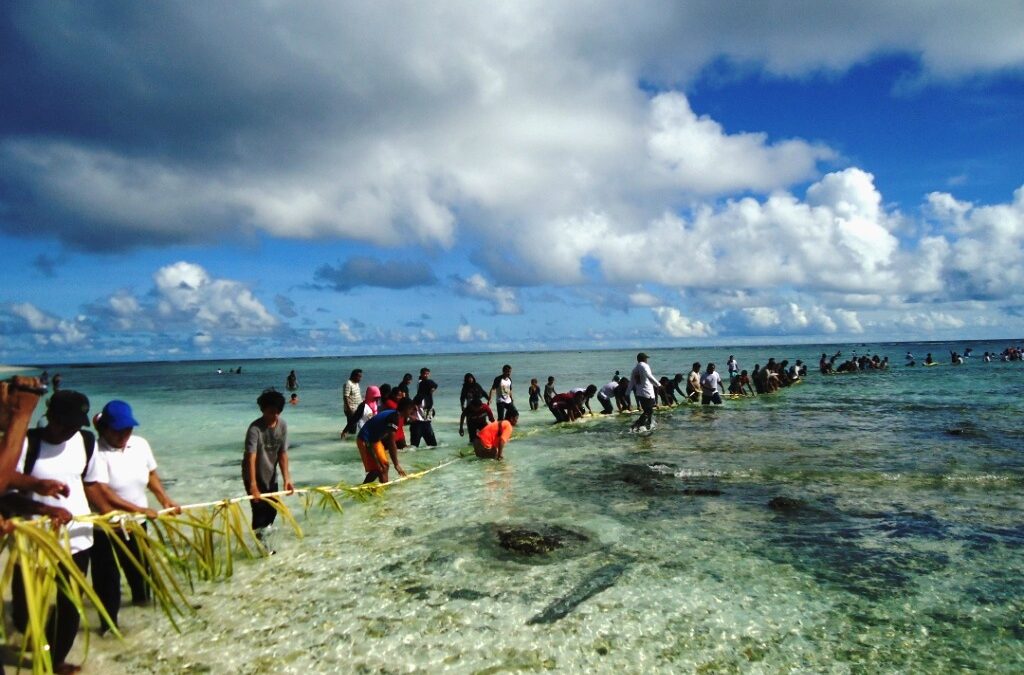
Customary elders and community members gathering on the shore in Maluku to conduct sacred rituals marking the opening (buka sasi) or closing (tutup sasi) of a protected marine zone (Photo Credit : The Guardian - Traditional Fisheries and Customary Law Archives)
Indonesia is home to thousands of coastal communities whose livelihoods, food security, and cultural identities are closely connected to the sea. For small-scale fishers, seafood sellers, and coastal households, healthy marine ecosystems are essential to both economic survival and community well-being. However, overfishing, destructive fishing practices, pollution, and increasing economic pressures continue to challenge the sustainability of Indonesia’s coastal resources.
In Maluku, an archipelago in eastern Indonesia, a traditional practice known as sasi offers an important example of how local communities can protect natural resources while maintaining social relationships. Rooted in customary law, sasi establishes rules governing when and how natural resources may be harvested. In marine environments, sasi laut can temporarily restrict the collection of particular species or the use of designated fishing grounds, allowing resources time to recover.
Research by Mantjoro (1996) and Harkes and Novaczek (2002) identifies sasi as a community-based resource management institution supported by customary organizations, local resource-use arrangements, and social relationships among community members. Its significance extends beyond environmental protection: sasi demonstrates how collective responsibility and local knowledge can help coastal communities manage shared resources.
Understanding Sasi: A Tradition of Responsible Resource Management
Sasi is a customary system found in parts of eastern Indonesia, particularly Maluku. It establishes temporary prohibitions on harvesting certain natural resources, including agricultural products, forest resources, and marine species. The rules vary between communities according to local traditions, resource conditions, and customary institutions.
In marine areas, sasi laut may regulate the harvesting of economically important species such as sea cucumbers and topshells, which are valued in local and commercial markets. During a closed period, harvesting the designated resource is prohibited. Once the community-authorized opening takes place, harvesting can resume according to applicable customary rules.
In the Kei Islands of Maluku, sasi has been used to manage the harvesting of Trochus niloticus, commonly known as topshell. Thorburn (2000) examined how this system operates within local customary institutions and how its effectiveness can be affected by conflicts over marine territories, commercial interests, and government regulations.

Trochus niloticus topshell marine mollusk shell (Photo Credit : H. zell)
The practice illustrates a fundamental principle of sustainable resource management: natural resources must be given opportunities to replenish rather than being harvested continuously to meet immediate demand.
Sasi is not identical across every village, nor does it guarantee ecological recovery in every situation. Its effectiveness depends on the species being managed, the duration of restrictions, community compliance, and the ability to prevent unauthorized harvesting. Nevertheless, it offers a valuable locally grounded approach to managing marine resources.
Protecting Marine Life and Supporting Coastal Livelihoods
For Indonesia’s small-scale fishing communities, the health of marine ecosystems directly influences household income and food security. When fish populations decline or valuable marine species become scarce, fishers may need to travel farther, spend more on fuel, or accept lower catches.
Temporary harvesting restrictions can help address some of these pressures by allowing targeted species time to grow and reproduce. When combined with appropriate monitoring and effective enforcement, these closures can contribute to more sustainable harvesting practices.
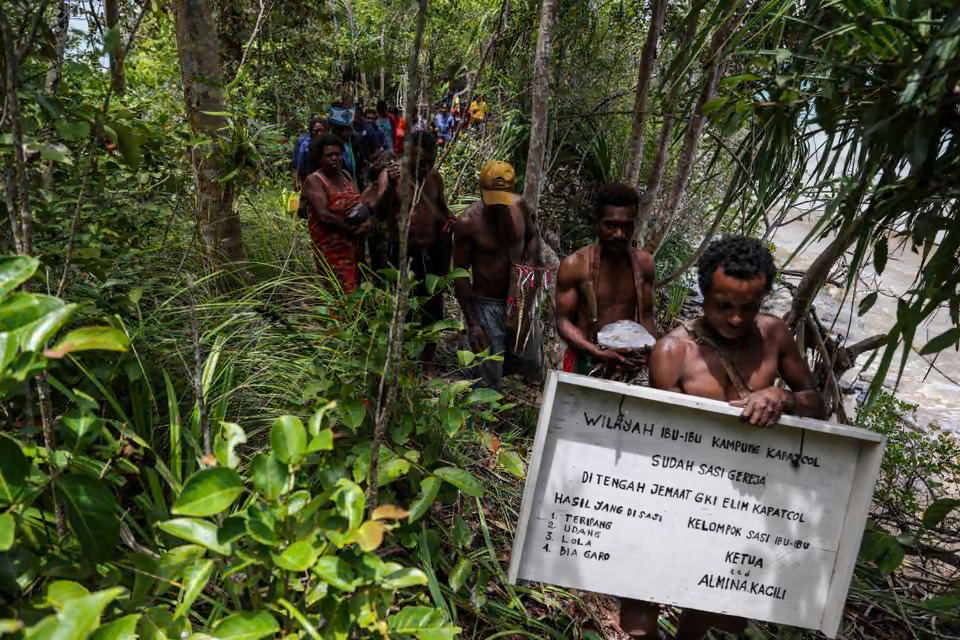
Local villages hold up Sasi boards indicating that fish and marine animals can be collected (Photo Credit : Garry Lotulung)
Research by Harkes and Novaczek (2002), which examined sasi across villages in Central Maluku, considered both biological and social sustainability. Their findings highlighted the importance of strong customary institutions in maintaining the resilience of the system.
The connection between conservation and livelihoods is particularly important in Maluku, where many coastal households depend on small-scale fisheries and marine resources for daily income. Protecting these resources is not simply an environmental objective; it is also an investment in the long-term stability of local economies.
However, sasi alone cannot resolve every threat facing coastal ecosystems. Marine pollution, coral reef degradation, habitat destruction, and unsustainable fishing outside customary management areas require additional measures. Its greatest potential lies in complementing broader fisheries management, habitat protection, and community-led environmental initiatives.
How Sasi Strengthens Social Bonds in Coastal Communities
One of sasi’s most distinctive features is its role in strengthening relationships among community members. Coastal resource management often involves people with different economic interests, including fishers, seafood traders, processors, and households that depend on shared marine resources.
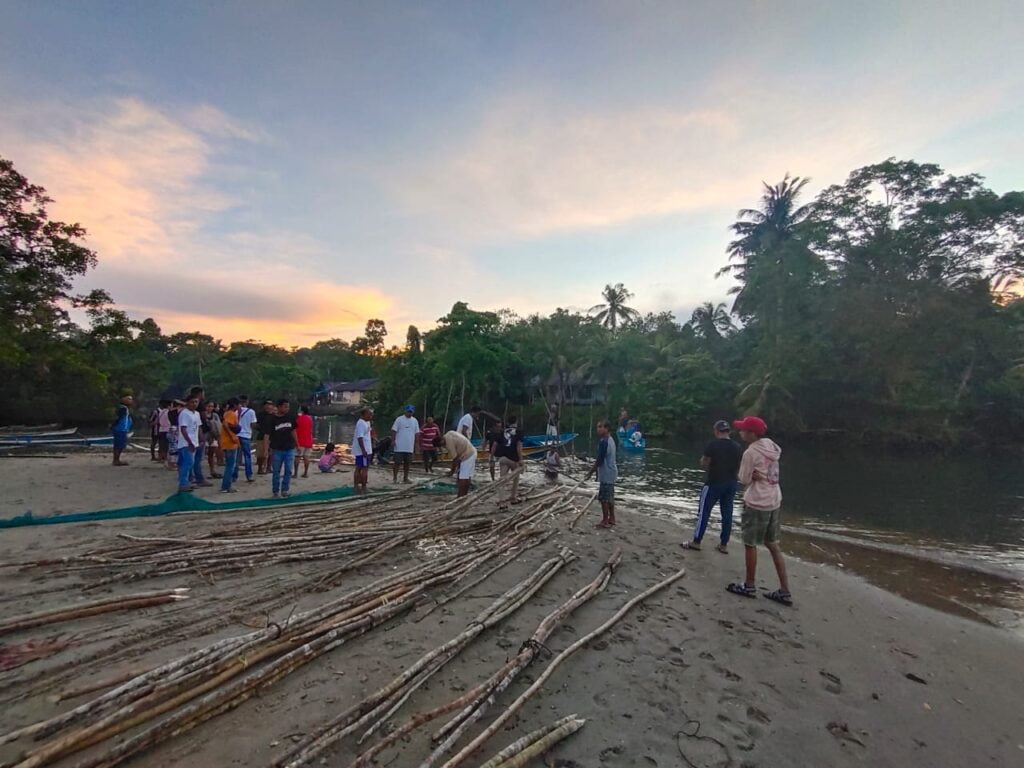
Preparation of Sasi Laut ceremony (Photo Credit : Y. Lewerissa)
Without agreed rules, competition for valuable catches can create disputes and encourage harvesting that prioritizes immediate profits over long-term sustainability. Sasi provides a customary framework through which communities can establish expectations, regulate access, and share responsibility for resource management.
Traditional leaders and local customary institutions help communicate and uphold these rules. In some communities, local guardians known as kewang also play a role in monitoring compliance and protecting customary resources. Community participation can reinforce a shared understanding that the sea is a resource whose long-term value depends on collective care.
Mantjoro (1996) identified established community organizations and the cultural value attached to relationships among fishers as important elements supporting the sasi system. This suggests that conservation can be strengthened when environmental rules are embedded in relationships of trust, mutual responsibility, and respect for customary practices.
These social connections matter because coastal livelihoods rarely operate in isolation. A reduction in catches can affect fish sellers, processors, and other households throughout the local economy. Similarly, effective resource management can benefit a wider network of people when marine resources remain productive.
Sasi therefore demonstrates that protecting marine ecosystems can also mean protecting the relationships that sustain coastal communities.
Real Challenges Facing Sasi in Modern Indonesia
Despite its cultural and environmental significance, sasi faces challenges as coastal communities respond to changing economic conditions, commercial fishing, and modern governance systems.

Mike Tison Mangar collects lobsters from the bow of a boat during the breaking of Sasi (Photo Credit : Garry Lotulung)
One major challenge is the pressure to generate immediate income. For households that rely on daily fishing earnings, a temporary harvesting ban can create financial difficulties, especially when alternative livelihoods are limited. Conservation measures are more likely to remain effective when communities understand their long-term benefits and receive support in managing short-term economic needs.
Another challenge is the management of shared marine territories. Local customary restrictions may be difficult to enforce when fishers from outside a village enter the area or when neighboring communities disagree about resource boundaries. Thorburn (2000) documented conflicts surrounding marine resource management in the Kei Islands, illustrating how customary systems can be affected by competing claims and inconsistent government policies.
Research from Kaimana, West Papua, also shows that traditional conservation systems can change as economic relationships evolve. Patriana et al. (2016) found that the commercialization of sasi in their study area affected the distribution of benefits and could disadvantage less powerful community members, including women.
This finding is an important reminder that preserving a tradition is not enough on its own. Resource management must also consider who participates in decision-making, who receives the economic benefits, and whether restrictions affect different households fairly.
For sasi to remain relevant, its environmental objectives must be supported by transparent decision-making, equitable access to resources, and meaningful participation from the people whose livelihoods depend on them.
Integrating Traditional Knowledge with Modern Coastal Management
Sasi offers valuable lessons for contemporary coastal management in Indonesia, particularly when customary institutions work alongside scientific research, local government, and wider conservation programs.
Local communities possess knowledge of seasonal changes, fishing practices, customary boundaries, and the social relationships that influence resource use. Marine scientists can complement this knowledge through ecological monitoring, species assessments, and research into the effectiveness of harvesting restrictions.
Village governments and relevant authorities can support these efforts by helping clarify responsibilities, coordinating action across customary boundaries, and ensuring that community-based measures are consistent with applicable fisheries and environmental regulations.
Inclusive participation is equally important. Women involved in seafood processing and selling, younger residents, small-scale fishers, and households with limited economic resources should have opportunities to contribute to decisions that affect their livelihoods. Their experiences can reveal practical challenges and help ensure that conservation benefits are distributed more fairly.
Novaczek et al. (2001), in their institutional analysis of sasi laut in Maluku, highlighted the importance of supporting community-based management institutions. Their work reinforces the value of strengthening local capacity rather than treating customary practices as separate from modern resource governance.
The aim should not be to replace traditional knowledge with external systems, but to combine community experience with the resources and technical support needed to protect marine ecosystems effectively.
Lessons for Coastal Communities Across Indonesia
Although sasi is closely associated with Maluku, its underlying principles are relevant to coastal communities throughout Indonesia. Communities in different regions have their own customary practices and local approaches to managing shared resources. These systems should not be treated as interchangeable, but they can offer complementary lessons about environmental stewardship and collective responsibility.
The experience of sasi highlights several important principles: harvesting restrictions need to reflect local ecological conditions, communities must have a meaningful role in establishing and monitoring rules, and conservation should account for the economic realities of coastal households.
Environmental initiatives are also more likely to endure when residents recognize their benefits and feel that management decisions are fair. Community participation can build a sense of ownership, while cooperation between customary institutions and government authorities can help address challenges that extend beyond village boundaries.
For coastal development and conservation initiatives, this means that success should not be measured solely by the area protected or the number of activities conducted. It should also consider the condition of marine resources, the sustainability of local livelihoods, and the strength of community participation.
Conclusion
Maluku’s sasi system demonstrates that marine conservation and community well-being are closely connected. By regulating when resources can be harvested, customary practices can help reduce pressure on marine life while reinforcing cooperation, cultural identity, and shared responsibility.
However, sasi is not a complete solution to Indonesia’s coastal challenges. Its continued effectiveness depends on fair governance, community participation, appropriate enforcement, and support for households affected by harvesting restrictions.
The wider lesson is that sustainable coastal management must consider both the environment and the people who depend on it. When traditional knowledge is respected and combined with effective modern management, coastal communities can strengthen their ability to protect marine resources for future generations.
Ultimately, protecting the sea means more than preserving biodiversity. It also means sustaining the livelihoods, traditions, and social bonds that make coastal communities resilient. Maluku’s experience reminds us that lasting conservation begins when people recognize that the future of their community is inseparable from the future of the ocean.
References
Harkes, I., & Novaczek, I. (2002). Presence, performance, and institutional resilience of sasi, a traditional management institution in Central Maluku, Indonesia. Ocean & Coastal Management, 45(4–5), 237–260. https://doi.org/10.1016/S0964-5691(02)00057-1
Mantjoro, E. (1996). Traditional management of communal-property resources: The practice of the Sasi system. Ocean & Coastal Management, 32(1), 17–37. https://doi.org/10.1016/S0964-5691(96)00013-0
Novaczek, I., Harkes, I. H. T., Sopacua, J., & Tatuhey, M. D. D. (2001). An institutional analysis of sasi laut in Maluku, Indonesia. The WorldFish Center. https://hdl.handle.net/20.500.12348/2333
Patriana, R., Adiwibowo, S., Kinseng, R. A., & Satria, A. (2016). The dynamics of sasi in Kaimana: The institutional change over traditional marine resource management. Sodality: Jurnal Sosiologi Pedesaan, 4(3). https://doi.org/10.22500/sodality.v4i3.14435
Thorburn, C. C. (2000). Changing customary marine resource management practice and institutions: The case of sasi lola in the Kei Islands, Indonesia. World Development, 28(8), 1461–1479. https://doi.org/10.1016/S0305-750X(00)00039-5