

How Mangrove Canopies Regulate Temperature and Microhabitats in Coastal Wetlands
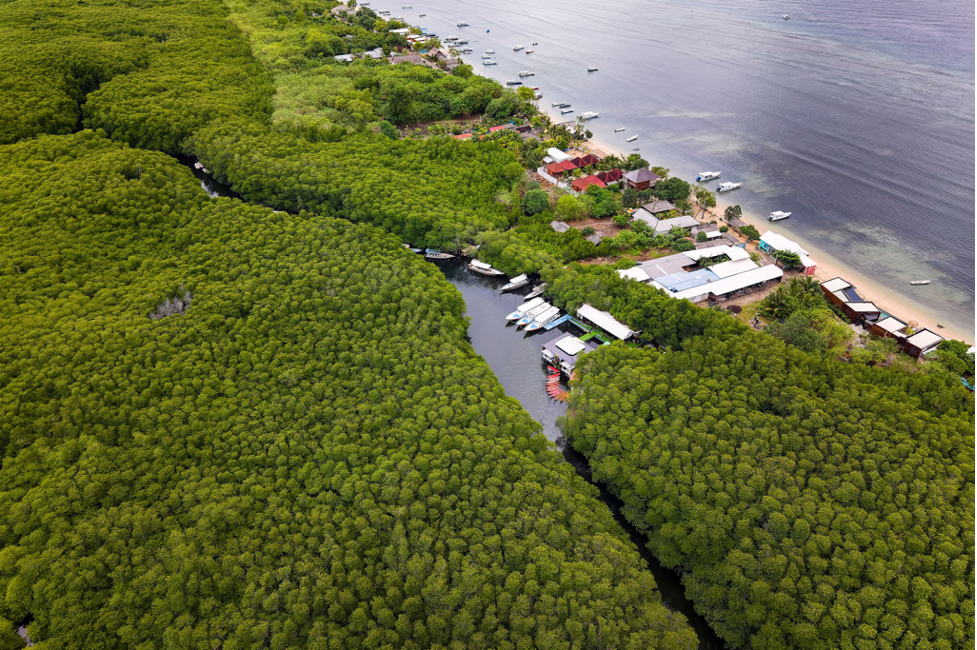
Dense mangrove canopy in Nusa Lembongan Indonesia (Photo Credit : WhitcombeRD/Getty Images)
Across more than 17,000 islands, Indonesia is home to roughly one-fifth of the world’s mangrove forests—stretching over 3.3 million hectares from Sumatra and Kalimantan to Papua. Most people know mangroves for blocking big waves and storing carbon. However, their thick, leafy tops—known as the canopy—also do a quieter, everyday job: they act like a giant natural umbrella and air conditioner that keeps coastal life alive.
Nature’s Coastal Air Conditioner
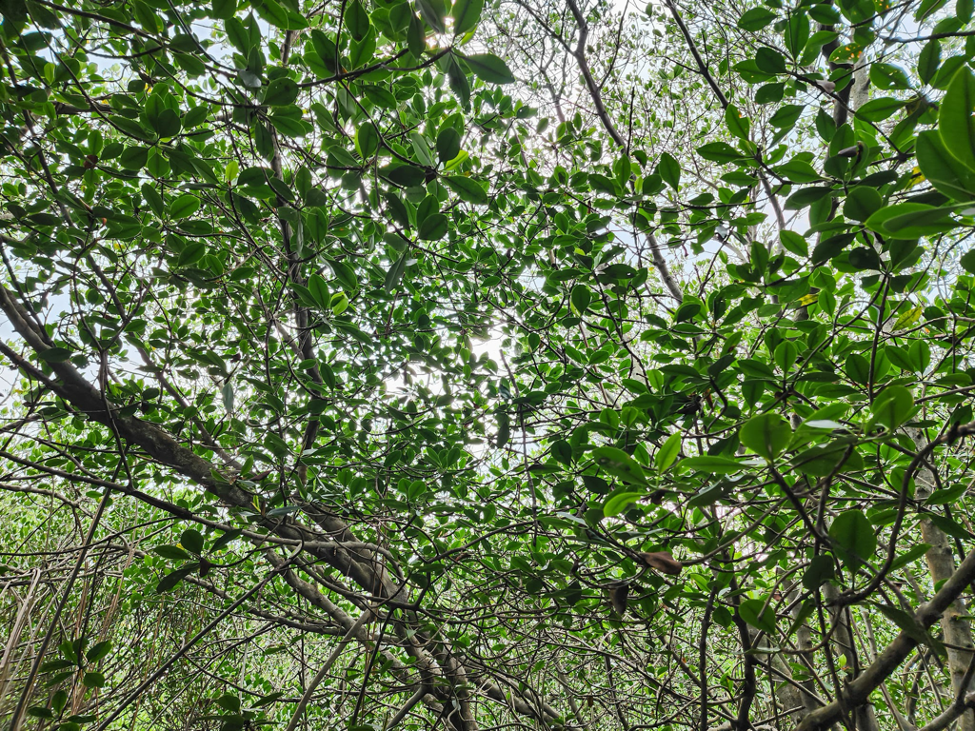
Thick mangrove leaves filtering harsh tropical sunlight (Photo Credit : ArYu Photography/Getty Images)
Because Indonesia sits right on the equator, the tropical sun beats down fiercely on open coastlines. On bare, unshaded mudflats—such as along the northern coast of Java (Pantura)—the midday ground temperature can easily climb past 40°C (104°F). That extreme heat dries out the mud and leaves behind thick salt crusts that quickly kill small coastal creatures.
A healthy mangrove canopy cools the coast in three simple ways:
- Blocking Harsh Sunlight: Thick layers of waxy green leaves soak up and bounce back up to 95% of the sun's rays before they hit the ground. Because of this heavy shade, the air and mud beneath the trees stay 3°C to 7°C cooler than open beaches just a few meters away.
- Releasing Cool Moisture: Just like humans sweat to cool down, mangrove trees pull water up through their roots and release cool moisture into the air through tiny pores in their leaves. This keeps the forest air fresh and humid even during Indonesia’s dry season (musim kemarau).
- Trapping Warmth at Night: After sunset, that same leafy roof acts like a blanket, holding in the day's gentle warmth so the forest doesn't get too cold overnight. This keeps temperatures steady around the clock.
Building Stacked Homes for Wildlife
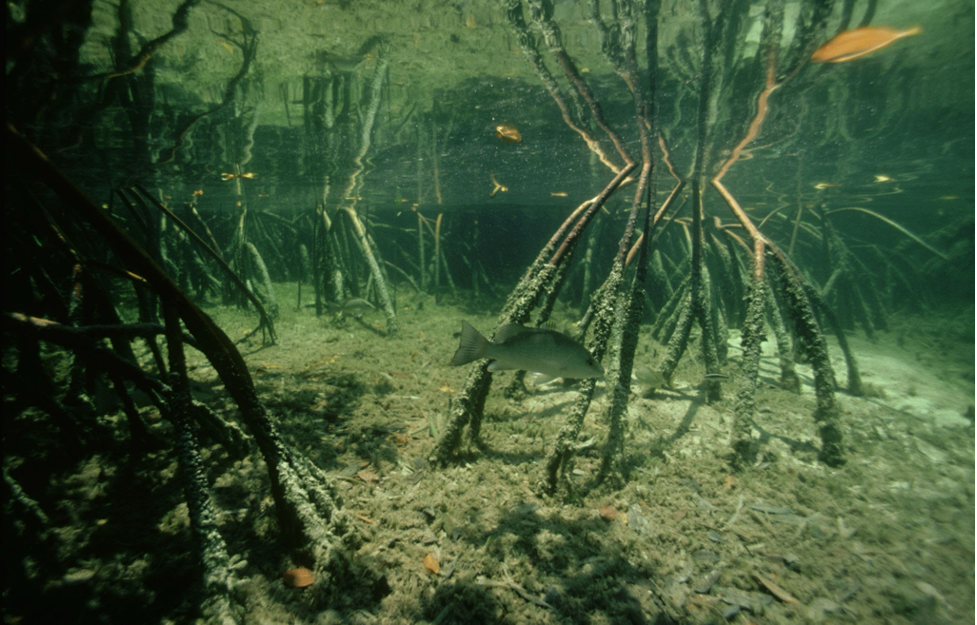
Underwater mangrove roots acting as a safe nursery for young fish (Photo Credit : Mark Deeble/Getty Images)
By softening the harsh weather, a mangrove forest creates three distinct "floors" or living spaces—called microhabitats—from the sunny treetops down to the muddy water below.
|
Forest Layer |
What It Feels Like |
Who Lives Here in Indonesia |
|
The Sunny Treetops |
Bright sunlight, steady sea breezes, and warmer air |
Coastal birds like storks and egrets rest and hunt here, while fruit bats visit at dusk to feed on mangrove flowers. |
|
The Shady Middle |
Dappled sunlight, calm winds, and cool, damp air |
Wild orchids, ferns, tree frogs, and monitor lizards (biawak) use this sheltered middle zone to stay out of the midday heat. |
|
The Muddy Root Zone |
Deep shade, cool mud, gentle water currents, and less salty water |
Baby shrimp, mud crabs, mudskippers, and colorful fiddler crabs hide among the tangled roots while they grow. |
Shade also keeps the seawater around the roots from evaporating too fast. Without shade, the remaining water gets overly salty, which stresses or kills young fish. By keeping the water cool and balanced, mangrove roots serve as a safe "nursery" for young seafood before it swims out to the open ocean.
Why This Matters in Everyday Indonesian Life
We can see just how important mangrove shade is by looking at what happens across Indonesia when these trees are cut down—especially to build open fish and shrimp ponds (tambak) in places like Central Java, East Java, and Kalimantan.
- Healthier Fish and Shrimp Farms: When farmers clear all the mangroves to dig open ponds, the midday sun heats the water too much. Warm water holds less oxygen, which stresses farmed shrimp and makes them catch deadly diseases. To fix this, many farmers in West Java and South Sulawesi now practice silvofishery (empang parit)—planting rows of mangroves inside and around their ponds to keep the water naturally cool and boost their harvests.
- Cooling Down Hot Coastal Cities: In crowded, fast-warming coastal cities like North Jakarta (Muara Angke and Pantai Indah Kapuk) and Surabaya (Wonorejo), remaining mangrove parks act as giant green cooling zones. Neighborhoods next to these forests feel noticeably cooler in the afternoon than areas packed only with concrete and asphalt.
- Why Tree Planting Sometimes Fails: Knowing how shade works also explains why planting baby mangroves on wide, empty mudflats often fails. Without older trees overhead to block the sun, young seedlings can literally bake to death in the hot, salty mud before they ever get a chance to grow.
Protecting Indonesia’s mangrove canopies is about much more than just planting trees. Keeping this leafy roof intact protects local fisheries, helps coastal farmers succeed, and keeps seaside towns cool and livable.