Ghost Crabs: Fast Runners of Sandy Beaches
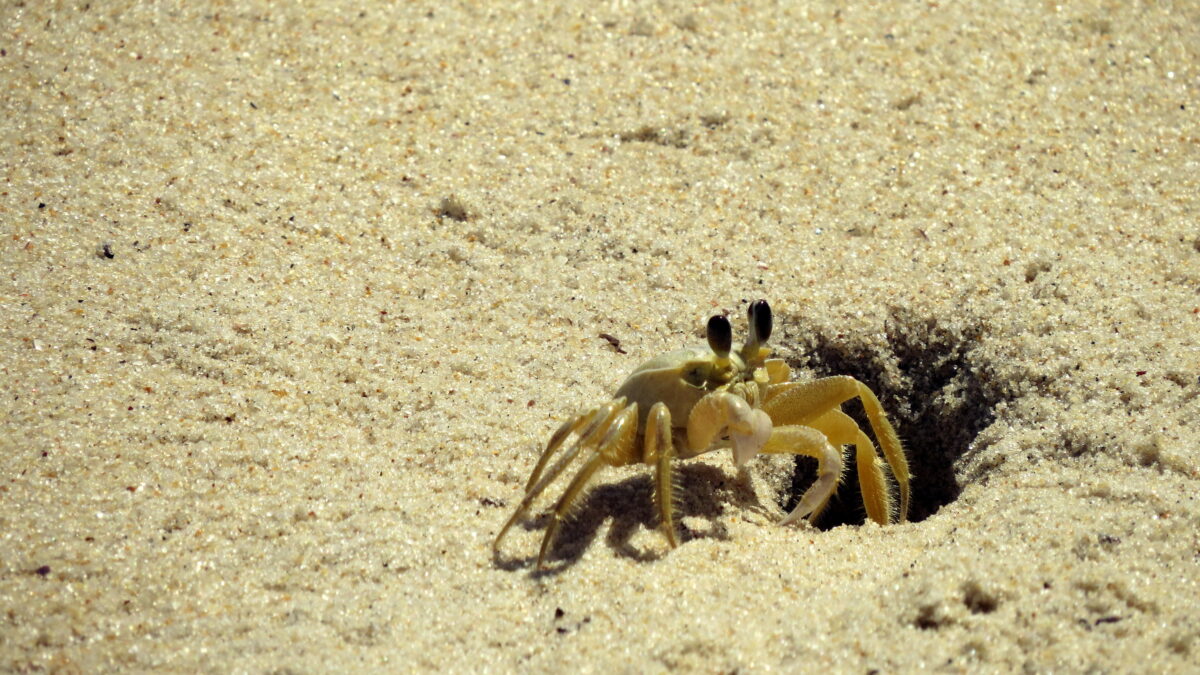
Ghost crab emerging from its burrow (Photo Credit : MarvinMep)
Ghost crabs belong to the family Ocypodidae and the genus Ocypode. They mainly inhabit sandy beaches in tropical and subtropical regions. Their bodies are generally beige, gray, or brown, allowing them to blend into the sand. This coloration provides camouflage that helps them avoid predators.
Their eyes are positioned on relatively long stalks and can move independently, allowing them to observe their surroundings without completely emerging from their burrows. One of their most striking characteristics is their ability to run very fast. They can move sideways or forward at high speeds when they feel threatened.
Ghost crabs are more than just fast runners on the beach. They are important inhabitants of sandy beach ecosystems.
Life between sea and land
Ghost crabs mainly inhabit the supratidal and upper intertidal zones of sandy beaches. During the day, they tend to shelter in their burrows. Their foraging activities usually increase when conditions are favorable, particularly from dusk to night.
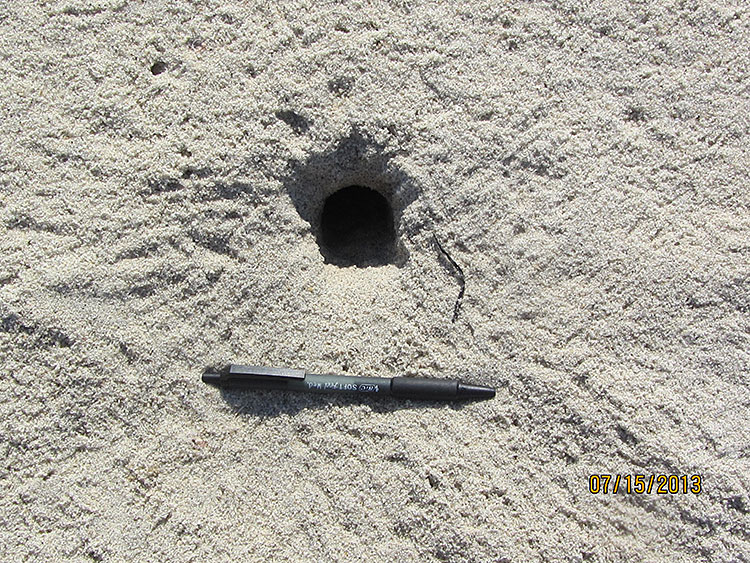
The burrow openings researchers count to estimate ghost crab presence and acitivity (Photo Credit : yesterdaysisland.com)
Burrows are central to their lives. A burrow may have several sections and branches, with its shape and depth influenced by the crab’s size, sand characteristics, humidity, vegetation, and overall beach conditions. Therefore, ghost crab burrows can serve as ecological indicators of the condition of a sandy beach.
Research in the Philippines has shown that the vegetation cover of Ipomoea pes-caprae is associated with the density and characteristics of Ocypode burrows. Areas with vegetation have also been found to contain more active burrows than open areas.
Researchers do not always need to capture ghost crabs to study their populations. One widely used method is to count their burrows. Several parameters can be observed, including:
- Burrow density: The number of burrows per unit area.
- Burrow opening diameter: An indicator that may help estimate the size of the crab occupying or previously occupying the burrow.
- Burrow depth: A characteristic that can provide information about burrow structure and habitat conditions.
- Burrow position: The location of burrows in relation to the coastline.
- Signs of activity: Evidence that a burrow is currently being used.
- Active and inactive burrows: The proportion of burrows showing signs of current activity.
Burrows can therefore serve as proxies, or indirect indicators, for studying ghost crab populations. However, an important distinction must be made: not every hole in the sand is a ghost crab burrow. Identification requires consideration of the opening’s shape, signs of activity, location, and other relevant characteristics.
Why can they run so fast?
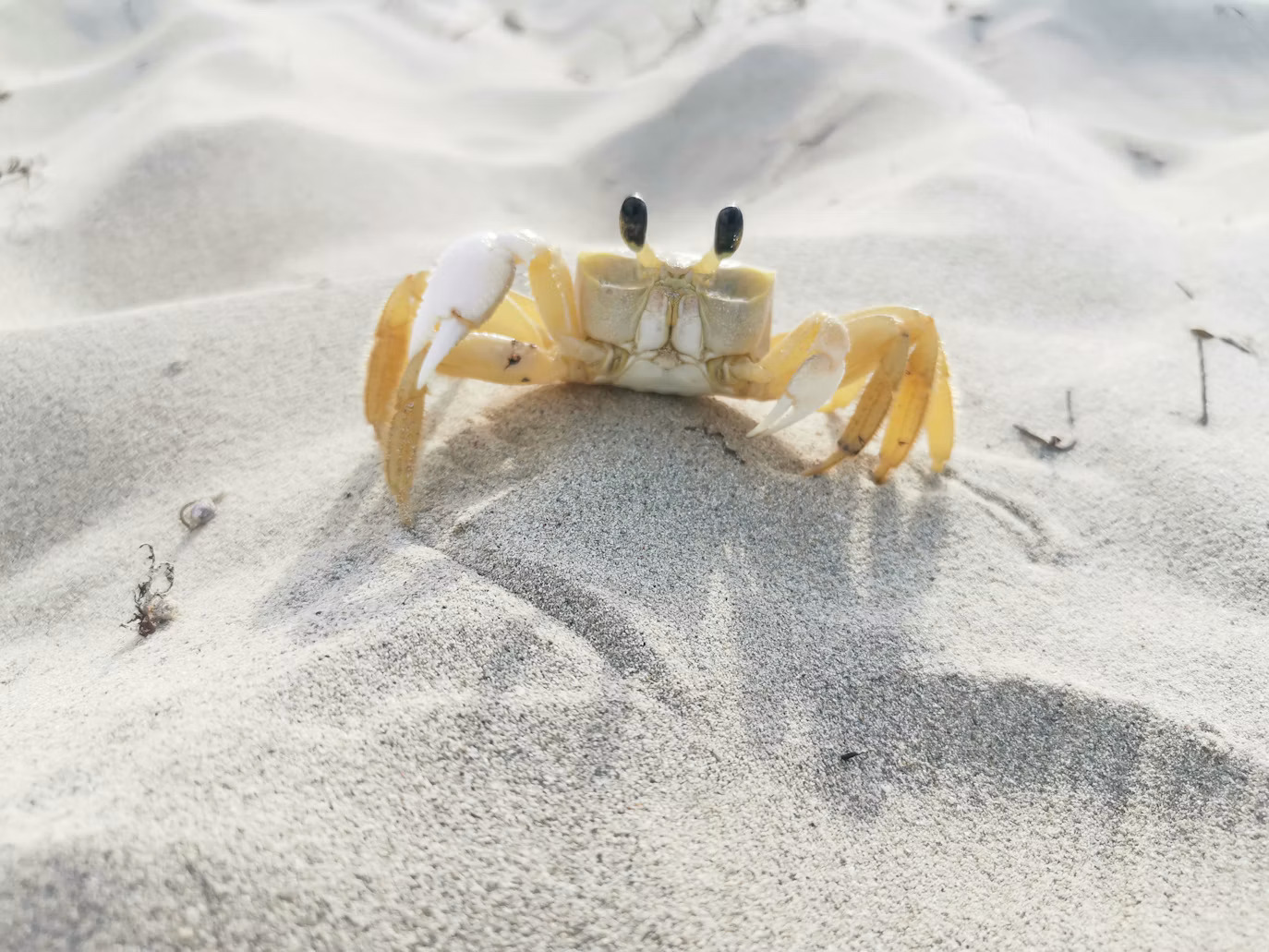
Close-up of a ghost crab (Photo Credit : Max Letek)
The speed of ghost crabs is more than an interesting attraction for beach visitors. Living in an open environment exposes them to various threats, including shorebirds, fish, and other predators. Their ability to sprint helps them escape danger quickly.
Their escape response can be summarized as follows:
Detect a threat → run toward a burrow → disappear beneath the sand.
Ghost crabs also have excellent eyesight, which helps them detect movement in open environments. Interestingly, research suggests that their behavioral responses can be used to investigate human disturbances on beaches.
Experiments involving Ocypode stimpsoni in South Korea found that trampling near burrows increased the crabs’ re-emergence time to approximately three times that observed under undisturbed conditions. Trampling also reduced surface activity and increased vigilance.
These findings suggest that ghost crabs are sensitive not only to changes in their habitat but also to human presence and activities.
What do ghost crabs eat?
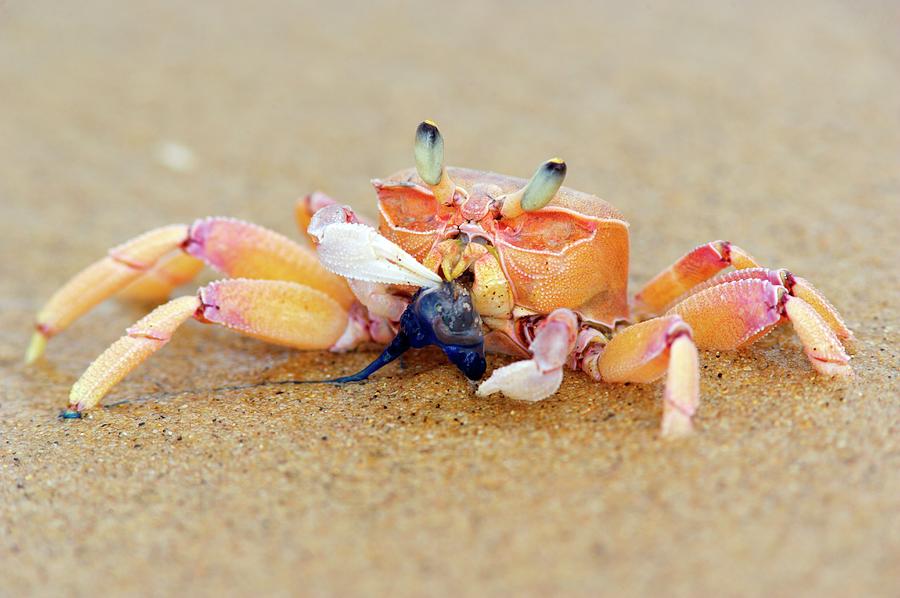
A ghost crab feeding on jellyfish (Photo Credit : Heinrich Van Den Berg)
Ghost crabs are opportunistic omnivores. Their diet includes a variety of food sources available on the beach, such as:
- Carcasses of marine organisms
- Mollusks
- Small fish
- Organic matter
- Insects
- Algae
- Other small organisms
Their feeding behavior makes them important components of coastal food webs. They can act as predators, scavengers, and carrion feeders. By utilizing different food sources, ghost crabs help transfer energy and organic matter between marine and terrestrial environments.
Research on ghost crab ecology also indicates that these crabs can adapt their feeding behavior to the food sources available in their surroundings. However, changes in foraging behavior are not always the most sensitive indicators of human disturbance. This suggests that different biological characteristics of ghost crabs may respond differently to environmental stress.
Beaches as ecological spaces
Ghost crabs are often associated with open sandy areas. However, coastal vegetation can also influence the quality and suitability of their habitat.
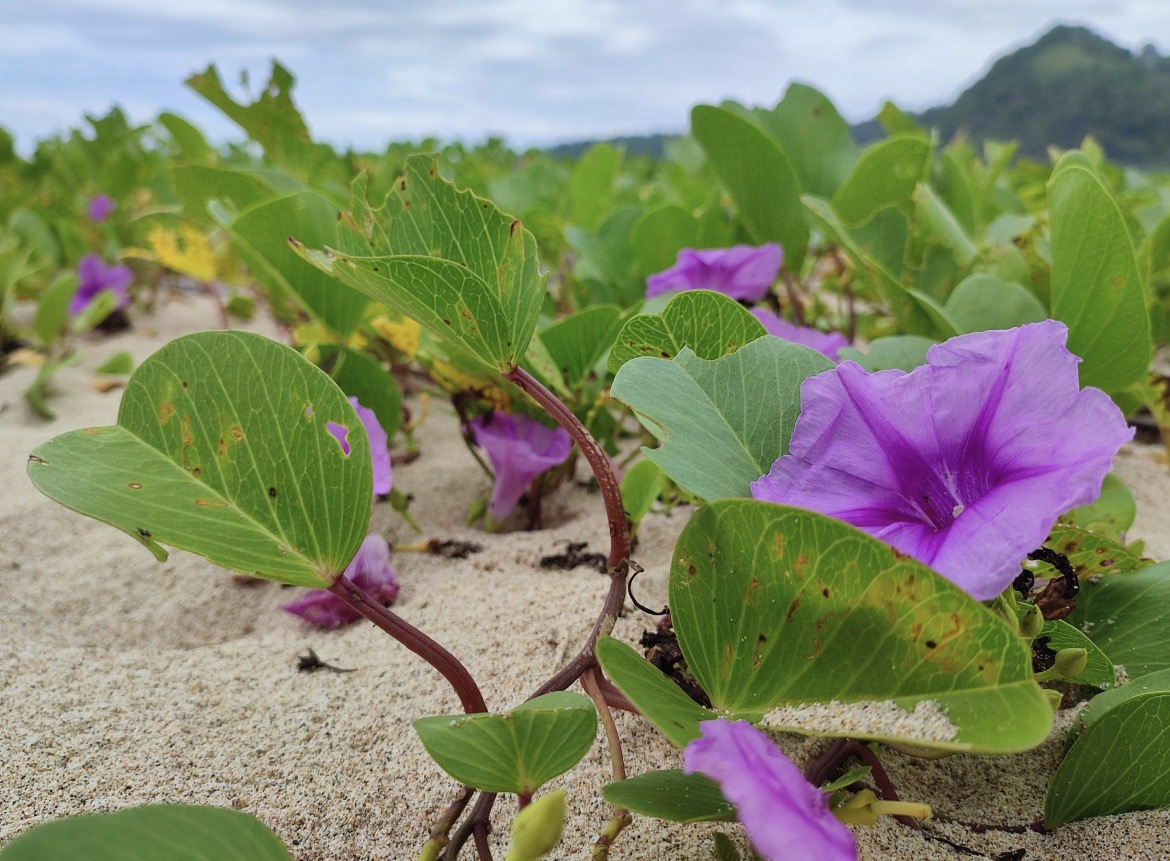
Ipomoea pes-caprae (Photo Credit : ArgentiNat)
Plants such as Ipomoea pes-caprae help trap sand, reduce erosion, and create more stable microhabitats. Research in the Philippines found an association between Ipomoea pes-caprae cover and the density and characteristics of Ocypode burrows.
Research in Brazil has also found positive relationships between vegetation cover and several population characteristics of Ocypode quadrata, including population conditions and body size.
These findings highlight an important principle in beach ecology: protecting ghost crabs means not only protecting the crabs themselves but also maintaining the coastal habitats that support their lives.
Problems arise when human activities exceed the ecosystem’s ability to withstand disturbance. Trampling, vehicles on beaches, infrastructure development, mechanical beach cleaning, urbanization, and changes in beach morphology can all alter ghost crab habitats.
A global review of coastal macroinvertebrates identified ghost crabs as a useful group for investigating the effects of human disturbances, including vehicle traffic and beach nourishment.
Long-term studies of Ocypode quadrata also suggest that reductions in human activity may be followed by population recovery, while areas exposed to greater anthropogenic pressure may exhibit poorer population characteristics.
Ghost crabs as beach bioindicators
Ghost crabs are of particular interest to scientists because they can provide information about beach conditions that may not be apparent to visitors. A beach may look clean and beautiful to humans without necessarily having favorable ecological conditions.
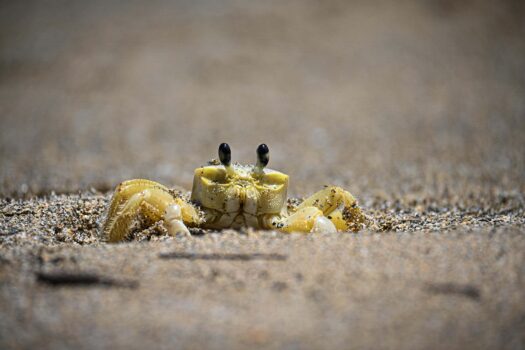
Ghost crab in its natural beach environment (Photo Credit : Eileen Hornbaker/USFWS)
Several ghost crab characteristics can be monitored to help assess beach ecosystems:
- Burrow density: Provides a relative indication of ghost crab presence and abundance.
- Burrow diameter: Helps researchers investigate the size distribution of the population.
- Active burrows: Provide information about ghost crab activity.
- Burrow distribution: Helps reveal patterns of habitat use.
- Seasonal changes: Provide insight into responses to environmental conditions.
- Behavioral responses: May help identify potential disturbances caused by human activities.
However, ghost crabs must be used as bioindicators with caution. Burrow density is influenced by more than human activity. Seasonal changes, beach morphology, vegetation, sand conditions, food availability, and natural population processes can also affect their numbers and distribution.
In other words, a low number of ghost crabs does not necessarily mean a beach is damaged, just as a high number does not automatically indicate that a beach is healthy. Reliable assessments require multiple indicators and an understanding of the surrounding habitat.
genus Ocypode is widely distributed along tropical and subtropical coastlines. Several recognized species include:
- Ocypode kuhlii: A ghost crab found in the Indo-Pacific region, including Indonesia.
- Ocypode stimpsoni: Found in East Asia and studied for its behavioral responses to human activities on South Korean beaches.
- Ocypode quadrata: A widely studied ghost crab found along the western Atlantic coast, including parts of Brazil and North America.
- Ocypode cursor: Found in parts of the Mediterranean and Atlantic regions. Some populations face pressure from recreational activities and habitat changes.
Species identification should be based on appropriate morphological characteristics or molecular taxonomic methods when necessary, as some species share similar physical features and may have overlapping distributions.
What about Indonesian beaches?
The Ocypode group has also been studied in various parts of Indonesia. A study conducted in Lombok, for example, compared the community structure of Ocypode on tourist and non-tourist beaches.
The study reported greater diversity and density on non-tourist beaches, highlighting relationships between ghost crab community structure, environmental conditions, and human activities.
Ghost crabs can therefore help researchers understand ecological changes along Indonesia’s coastlines. The pressures affecting sandy beaches are often more complex than simply the number of visitors.
Several activities and environmental changes can threaten ghost crab habitats:
- Vehicles on the beach: Vehicle tires can crush burrows, disturb ghost crabs, and alter the structure of the sand.
- Trampling: Intensive walking can damage burrows and interfere with crab activity. Research has also demonstrated behavioral changes in Ocypode stimpsoni following trampling disturbances.
- Coastal development: Buildings, roads, and coastal protection structures can alter beach morphology, reduce available habitat, and disrupt natural coastal processes.
- Beach nourishment: Adding sand to address coastal erosion can change substrate characteristics and affect ghost crab populations.
- Loss of coastal vegetation: Removing vegetation can reduce habitat complexity, affect sand stability, and change the distribution of ghost crab burrows.
- Climate change: Sea-level rise, temperature changes, extreme storms, and shifts in coastline dynamics can alter sandy beach habitats and affect the organisms that depend on them.
Protecting the little runners of the beach
Ghost crab conservation does not necessarily require turning entire beaches into restricted areas. A more practical approach is to manage human activities according to habitat sensitivity and local ecological conditions.
Several measures can help protect ghost crabs and their habitats:
- Limit vehicle access to sensitive sandy beach areas.
- Provide designated walking paths to reduce disturbance to important habitats.
- Maintain natural coastal vegetation.
- Avoid excessive mechanical beach cleaning that damages burrows or disrupts natural processes.
- Monitor burrow density, diameter, and activity regularly.
- Involve local communities in coastal biodiversity monitoring.
- Establish protected zones in areas that provide important habitat for ghost crabs and other coastal organisms.
Research in the Mediterranean region has found that populations of Ocypode cursor on recreational beaches can be lower than those in more protected areas. These findings reinforce the importance of considering ghost crabs in coastal ecosystem monitoring and beach management.
Protecting ghost crabs is not only about preserving one group of animals. It also means maintaining the ecological processes and habitats that allow sandy beach ecosystems to function.
5 quick facts about ghost crabs
- Sprinters: Ghost crabs are famous for their remarkable running speed, which helps them escape predators and other threats.
- Architects beneath the sand: They spend much of their time in burrows dug into sandy substrates, where they can shelter from predators and environmental conditions.
- Opportunistic eaters: They consume a variety of food sources, ranging from small organisms to organic matter and animal carcasses.
- Links between sea and land: As predators and scavengers, they help connect energy flows between marine and terrestrial ecosystems.
- Indicators of beach health: Burrow density, size, distribution, and ghost crab behavior can contribute to monitoring coastal ecological conditions when interpreted alongside other environmental information.
Conclusion
A healthy beach is more than a beautiful beach. When we walk along the shore and see a small crab sprinting toward its burrow, we may simply see an interesting natural attraction. For an ecologist, however, that sight can reveal something much more significant.
It may indicate that habitats are functioning, food webs are operating, and interactions between the sea and the land are continuing.
Ghost crabs remind us that beach health cannot always be judged by clear water or attractive scenery. Sometimes, the most valuable indicators are hidden beneath the sand. When burrows begin to disappear, it may be time to ask what is happening to the beach ecosystem.
Protecting beaches is not just about maintaining places for recreation and tourism. It is also about preserving the habitats, ecological processes, and small organisms that help keep coastal ecosystems alive.
-Yuni Sulaiman
References
Kwon, S., Kim, D., & Kim, T. (2026). Don’t tread on me: Human trampling on a sandy beach alters behavior of the ghost crab, Ocypode stimpsoni. Marine Pollution Bulletin, 224, 119154. DOI: 10.1016/j.marpolbul.2025.119154.
Gomes do Vale, J. et al. (2026). Seasonal, morphodynamic, and vegetation drivers of ghost crab (Ocypode quadrata) populations on subtropical sandy beaches. Environmental Monitoring and Assessment, 198. DOI: 10.1007/s10661-026-15876-z.
Diamante, R. A. M., & Santander-de Leon, S. M. (2023). Influence of Ipomoea pes-caprae cover on the density, size, and architecture of ghost crab (Ocypode sp.) burrows in sandy beach ecosystems. Philippine Journal of Science, 152(4), 1387–1395. DOI: 10.56899/152.04.10.
Ocaña et al. (2020). Macroinvertebrates as indicators of human disturbances on sandy beaches: A global review. Ecological Indicators, 118, 106764. DOI: 10.1016/j.ecolind.2020.106764.
Lestariani, N. et al. (2025). Ecosystem analysis between tourist and non-tourist beaches: Based on the community structure of Ocypode sp. Jurnal Penelitian Perikanan Indonesia, 31(1). DOI: 10.15578/jppi.31.1.2025.1-10.
Anthropogenic Disturbance Threatens the Endangered Tufted Ghost Crab, Ocypode cursor. (2026). Aquatic Conservation: Marine and Freshwater Ecosystems, 36(2). DOI: 10.1002/aqc.70321.