Birds of the Coast: What Returning Seabirds Tell Us About Ecosystem Recovery
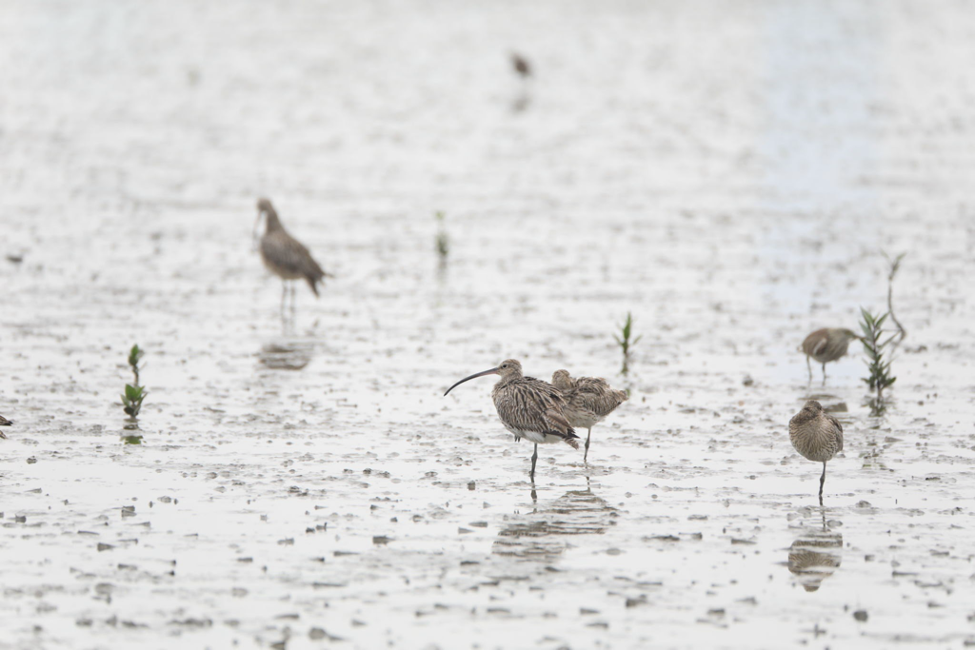
Migratory shorebirds foraging on exposed intertidal mudflats (Photo Credit : Travelnshot/Getty Images)
Along the thousands of kilometers of coastline across the Indonesian archipelago, a quiet transformation is unfolding across mudflats, estuaries, and mangrove canopies. Seabirds and shorebirds—ranging from migratory waders like the Far Eastern Curlew (Burung Gajahan Timur / Numenius madagascariensis) that cross the Asian flyway to native resident species like the Milky Stork (Bangau Tong-tong / Mycteria cinerea) and various egrets, are much more than coastal fauna; they are sensitive, high-resolution barometers of ecosystem health.
When seabird populations collapse, it is rarely an isolated anomaly. It signals choked food chains, degraded breeding sites, and fragmented intertidal habitats. Conversely, when seabirds return to feed, rest, and nest, they provide empirical, living proof of an ecosystem in active recovery.
Seabirds as Living Ecological Barometers
Occupying high trophic tiers in coastal food webs, seabirds rely on a complex continuum of interconnected habitats, including mudflats, coral reefs, seagrass beds, and dense mangrove belts. Their presence and population dynamics reflect specific ecological indicators:
- Trophic Stability: Healthy populations of terns (Dara Laut), gulls (Cemara Laut), and herons require abundant schooling fish and macroinvertebrates. A returning flock indicates that primary producers and mid-trophic species have rebounded sufficiently to support upper-level predators.
- Structural Habitat Integrity: Shorebirds and waders require undisturbed tidal flats for foraging and intact mangrove root systems for roosting and shelter. Their sustained presence serves as direct biological validation of structural habitat restoration.
- Bioaccumulation Monitors: Because seabirds assimilate heavy metals and microplastics from their marine prey, monitoring their health and reproductive success offers an early-warning diagnostic system for coastal pollution, often flagging risks before chemical assays reveal system-wide contamination.
Indonesia’s Coastal Realities: From Degradation to Restoration
Indonesia hosts nearly a quarter of the world’s mangrove forests. However, decades of intensive aquaculture expansion (tambak conversions), unmanaged coastal development, and industrial pollution have stripped vast stretches of Java, Sumatra, and Sulawesi of their natural shoreline buffers.
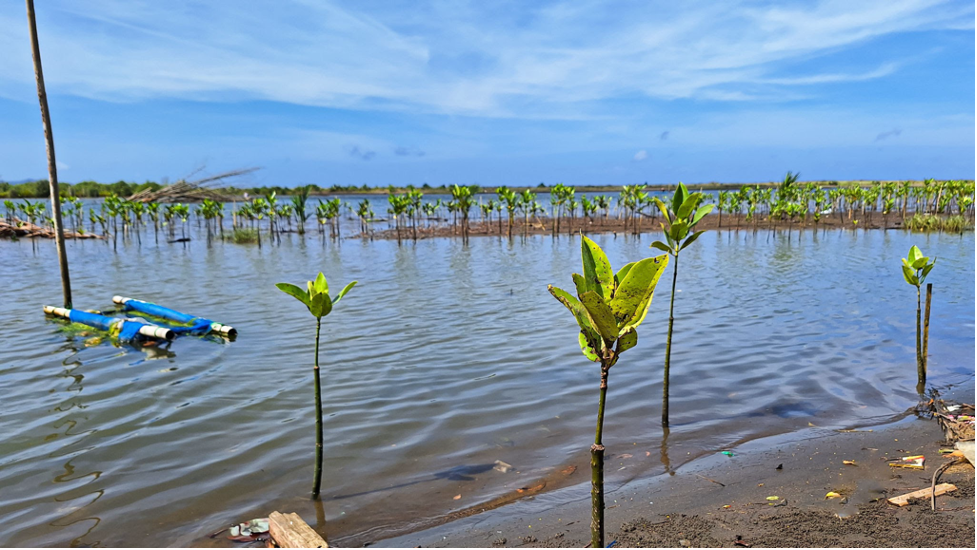
Mangrove saplings growing along restored coastal mudflat (Photo Credit : Rizky Rahmat Hidayat)
The ecological fallout extended far beyond avian decline: chronic shoreline erosion, plummeting fish and crustacean yields, and diminished climate resilience became systemic vulnerabilities.
In response, strategic interventions ranging from community-driven initiatives to national programs under the previously named Peatland and Mangrove Restoration Agency (BRGM) and the Ministry of Environment and Forestry have prioritized re-establishing coastal green belts. Where these restored mangrove plots reach ecological maturity, the avian response is often swift and measurable:
- Sembilang National Park (South Sumatra): As habitat protection and mudflat conservation stabilized this critical stopover along the East Asian-Australasian Flyway, hundreds of thousands of migratory shorebirds, including various stints (Trunduk) and plovers (Cerek), resumed utilizing its intertidal zones annually.
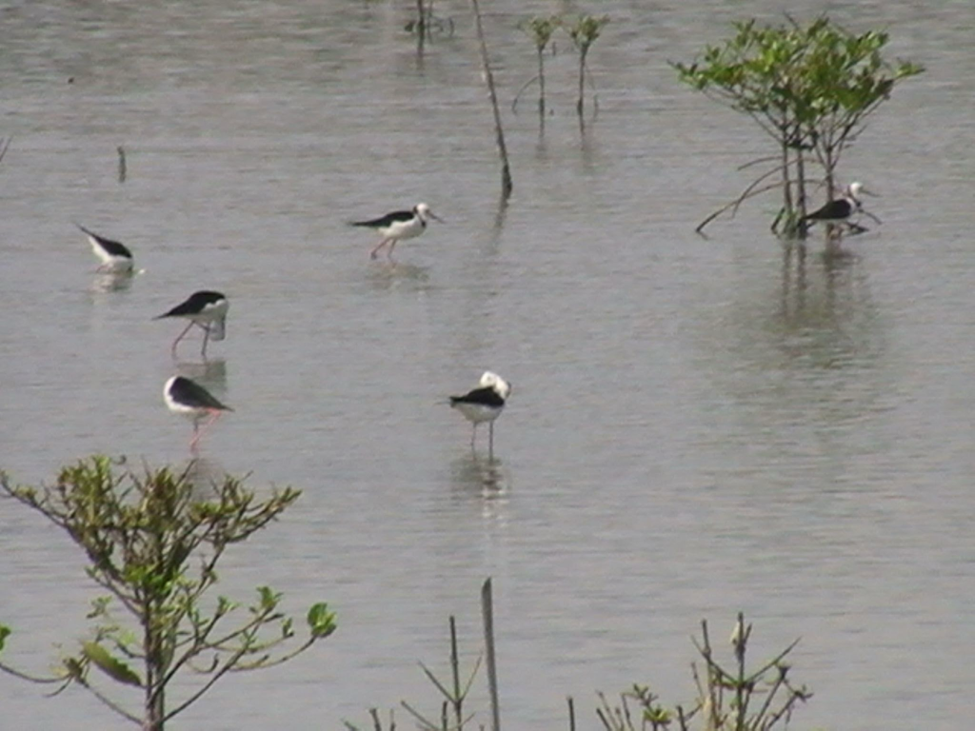
Waterbirds foraging near mangrove saplings in Sembilang (Photo Credit : syafrina lamin/Getty Images)
- Muara Angke & Rambut Island (Jakarta / Thousand Islands): Targeted conservation and waste-reduction efforts in these urban wetland pockets have sustained vital breeding and roosting colonies for the endangered Milky Stork (Bangau Tong-tong / Mycteria cinerea) alongside local herons (Kuntul).
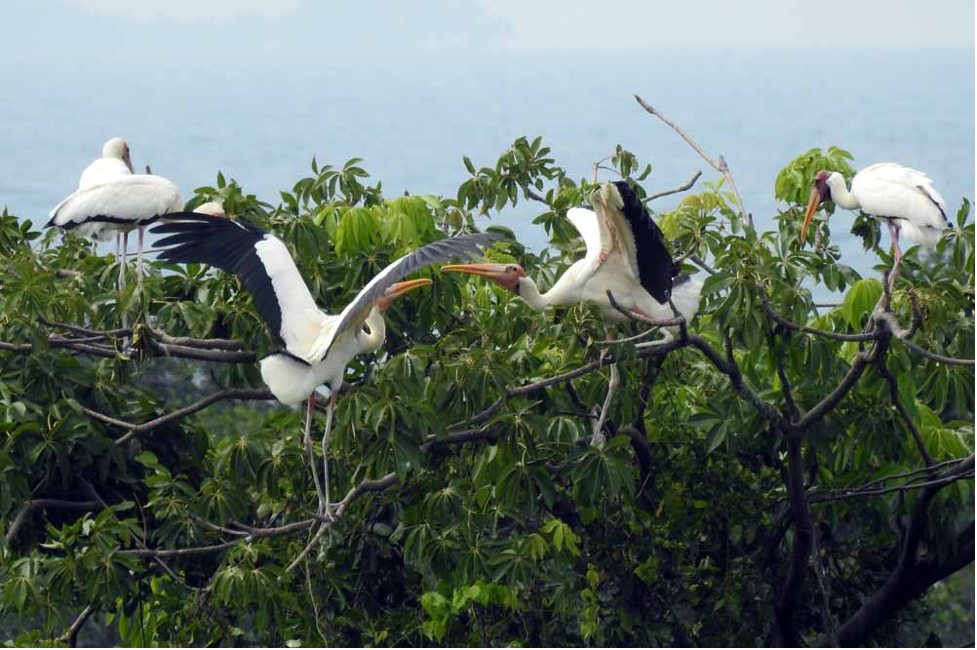
Milky storks nesting in the canopy of a protected mangrove island (Photo Credit : Asep Ayat)
- East Java Coastal Zones: Community-led mangrove rehabilitation around Probolinggo and Surabaya has successfully revitalized benthic invertebrate communities, drawing back flocks of plovers (Cerek), sandpipers (Trunduk), and egrets to newly stabilized tidal flats.
What Returning Birds Reveal About Ecological Functions
When seabirds re-establish roosts and breeding colonies, they do not just use the ecosystem—they actively drive its metabolic recovery .
|
Ecological Metric |
Impact of Returning Seabirds |
Indicator of Coastal Health |
|
Nutrient Cycling (Guano Deposit) |
Avian populations transfer marine-derived nitrogen and phosphorus from offshore feeding grounds to onshore mangrove soils. |
Enhanced soil fertility, accelerating mangrove root biomass development and seedling establishment. |
|
Benthic Food-Web Stability |
Foraging waders maintain optimal invertebrate densities, preventing single-species population spikes in mudflats. |
A balanced, oxygenated tidal substrate capable of supporting diverse benthic and marine larvae. |
|
Pest & Biomass Control |
Herons (Kuntul), terns (Dara Laut), and gulls regulate dynamic quantities of small surface fish and opportunistic species. |
A resilient marine food web protected from hyper-dominant nuisance species. |
Challenges Remaining on the Horizon
While returning flocks signal promising progress, Indonesian coastal restoration still faces persistent structural hurdles:
- Monoculture vs. Biodiversity: Early rehabilitation projects relied heavily on single-species planting (predominantly Rhizophora), failing to replicate the complex architecture of natural, mixed-species mangrove ecosystems required by diverse bird species. Modern frameworks are shifting toward multi-species, hydrological-restoration models.
- Coastal Infrastructure Conflicts: Large-scale engineering projects, such as massive seawalls and port expansions, frequently alter local hydrodynamic and sediment transport regimes, inadvertently submerging or scouring out the intertidal mudflats vital to shorebirds.
- Marine Plastic Pollution: The accumulation of plastic debris in coastal roosting sites and within marine prey remains a leading driver of avian ingestion and entanglement across Indonesian waters.
The Path Forward
The return of seabirds to Indonesia's coastlines is empirical proof that degraded ecosystems retain the capacity to heal when granted adequate protection and room to recover.
Achieving long-term ecological stability requires closing the gap between community-based mangrove management and rigorous, science-backed restoration ecology. By measuring project success through biological indicators such as avian diversity and population counts, alongside traditional tree survival rates, we can ensure that coastal initiatives restore fully functioning marine-terrestrial ecosystems, rather than merely planting green landscapes.