From Destructive Fishing to Protected Seas: Illegal Cyanide Use in Ornamental Reef Fish Capture — A Case Study of Les Village, Bali
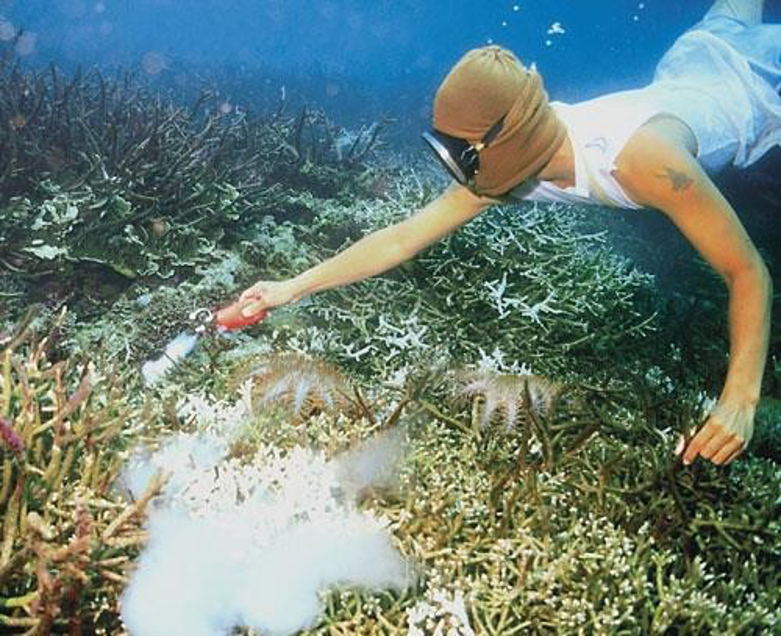
Fisher sprays the cyanides directly to the reefs to make fish lethargic (Photo Credit : Communities Conservation Livelihoods)
Indonesia lies at the heart of the Coral Triangle, a region often described as the global epicenter of marine biodiversity. With more than 17,000 islands and vast coastal waters, the country’s coral reefs are among the most diverse and productive ecosystems on Earth. These reefs are not only ecological assets but also economic foundations—supporting fisheries, tourism, shoreline protection, and the livelihoods of millions.
Yet beneath this natural wealth lies a persistent and damaging reality: destructive fishing practices driven by the ornamental fish trade, particularly the use of cyanide. While often overshadowed by larger-scale environmental issues, this practice continues to silently degrade reef ecosystems across Indonesia.
The Ornamental Fish Trade: Beauty with a Hidden Cost
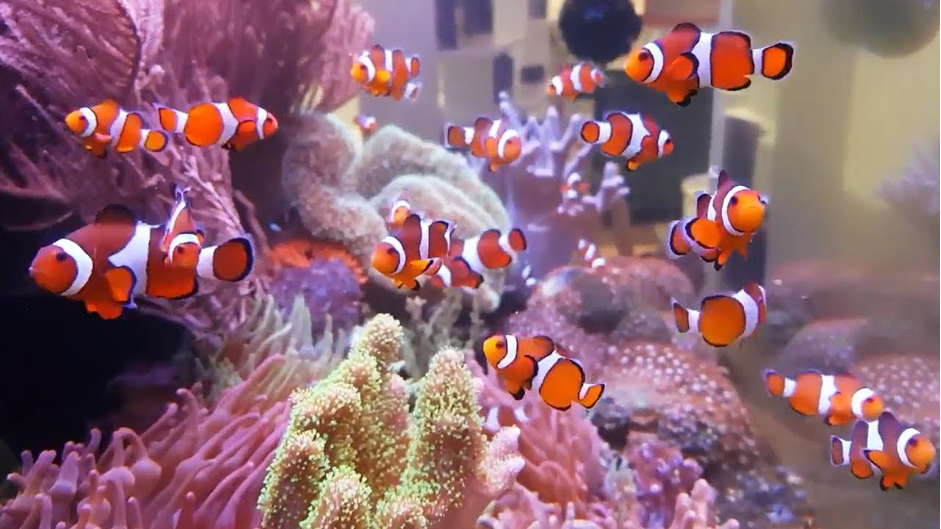
Clown fish (Photo Credit : George Mavrakis)
The marine aquarium industry depends heavily on tropical reef fish known for their vibrant colors and unique patterns. Species such as clownfish, angelfish, damselfish, and butterflyfish are exported worldwide to meet growing demand from hobbyists and commercial aquariums.
Indonesia is one of the largest suppliers of these ornamental fish. In theory, this presents an opportunity for sustainable, high-value fisheries. In practice, however, weak oversight and intense market pressure have enabled illegal and harmful collection methods to persist.
Among the most destructive is cyanide fishing—a method that prioritizes efficiency over ecological sustainability.
How Cyanide Fishing Works—and Why It Persists
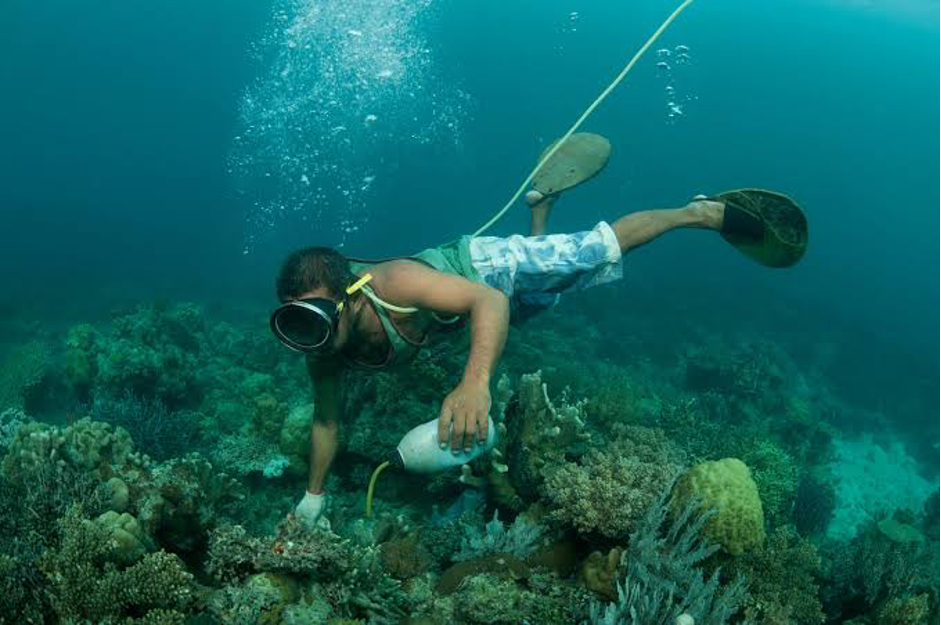
A fisherman illegally applies cyanide to a coral reef crevice (Photo Credit : Jurgen Freund/Nature Picture Library/Corbis)
Cyanide fishing involves dissolving sodium cyanide in seawater and spraying it into coral reefs to stun fish. The immobilized fish are then collected alive, making them suitable for export.
From a fisher’s perspective, the method offers several advantages:
- Faster capture compared to traditional netting
- Access to fish hidden deep within coral structures
- Higher short-term yields
However, these short-term gains mask severe long-term consequences.
Cyanide is highly toxic not only to fish but also to coral polyps—the living organisms that build reef structures. Even low concentrations can cause coral bleaching, tissue death, and eventual reef collapse. Additionally, many fish exposed to cyanide suffer internal damage and die shortly after capture, leading to inefficiencies and further pressure on wild populations.
Case Study: Les Village, Bali
A clear and well-documented example of this issue can be found in Les Village, located along Bali’s northern coastline.
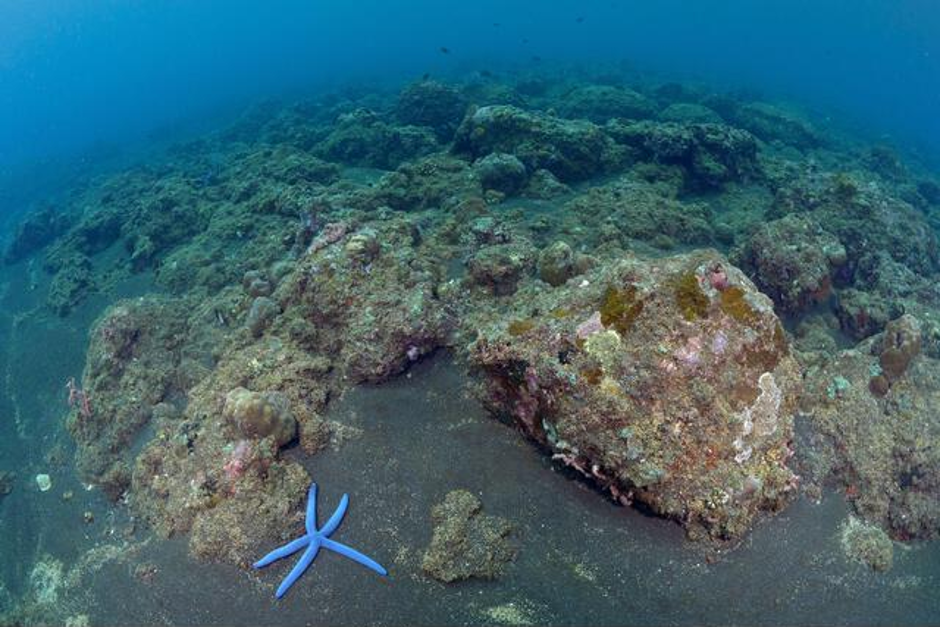
A starfish crawls along coral reefs, damaged from years of dynamite fishing, in Les, Bali, Indonesia, on April 11, 2021 (Photo Credit : Alex Lindbloom/AP Photo)
For decades, Les Village relied heavily on fishing as a primary source of income. As demand for ornamental fish increased, some fishers adopted destructive techniques, including cyanide and blast fishing, to remain competitive.
By the late 1990s and early 2000s, the consequences became increasingly visible:
- Severe coral degradation: Large sections of reef were reduced to rubble, losing their structural complexity
- Declining biodiversity: Fish populations, including commercially valuable ornamental species, began to drop
- Ecosystem imbalance: The loss of coral habitat disrupted breeding grounds and food chains
The damage extended beyond the environment. As fish stocks declined and reef quality deteriorated, local incomes became less stable, creating a cycle where fishers felt pressured to continue destructive practices just to survive.
From Destructive Fishing to Protected Seas
What sets Les Village apart is not only the scale of degradation—but the community’s response.
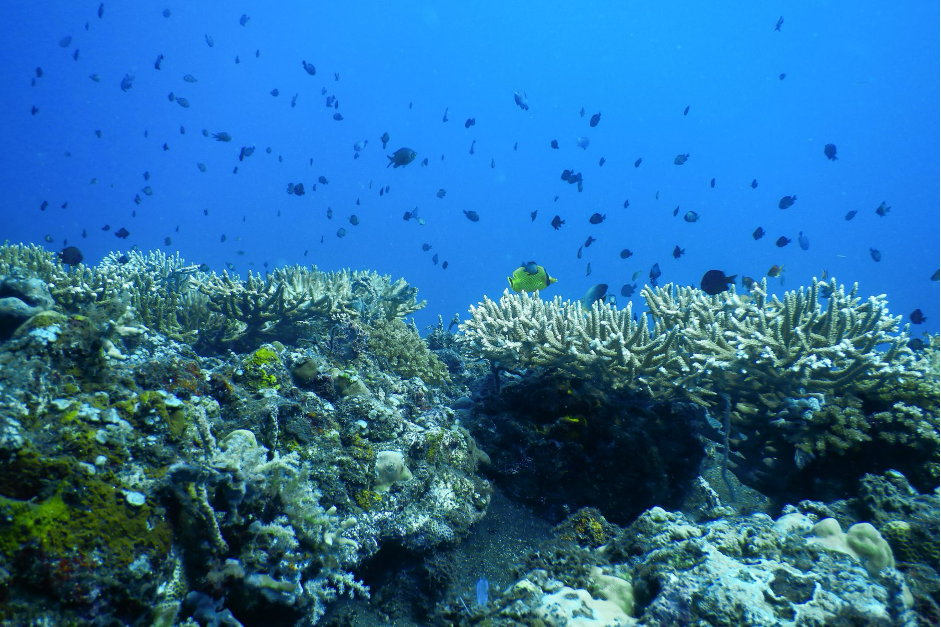
Corals and reef fish thrive on the artificial structures that community from Les have deployed (Image: LINI Foundation)
Faced with declining resources and economic uncertainty, local stakeholders began shifting toward reef protection and restoration. This transition marked a critical turning point: from destructive fishing to protected seas.
Key initiatives included:
- Coral Reef Restoration
Community groups and environmental organizations collaborated to install artificial reef structures, often made from concrete or metal frameworks. These structures provided a foundation for coral regrowth and helped restore habitat complexity.
- Community-Based Management
Local fishers became actively involved in protecting reef areas. Informal agreements and community rules were established to limit destructive practices and encourage sustainable methods.
- Alternative Livelihoods
To reduce dependence on harmful fishing, efforts were made to diversify income sources. These included:
- Eco-tourism (snorkeling and diving)
- Sustainable aquaculture
- Reef restoration work as paid employment
- Awareness and Education
Education programs helped shift perceptions, emphasizing the long-term value of healthy reefs over short-term profits.
Over time, these combined efforts began to show results. Coral cover improved in restored areas, fish populations gradually returned, and the local economy started to stabilize through more sustainable activities.
Broader Environmental Implications
The impacts of cyanide fishing extend far beyond individual reef sites. Coral reefs function as interconnected ecosystems, meaning damage in one area can affect larger marine networks.
Key environmental risks include:
- Loss of biodiversity: Coral reefs support an estimated 25% of all marine species
- Reduced climate resilience: Healthy reefs are better able to withstand warming oceans and acidification
- Weakened coastal protection: Coral reefs act as natural barriers against waves and storm surges
Once destroyed, coral reefs can take decades—or even centuries—to fully recover, if recovery is possible at all.
Economic and Social Consequences
Destructive fishing is not just an environmental issue—it is also a socio-economic challenge.
While cyanide fishing may increase short-term income, it ultimately leads to:
- Declining fish stocks, reducing long-term earning potential
- Loss of tourism revenue, particularly in areas known for diving and marine beauty
- Increased vulnerability of coastal communities, as natural resources degrade
The case of Les Village illustrates how environmental degradation and economic instability are deeply interconnected.
Ongoing Challenges in Indonesia
Despite progress in certain areas, illegal cyanide fishing continues in parts of Indonesia due to several factors:
- Limited enforcement capacity across vast marine territories
- Complex supply chains, making it difficult to trace fish origins
- Persistent global demand for ornamental marine species
- Economic pressures faced by small-scale fishers
These challenges highlight the need for coordinated action at local, national, and international levels.
The Path Forward
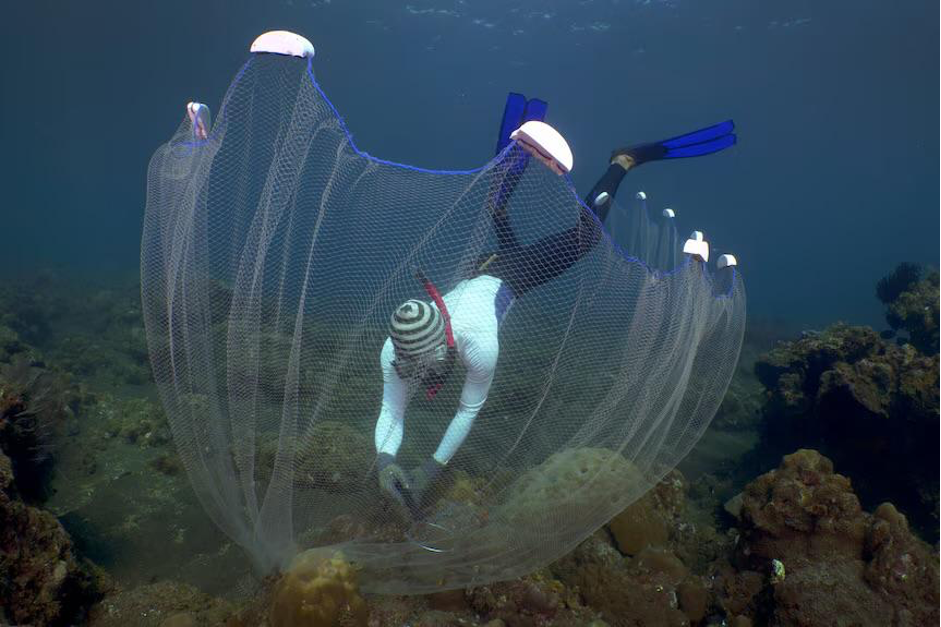
Made Partiana uses more careful methods to capture fish (Photo Credit : Alex Lindbloom/AP Photo)
Addressing destructive fishing requires more than just regulation—it demands systemic change.
Key priorities include:
- Strengthening enforcement of marine protection laws
- Improving traceability in the aquarium trade supply chain
- Expanding community-based conservation programs
- Investing in sustainable livelihood alternatives
- Raising consumer awareness about responsibly sourced marine fish
Technology, policy, and community engagement must work together to create lasting solutions.
Conclusion
The story of Les Village, Bali, offers both a warning and a source of hope. It demonstrates how quickly coral reef ecosystems can be damaged by destructive fishing—and how recovery is possible through collective action.
The transition from destructive fishing to protected seas is not easy, nor is it immediate. It requires commitment from communities, support from institutions, and responsibility from global markets.
Indonesia’s coral reefs are among the most valuable ecosystems on the planet. Protecting them is not only an environmental imperative but also a critical step toward ensuring sustainable livelihoods and long-term economic resilience.
If managed wisely, these reefs can continue to thrive—not just as sources of beauty, but as foundations of life for generations to come.