

Coral Reefs: Living Cities Beneath Indonesia’s Seas
When we look at the ocean from the shore, it seems calm and endless. But just a few meters below the surface, there is a busy and complex world. Coral reefs are like living cities under the sea. Thousands of species depend on them for food, shelter, and reproduction.
Indonesia is located at the heart of the Coral Triangle, the global center of marine biodiversity. Around 76% of the world’s coral species are found in this region, and Indonesia hosts more than 500 species of reef-building corals. This makes Indonesia one of the most important countries in the world for coral reef conservation.
Indonesia has about 2.5 million hectares of coral reefs, representing roughly 18% of the world’s total coral reef area. These reefs support fisheries, tourism, and coastal protection for millions of people.
Coral reefs are not rocks. They are living animals.
Each coral is made of tiny animals called polyps. These polyps build hard skeletons from calcium carbonate. Over hundreds and thousands of years, these skeletons form massive reef structures.
What makes corals special is their partnership with microscopic algae called zooxanthellae. These algae live inside coral tissues and produce energy through photosynthesis. In return, the coral provides protection and nutrients. This relationship allows coral reefs to grow even in nutrient-poor tropical waters.
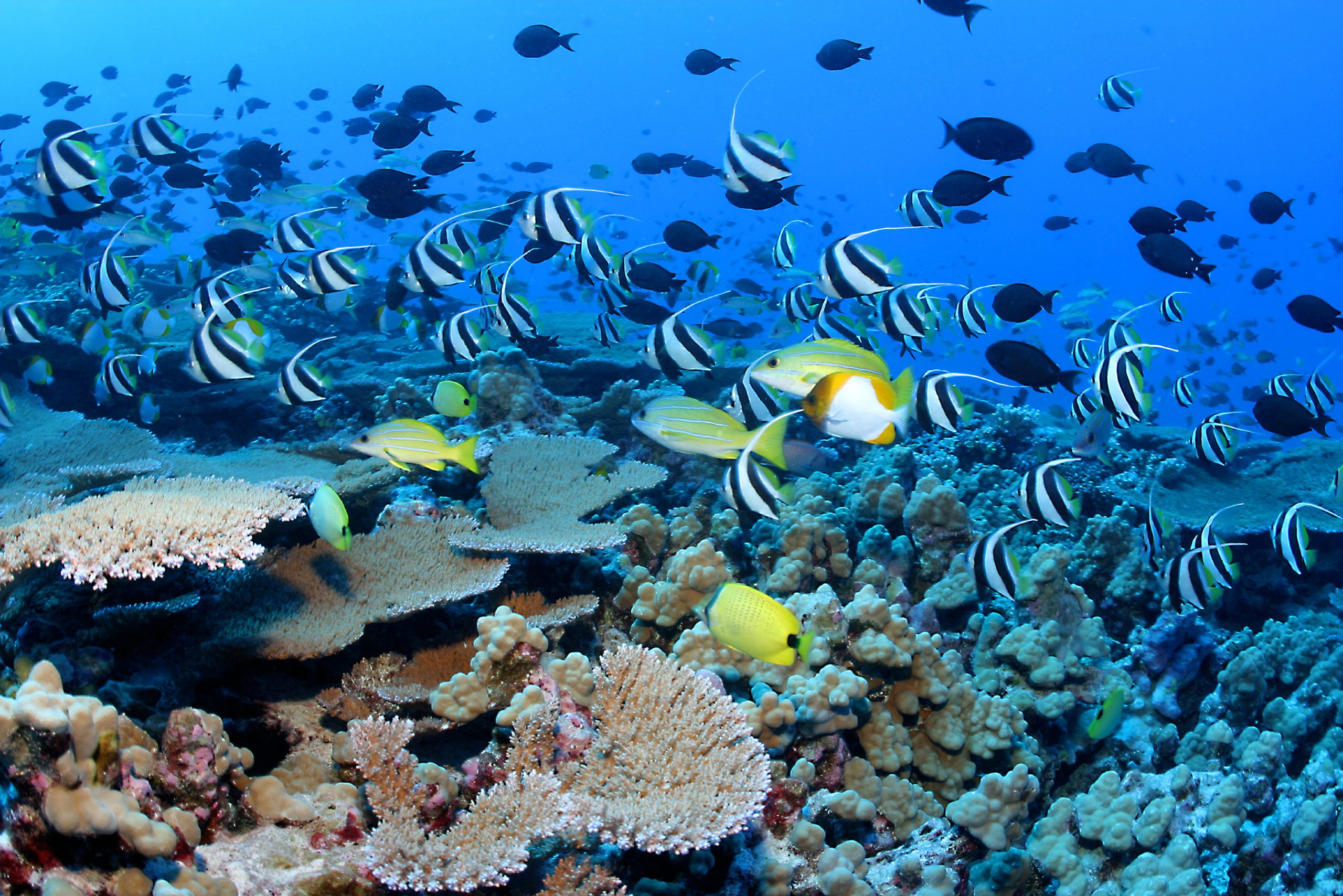
Photo Credit : James Watt
Why Coral Reefs Matter for Indonesia
Coral reefs are not only important for marine life. They are directly connected to human life.
In Indonesia, millions of coastal residents depend on reef-related fisheries. Reef fish are a major source of protein and income, especially for small-scale fishers.
Coral reefs also function as natural breakwaters. Studies show that healthy reefs can reduce up to 90% of wave energy, helping protect coastlines from erosion and storm damage. In a country with more than 17,000 islands and over 95,000 km of coastline, this natural protection is extremely important.
Reefs also support marine tourism. Diving and snorkeling destinations such as Raja Ampat, Wakatobi, and Bunaken contribute significantly to local economies.<
Ecologically, coral reefs cover less than 1% of the ocean floor, yet they support about 25% of all marine species. Losing reefs would mean losing biodiversity on a massive scale.
For Indonesia, coral reef health is not just an environmental issue. It is about food security, coastal safety, and economic stability.
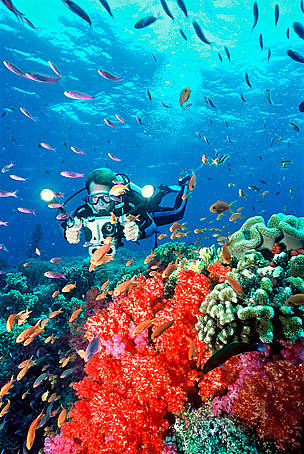
Photo Credit : Cat HOLLOWAY / WWF
Coral Bleaching and Climate Stress
Corals are sensitive to temperature changes. Even an increase of 1–2°C above the normal seasonal maximum can cause stress.
When stressed by heat, corals expel their zooxanthellae. Without these algae, corals lose their color and turn white. This is called coral bleaching.
Bleaching does not mean immediate death. Corals can recover if temperatures return to normal quickly. However, prolonged heat stress can kill entire reef systems.
Indonesia has experienced several major bleaching events, especially during strong El Niño years. Rising sea surface temperatures linked to global climate change are increasing the frequency of marine heatwaves.
According to national monitoring data, Indonesia’s coral reef condition varies:
- Around one-third are in good to excellent condition
- A significant portion are in fair condition
- The rest are categorized as poor or damaged
The threats are not only climate-related. Coral reefs in Indonesia also face:
- Destructive fishing practices
- Sedimentation from land clearing
- Coastal development
- Plastic pollution
- Overfishing
When multiple pressures happen at the same time, reef ecosystems become less.
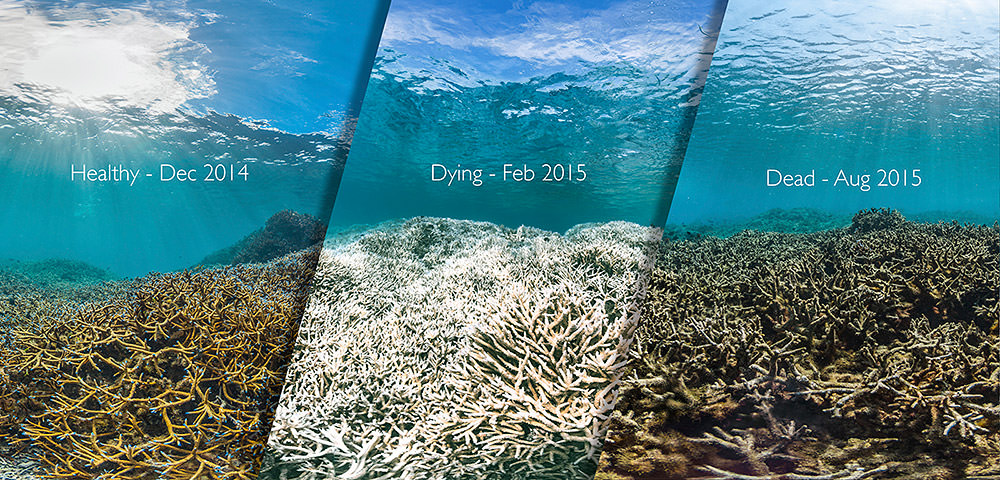
Photo Credit : National Marine Sanctuary of American Samoa
Science, Restoration, and the Future of Indonesia’s Reefs
The good news is that coral reefs can recover, if given the right conditions.
Scientific research in Indonesia and globally is focusing on:
- Coral Transplantation
Fragments of healthy coral are grown in nurseries and then attached to damaged reef areas.
- Artificial Reef Structures
Specially designed structures help coral larvae settle and grow.
- Heat-Tolerant Coral Research
Scientists are identifying coral species and strains that are more resistant to higher temperatures.
- Long-Term Monitoring
Using underwater surveys, satellite data, and community-based monitoring to track reef health over time.
However, restoration alone is not enough. Protecting water quality, reducing pollution, managing fisheries sustainably, and strengthening marine protected areas are essential.
Indonesia has established hundreds of Marine Protected Areas (MPAs), covering millions of hectares. Effective management of these areas plays a key role in reef resilience.
Coral reefs grow slowly, often only a few millimeters to centimeters per year. But the structures they build can last for thousands of years.
The science is clear: coral reefs are both powerful and fragile. They protect coastlines, feed communities, and support biodiversity on a global scale.
For Indonesia, protecting coral reefs means protecting the future of its coastal people.
The ocean may look vast and strong. But its balance depends on systems as small as a coral polyp.
And now we understand enough to know that action cannot wait.
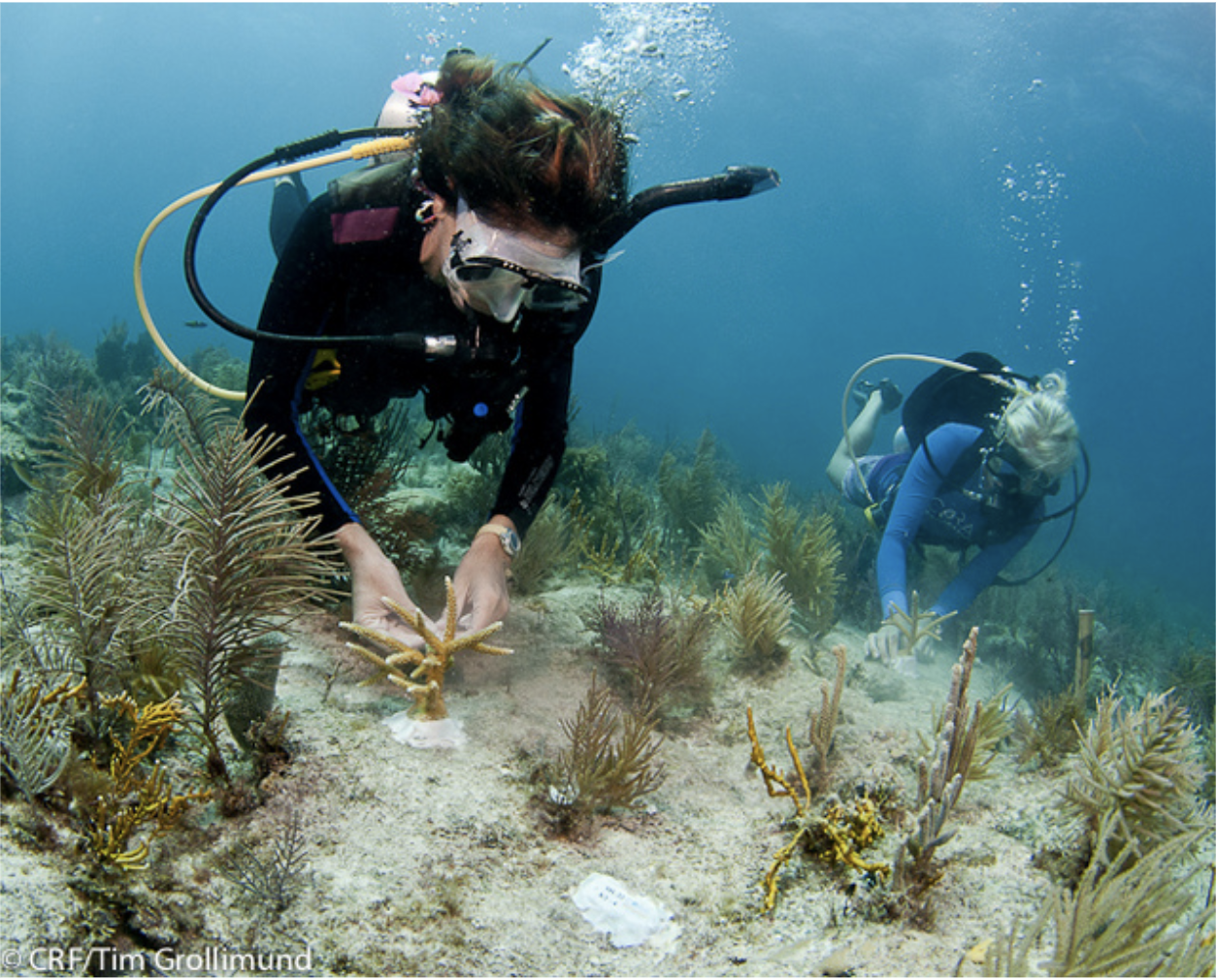
Photo Credit : Coral Restoration Foundation
-Rika Novida